Keeping a commercial kitchen clean can feel a bit like trying to hold back the tide with a bucket. Seriously. One moment the floors are gleaming, and the next, they're covered in the evidence of a hectic dinner service. It's a never-ending cycle.
But you and I both know this is about so much more than just appearances. It's the bedrock of food safety. It’s how you ace those dreaded health inspections. And it’s about building a professional space your team can actually feel good working in. A messy, disorganised kitchen isn't just a health hazard… it’s a morale killer.
This guide is your practical playbook. We're not talking theory here. This is built from real-world experience. We’re going to break down the whole shebang into a system you can actually use. So forget trying to scrub everything, all the time. That just leads to burnout.
Instead, we'll focus on a rhythm:
- The daily habits you absolutely can't miss.
- The weekly jobs that stop grime from ever getting a foothold.
- The big deep cleans that tackle everything else.
The goal isn't some impossible standard of perfection 24/7. It's about creating a solid, repeatable process that brings a bit of order to the chaos and keeps your kitchen consistently safe and compliant.
This is the system that separates the pros from the amateurs. It’s how you stay ahead of the game instead of constantly playing catch-up with dirt and grease.
Your System for a Spotless Commercial kitchen
The whole idea is to work with a structured cleaning frequency. Simple. Some tasks need doing constantly, while others can wait. Think of it like servicing a car… you check the oil regularly, but you only change the timing belt every few thousand kilometres. The same logic applies right here.
You can picture this system as a simple flow of daily, weekly, and monthly tasks, each one building on the last.
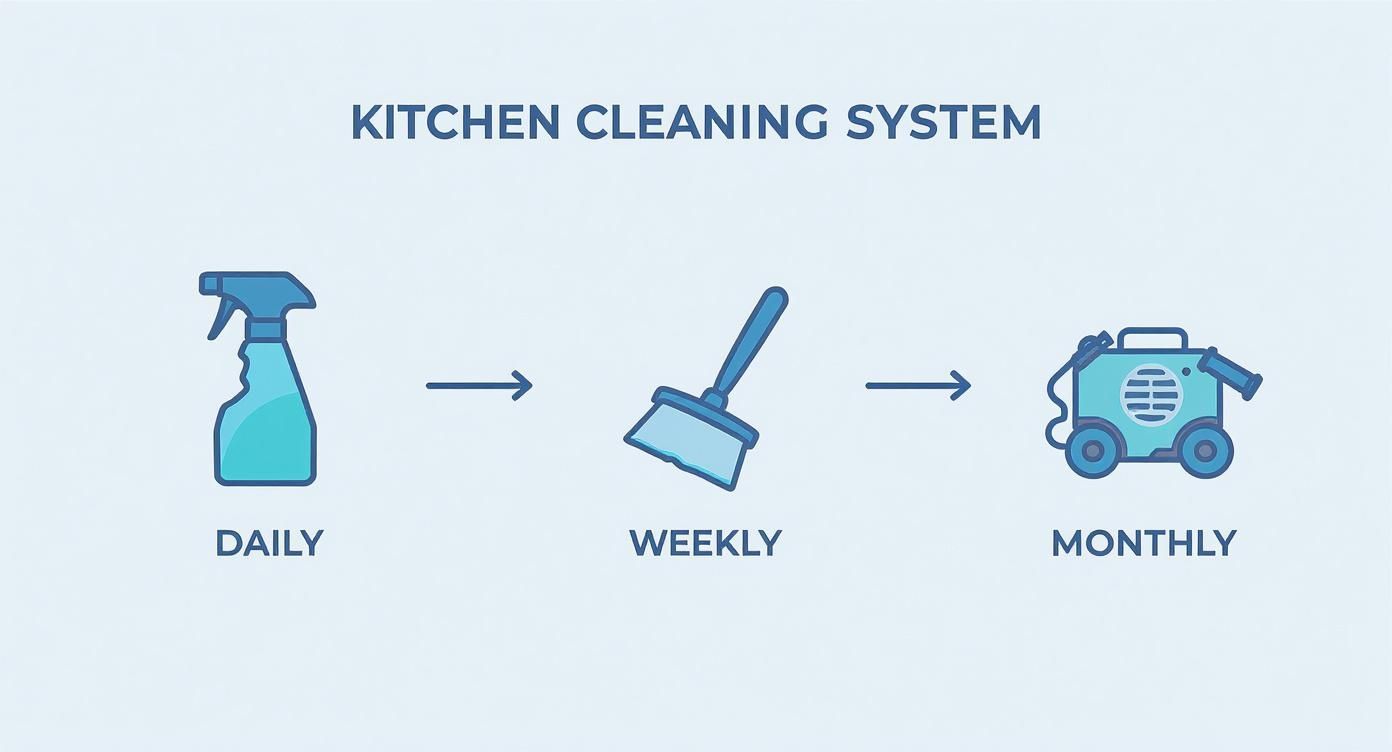
This visual breaks it down perfectly. Daily touch-ups are your foundation, weekly scrubs prevent major build-up, and those monthly deep cleans reset the entire space.
Why a System Matters More Than Ever
Getting this right isn't just good practice; it's smart business. And it’s a growing industry for a reason. In fact, Australia's commercial kitchen cleaning services market was valued at USD 385.7 million and is projected to grow to USD 732.15 million by 2033. This growth is being pushed along by stricter health regulations and people just being more aware of food safety.
Having a clear plan is what keeps you on the right side of those regulations. It takes the guesswork out of the whole thing. No more wondering if the cool room was sanitised or if the filters were degreased last month. When you've got a system, you know.
Of course, a system is only as good as the checklist that supports it. A well-designed checklist makes sure nothing gets missed and holds everyone accountable. You can get started by checking out our comprehensive commercial cleaning checklist for some great ideas. It's a fantastic starting point for building out your own plan.
Kitchen Cleaning Frequency Cheat Sheet
To help you get started, here’s a quick reference table. Think of it as your cheat sheet for what to tackle and when.
| Area or Equipment | Daily | Weekly | Monthly or As Needed |
|---|---|---|---|
| Work Surfaces & Benchtops | Clean and sanitise multiple times | Deep clean edges and undersides | – |
| Floors | Sweep and mop | Scrub with a deck brush | Deep clean grout lines, clean under heavy equipment |
| Stovetops & Grills | Wipe down surfaces, clean grates | Deep clean, boil out burners | – |
| Sinks | Clean and sanitise | Delime and polish faucets | – |
| Fryers | Filter or change oil, wipe exterior | Boil out the fryer | – |
| Dishwasher | Clean filter traps, wipe down | Delime the interior | Service check |
| Fridges & Cool Rooms | Wipe spills, check temperatures | Clean shelves and door seals | Empty and deep clean entire unit |
| Exhaust Hood Filters | – | Clean and degrease | Professional deep clean of the full system |
| Walls & Backsplashes | Wipe down splashes | Clean entire surface area | – |
| Rubbish Bins | Empty as needed, wipe exterior | Wash and sanitise inside and out | – |
This table isn't everything, but it gives you a solid framework for scheduling your cleaning tasks effectively, making sure nothing important gets overlooked.
The Daily Non-Negotiables for Kitchen Hygiene
Alright, let's talk about the daily grind of keeping a commercial kitchen clean. This isn't about the once-a-week, pull-everything-apart deep clean. This is about the essential, non-negotiable habits that happen every single day.
Think of it as the baseline. It’s the constant maintenance that stops small messes from turning into major hygiene disasters. Building these little habits into your team's daily workflow is the absolute foundation of a consistently clean and compliant kitchen.
Embracing the Clean-As-You-Go Mindset
The single most effective habit you can build in a kitchen is to clean-as-you-go. It sounds so simple. But in the chaos of a busy service, it's a game-changer. Instead of letting spills, splashes, and food scraps pile up, you deal with them right then and there.
You wouldn't let a pot boil over and just leave the burnt mess on the stovetop for hours, would you? Of course not. Apply that same logic to every single task, from chopping veg to plating up mains. It stops grime from ever getting a foothold, keeps workspaces clear, and dramatically cuts down the risk of slips and falls.
Honestly, it just makes the end-of-day clean-up so much less of a nightmare for everyone. This proactive approach keeps cross-contamination risks low and creates a more professional, less stressful environment.
The Essential Daily Checklist
So, what does this look like in practice? Here are the core tasks that need to be ticked off every single day. No excuses.
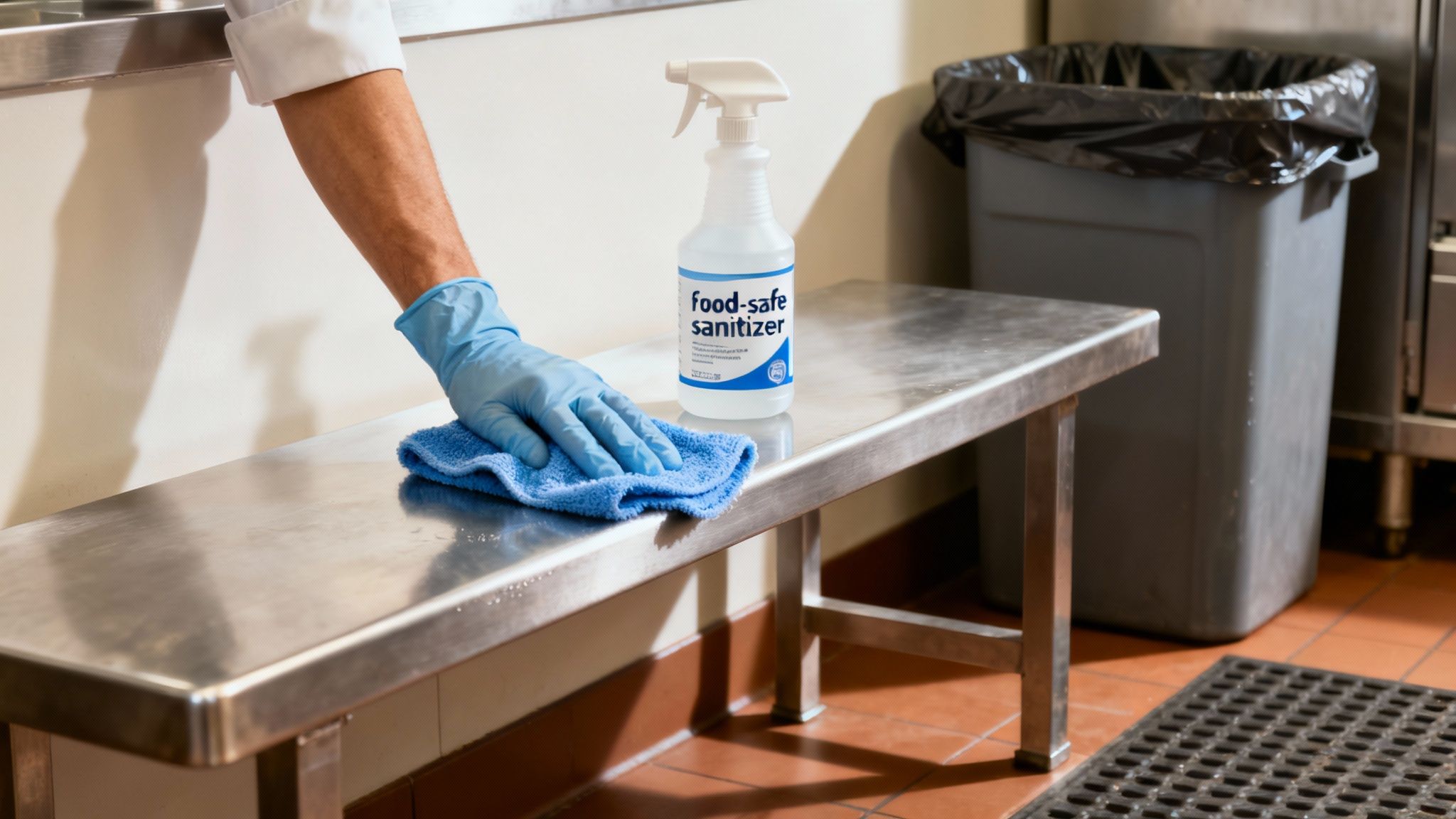
- Sanitise All Food-Contact Surfaces: Every bench, prep station, and chopping board needs to be cleaned and sanitised multiple times throughout the day. This is especially critical when you're switching between jobs, like prepping raw chicken and then moving on to salad ingredients. This isn't just a quick wipe with a damp cloth; you need to use a proper food-safe sanitiser and let it sit for the correct amount of time to actually kill the bacteria.
- Wipe Down High-Touch Points: Think about everything that gets touched constantly. Fridge and oven door handles. POS screens. Light switches and tap handles. They're all hotspots for germs. A quick wipe-down with a sanitising solution throughout the day makes a huge difference.
- Sweep and Mop Floors: A clean floor is a safe floor. At the very least, floors should be swept and mopped thoroughly at the end of every single service. This gets rid of food debris that attracts pests and cleans up any grease or spills that create a serious slip hazard.
- Empty and Clean Bins: Bins need to be emptied as soon as they're full. Not when they're overflowing. At the end of the day, the bins themselves should be wiped down and the liners replaced. It’s a simple step that stops lingering smells and tells pests they're not welcome here.
A busy kitchen generates a surprising amount of rubbish. A constantly overflowing bin is often the first sign that daily cleaning procedures are slipping. It’s a little detail that health inspectors always notice.
Your Weekly Reset for a Deeper Clean
So, you've got the daily tasks dialled in. That's a huge win. But now we need to talk about the weekly reset. This is where you go a layer deeper to tackle the grime that daily wipe-downs just can't reach.
Think of it like this. Daily cleaning is like brushing your teeth… it’s essential maintenance. The weekly clean is like flossing. It gets into all the tricky spots to stop bigger problems from ever starting. This is how you stop that slow, creeping build-up of grease that becomes an absolute nightmare to remove later on.
This weekly rhythm is what truly sets a professionally run kitchen apart from the rest. It shows a commitment to hygiene that goes beyond just what you can see on the surface.
Beyond the Surface Equipment Cleaning
During the week, your equipment gets a constant workout. The weekly reset is your chance to give it some proper attention, getting inside to clean the parts that don't see the light of day during a busy service.
It's time to tackle the insides of your workhorse appliances.
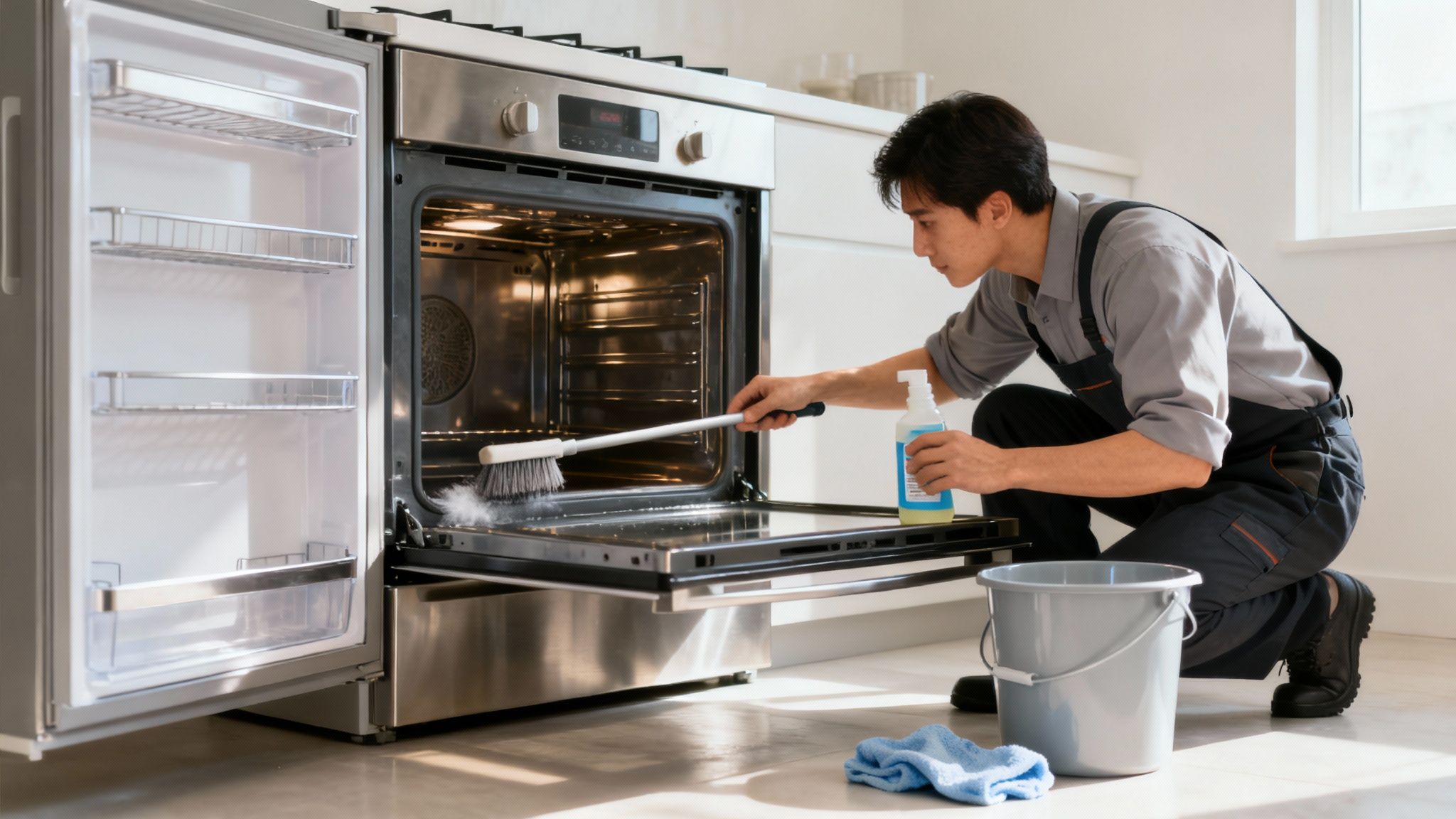
- Ovens and Microwaves: That baked-on carbon and food splatter inside your ovens doesn't just look bad. It can mess with cooking performance and even become a fire hazard. Grab a good quality oven cleaner, let it do its thing, and then scrub away the week's mess. For microwaves, a simple trick is to heat a bowl of water for a minute. The steam loosens any stubborn bits before you wipe.
- Fridges and Cool Rooms: Pull everything off the shelves and give them a thorough wipe-down with a food-safe sanitiser. This is the perfect time to check for any forgotten items lurking at the back and to clean up sticky spills on the bottom. And don't forget the door seals… they're an absolute magnet for grime.
This isn't just about looking clean. It's a compliance issue. The Australian Food Standards code is crystal clear that all surfaces touching food must be free from visible food waste, dirt, and grease. Some gear, like meat slicers, even needs to be cleaned and sanitised every four hours to stay compliant. You can discover more insights about these crucial hygiene regulations to make sure you're always covered.
Deliming and Descaling for Longevity
Hard water is the secret enemy of many kitchen appliances. Over time, it leaves mineral deposits (limescale) that clog up machinery, reduce efficiency, and can lead to expensive breakdowns.
Your weekly schedule is the perfect time to fight back.
Running a descaling cycle on your dishwasher and coffee machines once a week is one of the smartest preventative maintenance tasks you can do. It keeps them running at their best and can seriously extend their lifespan.
A clogged dishwasher nozzle means dirty plates. A scaled-up coffee machine means poor-tasting coffee and an unhappy machine. This simple weekly task saves you so many headaches in the long run.
Tackling Floors and Drains
Daily mopping is great for the surface-level stuff, but the weekly clean is when you give the floors a proper scrub. Get a good deck brush and some quality floor cleaner into the corners, under benches, and along the edges where dirt loves to hide.
And then there's the job no one enjoys… the floor drains.
It’s tempting to ignore them, but a clogged drain is a recipe for disaster. It can cause awful odours, slow drainage, and create a breeding ground for pests. Just pull the covers off, clear out any debris, and give them a good scrub. It’s a five-minute job that prevents massive problems. This is a fundamental part of cleaning a commercial kitchen properly.
Tackling the Full Kitchen Deep Clean
Alright, let's talk about the big one. The deep clean. This is the heavy-duty reset you'll schedule monthly or quarterly to get into every single nook and cranny that’s usually out of sight. And let's be honest, out of mind during the daily rush.
We’re talking about pulling all the equipment away from the walls to clean behind and underneath everything. You'll finally discover what’s really been hiding back there… and it’s not always pretty. I know it sounds like an overwhelming job. Because it absolutely can be.
But if you break it down into a logical sequence, you won't just be pushing dirt from one place to another.
Working From the Top Down
The golden rule of any major clean is to start high and finish low. It’s just common sense, but you’d be surprised how often people forget this in the heat of the moment. There's nothing worse than scrubbing the floors to perfection only to then drop dust and grime all over them from the ceiling.
Start with these high-up areas first:
- Ceilings and Walls: Give them a thorough wipe-down to remove accumulated grease and dust. A long-handled mop with a clean, damp head works wonders here.
- Light Fixtures: Turn them off first, of course. Carefully clean the covers to remove any greasy film. This not only looks better but also improves the brightness in your kitchen.
- Ventilation and Exhaust Hoods: This isn't just a cleaning task; it’s a critical fire safety job you absolutely cannot ignore. Clogged filters are a massive fire risk.
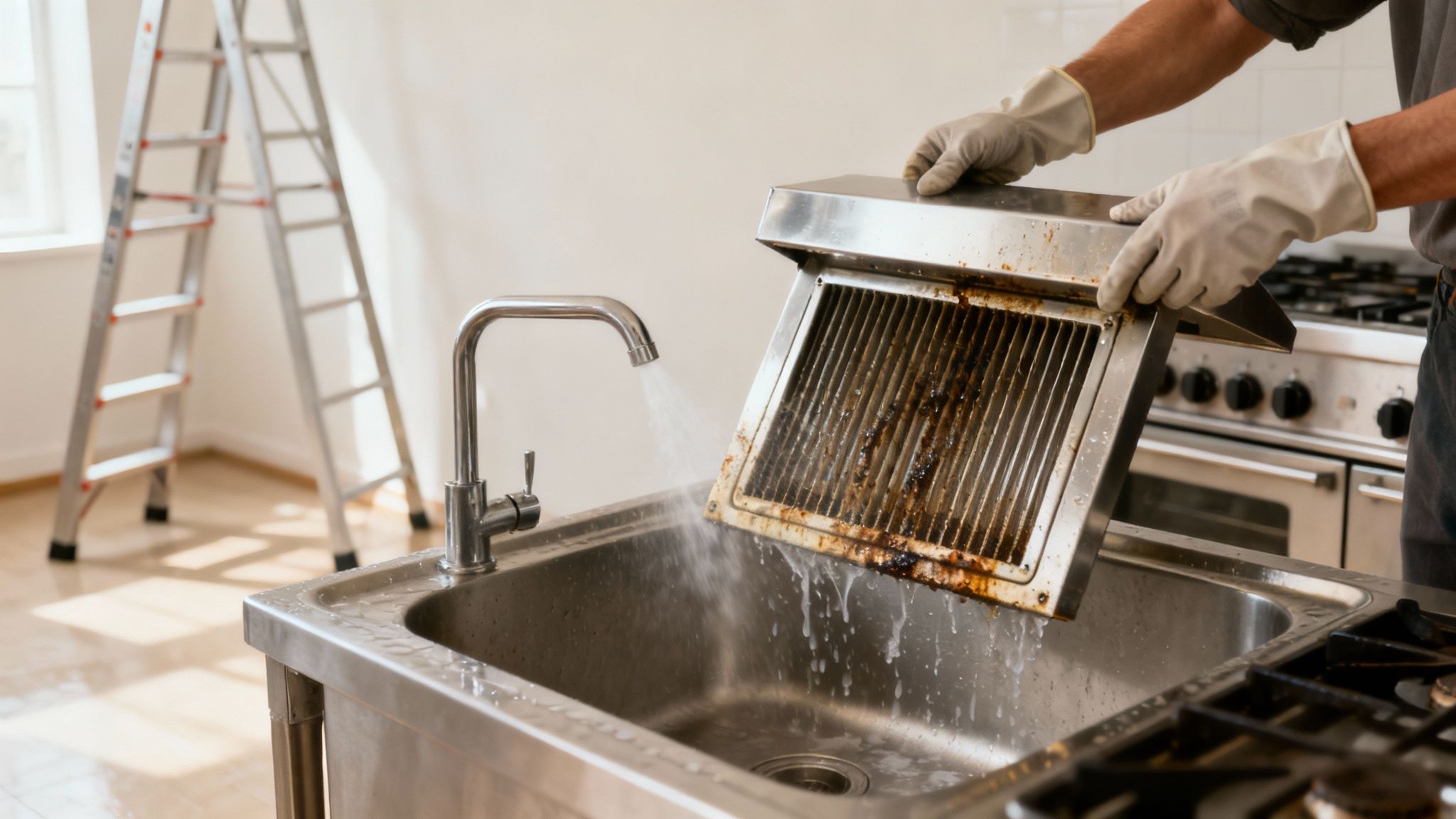
For the exhaust hood filters, you'll need to remove them and soak them in a heavy-duty degreaser before scrubbing them clean. Depending on usage, this might be a weekly job, but the full system needs serious attention during the deep clean.
The Ground-Level Assault
Once the high stuff is done, you can move down to the equipment and floors. This is where the real muscle work comes in. Pull everything you can… fridges, prep tables, ovens… away from the walls.
This is your chance to scrub the walls behind the equipment and degrease the floors underneath. You'll be amazed at what builds up in these hidden spots. It's also a good opportunity to give the equipment itself a thorough going-over, including the sides and back that are normally hidden. For tough jobs like baked-on grease inside oven doors, a bit of specific knowledge goes a long way. If that’s a challenge you’re facing, you can learn how to clean the glass in an oven door with our targeted guide.
This is also the time to tackle one of the most dreaded jobs in any kitchen: the grease trap. While daily practices help, a full clean-out is non-negotiable for preventing blockages, foul odours, and serious plumbing emergencies.
Handling the Grease Trap
Your grease trap is your kitchen's unsung hero. It's silently stopping fats, oils, and grease from destroying your plumbing. Ignoring it is a recipe for disaster. A clogged trap can bring your entire operation to a standstill.
The signs it needs urgent attention are hard to miss. You might notice slow-draining sinks, nasty smells coming from the drains, or even an increase in pests. These are all red flags. A full and proper clean-out involves removing the built-up sludge and getting rid of it correctly according to local regulations.
In-House vs Professional Deep Cleaning
So, the big question is, do you handle this monster task yourself or call in the professionals?
Honestly, it depends on your team, your equipment, and your time. A DIY deep clean can save money, but it takes your staff away from their main jobs. Professionals, on the other hand, come in with specialised gear like high-pressure steam cleaners and the expertise to do the job quickly and efficiently.
Plus, for jobs like exhaust system cleaning and grease trap pump-outs, using a certified professional is often a requirement for compliance and insurance purposes anyway.
Choosing the Right Cleaning Tools for the Job
You can't win the war against kitchen grime without the right gear. Trying to clean a commercial kitchen with the wrong stuff is like trying to prep a five-course meal with a butter knife. It’s just not going to work. This is all about building your cleaning arsenal, and it starts with knowing what your tools actually do.
Let's clear something up right away. Cleaners, sanitisers, and disinfectants are not the same thing. They aren't interchangeable, and grabbing the wrong bottle at the wrong time is a classic food safety mistake I've seen happen far too often.
Cleaners vs Sanitisers What's the Difference
Think of it this way. A cleaner is your first line of attack. Its job is to get rid of the visible mess… the grease, food scraps, and general dirt. It uses soap or detergent to lift all that grime off the surface.
But a clean surface isn't necessarily a safe one. That’s where a sanitiser comes in. Its job is to knock down the number of nasty microorganisms, like bacteria, to a safe level. This step is completely non-negotiable for any surface that ever comes into contact with food.
So, what about a disinfectant? That’s the heavy hitter, brought out to kill almost all viruses and bacteria on a surface. You’d use this for high-risk situations, like after a contamination incident, but it's usually too harsh for your everyday food prep areas. For most of your daily grind, a good cleaner followed by a food-grade sanitiser is exactly what you need.
The Power of Colour Coding
One of the simplest yet most effective systems you can put in place is colour coding your cleaning gear. It’s a brilliant visual shortcut that helps prevent dangerous cross-contamination without anyone having to second-guess themselves. When you’re in the middle of a frantic dinner service, simple is always better.
The system itself is dead easy. You just assign different colours to different tasks or zones.
- Red: Reserved for high-risk areas like raw meat preparation zones.
- Blue: Used for general, low-risk cleaning, like wiping down shelves or dining tables.
- Green: Designated for your fruit and vegetable prep areas.
- Yellow: Often used for cleaning sinks and washroom areas.
This isn't just a "nice-to-have" idea. It’s a fundamental safety process. Trust me, a health inspector will be very happy to see this in action. It shows you’re actively managing risk and have a clear, easy-to-follow system.
Building Your Essential Cleaning Kit
Having the right tools on hand makes every job easier, faster, and more effective. While every kitchen has its quirks, there are some universal essentials you just can't do without. It's a huge industry for a reason. The Australian commercial cleaning market was valued at USD 13.25 billion and employs around 151,300 people. That kind of scale is built on having the right gear. You can discover more about the size of the commercial cleaning industry and see just how vital these services are.
Here’s a checklist to get you started on the right foot:
- Heavy-Duty Brushes: You’ll need a variety here. A solid deck brush for floors, smaller brushes for getting into tight grout lines, and specialised brushes designed for specific equipment.
- Squeegees: A floor squeegee is a must for shifting large amounts of water after mopping, which cuts down drying time. Smaller handheld ones are perfect for getting a streak-free finish on windows and stainless-steel surfaces.
- Scrapers: Absolutely essential for tackling that stubborn, baked-on carbon on flat-top grills and inside ovens.
- Quality Mops and Buckets: Don't cheap out here. Invest in a good quality mop and a two-bucket system… one for your cleaning solution and one for rinsing the dirty mop head. It makes a world of difference.
- Steam Cleaner: This is a fantastic investment for your deep cleans. The high-temperature steam dissolves tough grease and sanitises surfaces without needing harsh chemicals. It’s a total game-changer for filthy tile grout, greasy filters, and those awkward, hard-to-reach corners.
Common Questions About Commercial Kitchen Cleaning
Okay, we’ve covered a lot of ground. From the daily grind to the deep-clean reset. But even with the best system on paper, the real world of cleaning a commercial kitchen always throws a few curveballs.
It's completely normal to have those nagging questions pop up. You know the ones… they keep you wondering if you're really doing enough, or if you're focusing on the right things. So, let's tackle some of the most common ones I hear all the time.
How Often Should I Clean My Exhaust System?
This is a big one, and for good reason. A greasy exhaust system isn't just a hygiene issue. It's a massive fire hazard. The rules here aren't one-size-fits-all, as it really depends on what… and how much… you're cooking.
Take a look at your menu and your service volume.
- Heavy-Use Kitchens: If you're doing a lot of frying, char-grilling, or wok cooking, you need a professional clean every three months. No exceptions. That heavy grease builds up incredibly fast.
- Moderate-Use Kitchens: For places with a more balanced menu, a professional clean every six months is generally the standard.
- Light-Use Kitchens: Think cafes, small bakeries, or places that mostly steam or boil. In these cases, once a year might be enough.
But here’s the crucial bit. Always, always double-check with your local council and your insurance provider. They often have their own specific compliance requirements you need to meet, and you don't want to get caught out.
What’s the Deal with My Stubborn Grease Trap?
Ah, the grease trap. Nobody’s favourite topic, but ignore it at your own risk. The absolute key here is regular maintenance to stop it from becoming a full-blown, business-halting emergency. Trust me, it's far easier to manage it than to fix a disaster.
Your team’s main job is to stop pouring hot oil or grease directly down the drain. It seems obvious, but during a chaotic service, it happens. This simple habit alone stops a thick, heavy sludge from building up too quickly.
As for cleaning it out completely, this is a job for the pros. The trap needs to be pumped out by a licensed professional, typically every one to three months, depending on its size and your kitchen's output. Trying to DIY a full pump-out is messy, hazardous, and you could easily find yourself in hot water for violating local waste disposal regulations.
A clogged or overflowing grease trap is one of those problems that can bring a kitchen to a complete standstill. It's not just a plumbing issue; it's a health and regulatory risk that can lead to foul odours, backups, and even forced closures.
What Mistakes Cause Health Code Violations?
This is the question that keeps managers up at night. Health inspectors are trained to spot issues that staff might overlook during a busy shift, and they tend to focus on a few key areas.
One of the biggest mistakes is improper sanitising. A bench might look clean after a quick wipe-down, but if it hasn't been treated with the right food-safe sanitiser for the correct contact time, it's still a breeding ground for bacteria. This often happens when staff are rushing and just grab a dirty, overused cloth.
Another major red flag is cross-contamination. Using the same chopping board for raw chicken and then salad greens without a full wash and sanitise in between is a classic… and very dangerous… mistake that inspectors look for.
Finally, inspectors always check temperature control. This means your fridges, cool rooms, and food warmers not only need to be at the correct temperature but must also be clean and well-maintained to function properly. If you want to dive deeper into the broader world of keeping professional spaces pristine, you can learn more about what commercial cleaning involves in our detailed guide.
Keeping your kitchen spotless is a huge task, but you don't have to manage it all alone. For a consistently high standard of cleanliness that meets every compliance requirement, That Cleaning Crew provides expert, reliable deep cleaning services tailored to your kitchen's unique needs. Find out how we can help you at https://www.thatcleaningcrew.com.au.