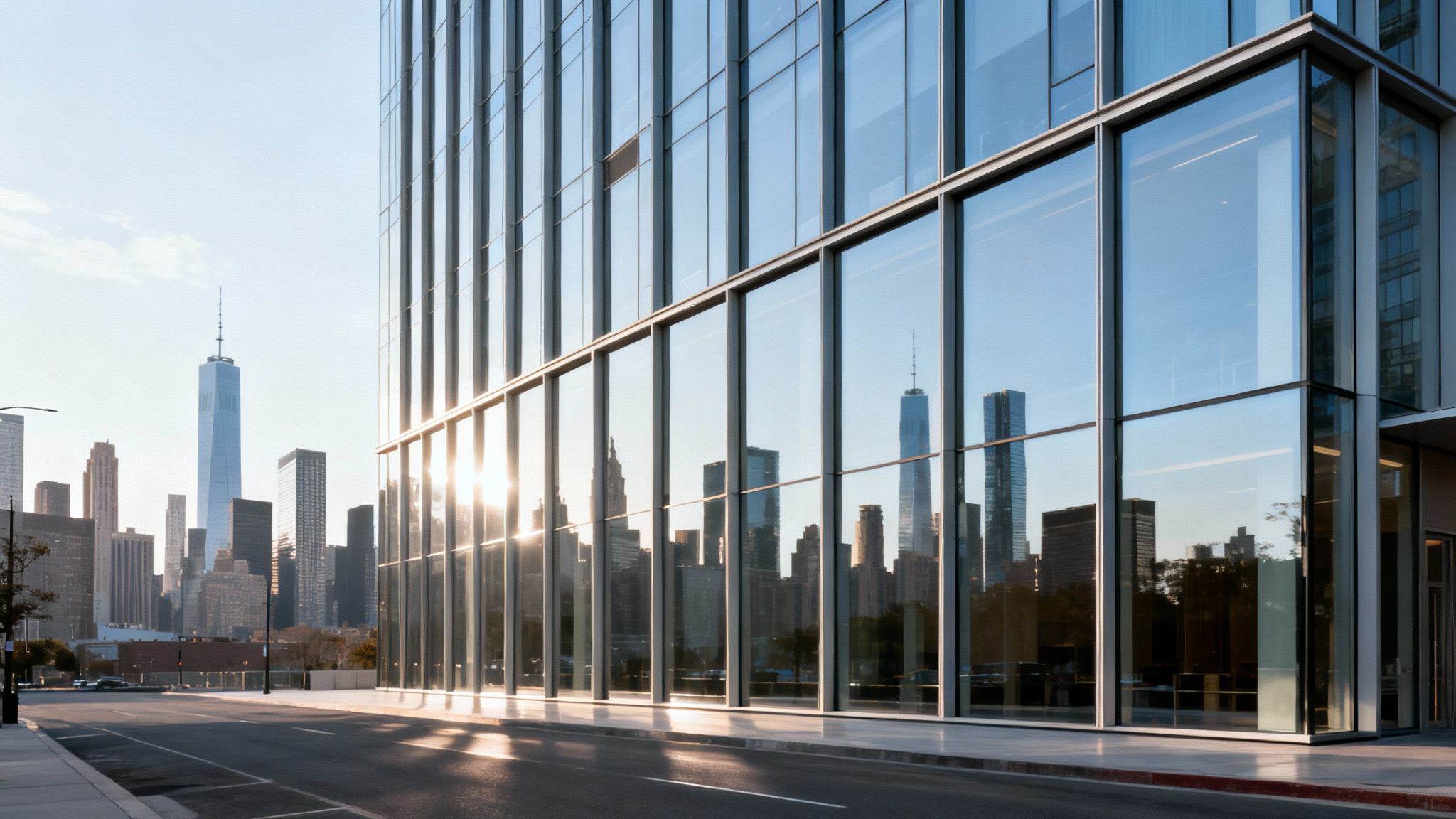
Let's be honest. Nothing quite beats the look of sparkling clean windows on a high-rise. They catch the city skyline just right and send a pretty clear message about your building’s standards before anyone even steps inside. It’s a first impression that speaks volumes.
Why Sparkling Windows Are a Building's Best Asset
But it goes a lot deeper than just looks, doesn't it? As a facilities or building manager, you know that cleaning high rise windows is a critical part of building maintenance, asset protection, and just keeping your tenants happy.
From the street, it all looks pretty simple… glass, steel, and a great view. But when you’re the one responsible for it all, you quickly learn it’s a complex puzzle of safety, logistics, and trying to manage the costs.
This guide is designed to help you put all those pieces together. We’re going to break it all down, step by step.
No jargon, just straight talk. We’ll walk through the different ways the pros get the job done, what safety really looks like from 30 storeys up, and how you can make sense of the costs involved.
We’ll cover the key areas you really need to know about, including:
- The main ways we access and clean windows at height.
- Critical safety and compliance standards… the ones that really matter here in Australia.
- The real factors that actually drive the final price you see on a quote.
By the end of this, you’ll have the confidence to not just hire a window cleaning service, but to choose the right one that fits your building’s unique needs.
The Different Ways to Clean Windows at Height
So, how does it all actually get done? It’s definitely not just someone with a squeegee and a healthy dose of courage. Cleaning high rise windows is a specialised skill that relies on some seriously impressive techniques and equipment.
Think of it like choosing the right tool for a very, very tall job. Let's walk through the main methods you'll come across so you can understand what might work best for your building.
Classic Techniques and Modern Solutions
The classic method you probably picture in your head is Rope Access, or abseiling. Technicians use industrial ropes to descend the building’s face, which gives them incredible flexibility to get into every single nook and cranny. This is a total game-changer for buildings with complex architecture, odd angles, or those really difficult-to-reach spots.
Then you have the Building Maintenance Unit (BMU). This is that clever cradle you see gliding up and down the side of modern skyscrapers. For many newer, taller buildings, a BMU is the best and, sometimes, the only practical option out there.
For the not-so-high 'high rise' buildings, Elevated Work Platforms (EWPs) like cherry pickers and scissor lifts are often the go-to solution. They provide a stable, secure base for cleaners to work from, making them perfect for mid-rise structures.
And we can't forget the incredible reach of Water-Fed Poles. This is a ground-based technique that's much safer and surprisingly effective for the lower levels of a tall building, often reaching up several storeys high without anyone ever leaving the ground.
Each method has its place, and knowing the core differences is key to making a smart decision for your property. To give you a clearer picture, here's a quick comparison.
Comparing High Rise Window Cleaning Methods
This table breaks down the common access methods, highlighting where each one shines and what limitations you need to keep in mind.
| Method | Best For | Key Advantage | Main Limitation |
|---|---|---|---|
| Rope Access (Abseiling) | Complex building facades, skyscrapers, hard-to-reach areas | Unmatched flexibility and access to any part of the exterior | Slower than other methods; requires certified technicians |
| Building Maintenance Unit (BMU) | Modern, very tall buildings with purpose-built systems | Efficient and safe for routine cleaning on uniform facades | Extremely high initial cost; relies on existing building infrastructure |
| Elevated Work Platform (EWP) | Low-to-mid-rise buildings (up to ~20 storeys) | Stable working platform and quick setup on suitable ground | Limited by height and ground accessibility (uneven terrain) |
| Water-Fed Poles | Ground levels and lower floors (up to ~6 storeys) | The safest method; cost-effective and fast for lower sections | Limited reach; less effective on heavily soiled windows |
Choosing the right approach often involves combining these methods to get the most efficient and thorough clean. For a deeper look at these techniques, you can explore our detailed guide on high rise building window cleaning.
Getting Safety and Compliance Right in Australia
Let’s be really clear about this… this is the part of the job where there are absolutely no shortcuts. When you have technicians suspended hundreds of metres in the air, safety isn't just a word in a policy document. It’s everything.
Every professional high-rise cleaning company in Australia must operate under strict regulations, most notably the Work Health and Safety (WHS) Act. This isn't just a suggestion. It’s a legal requirement. A huge part of this is creating a detailed Safe Work Method Statement (SWMS) before any work even begins. You can think of it as the operational playbook for that specific job, designed to keep everyone safe from start to finish.
This is a physically demanding and high-stakes job. There are roughly 2,900 window cleaners across Australia, and their work demands constant vigilance and highly specialised gear. If you're curious, you can find more insights into the profession on the Jobs and Skills Australia website.
The Pillars of a Safe Operation
Understanding these elements isn't optional… it’s how you protect your building, your tenants, and the workers themselves. A massive part of this comes down to having the right working at height safety equipment, from harnesses and ropes to carabiners and descent devices.
You should also look for technicians holding certifications like IRATA (Industrial Rope Access Trade Association). It’s the global gold standard for a reason. Don’t be afraid to ask a potential contractor about their safety record or to see their public liability insurance. That's not being difficult; it's being responsible.
This decision tree helps you see which cleaning method is typically chosen based on a building's height.
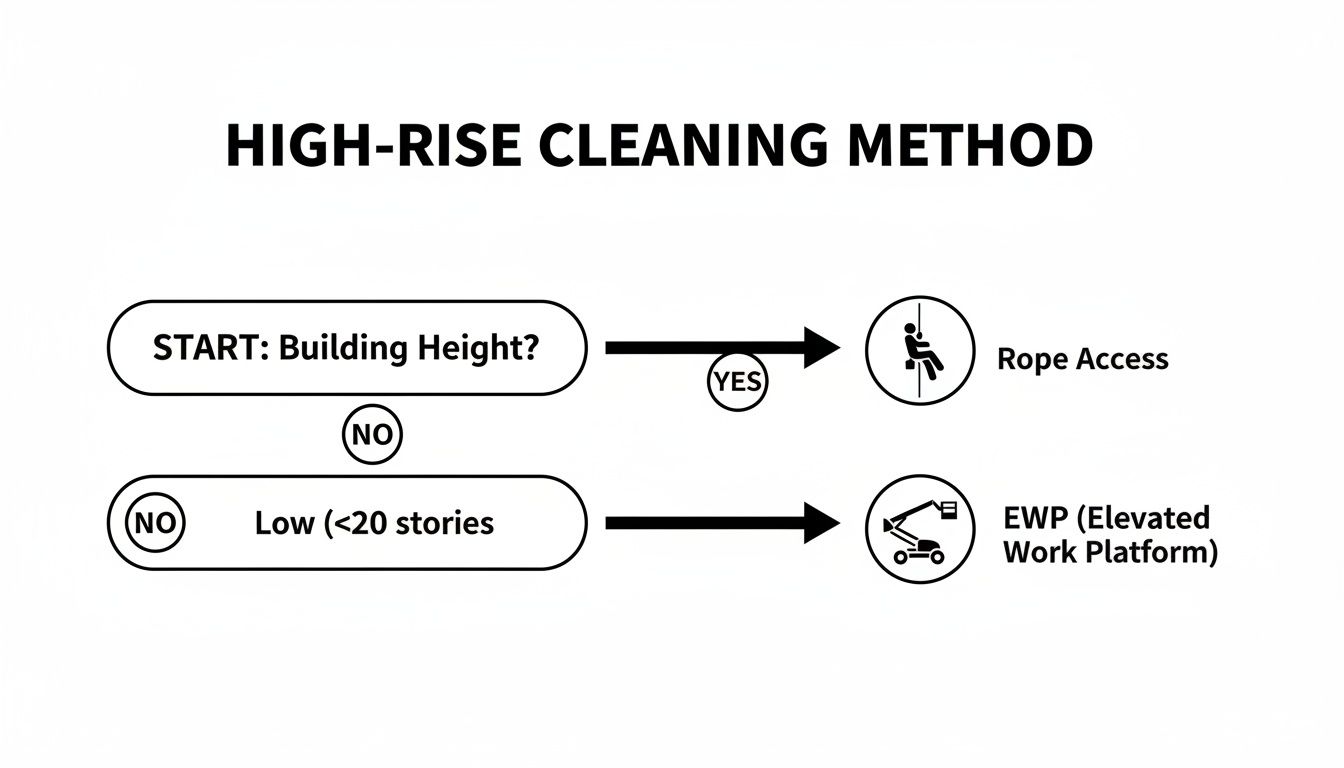
Pretty much, the taller and more architecturally complex the building is, the more likely it is that rope access becomes the safest and most practical choice.
What Goes Into the Cost of High-Rise Window Cleaning?
So, let's talk money. Why does one quote for cleaning a high-rise seem worlds apart from another? It’s never a number just pulled from a hat… it’s a careful calculation based on a few crucial, real-world factors.
The biggest cost driver, almost every time, is accessibility. It's like this: painting a smooth, flat, ground-floor wall is pretty straightforward. Now, imagine painting a ceiling with exposed beams and awkward angles, ten stories up. A building with overhangs that demands complex rope access work will naturally cost more than a simple, flat glass facade where our team can work efficiently.
Of course, the obvious factors play a huge part too. The building's overall height and the total square meterage of glass are fundamental to any estimate. Simple. More glass and more height mean more time and more resources.
The Factors You Might Not Expect
But what about the things that aren't so obvious? The level of soiling is a big one. A first-time clean after construction, where we’re dealing with stubborn paint, silicone, and building debris, is a much bigger job than a routine quarterly maintenance clean. It's the difference between a quick tidy-up and a full-on deep clean.
The specific equipment needed also shapes the final price. A job requiring a specialised Elevated Work Platform (EWP) will have different cost implications than one that can use an existing Building Maintenance Unit (BMU). For a more detailed breakdown of these variables, you can explore the elements of a typical window cleaning service cost.
Finally, there are the 'hidden' but non-negotiable costs of safety and compliance. That comprehensive public liability insurance, WorkCover, and the continuous, rigorous training our technicians undergo aren't free. But honestly, it’s the most valuable part of any professional quote you'll ever receive. It’s peace of mind, built right in.
How to Choose the Right Window Cleaning Contractor
Choosing a partner for cleaning your high-rise windows feels like a big decision… because it is. You're not just hiring someone to clean glass; you're entrusting them with the safety, integrity, and presentation of your entire asset. So, where do you even start?
This is about more than just picking the cheapest quote off a list. A true professional partner will insist on a thorough site inspection before they even think about giving you a price. This is a great sign. It shows they’re serious about understanding your building's unique challenges, access points, and potential hazards.
After that, they should give you a detailed, easy-to-understand scope of works. No vague promises. Just a clear, transparent plan of action.
Your Contractor Vetting Checklist
When you're comparing your options, make sure you tick these absolute must-have boxes:
- Comprehensive Insurance: Ask to see their current certificates for public liability and workers' compensation. Don't just take their word for it. This is your first line of defence.
- Safety Certifications: Look for industry-recognised training, like IRATA for rope access technicians, and don't be shy about asking about their safety record. A good contractor will be proud to share it.
- Proven Experience: Request case studies or references from buildings similar to yours. Seeing their work on a comparable property is pure gold and tells you they can handle the specifics of your site.
The Australian commercial cleaning market is a huge sector, valued at around $14 billion a year. With that much activity, it really pays to partner with established, reputable professionals. You can discover more insights about the Australian window cleaning industry to get a better feel for the landscape.
Choosing a reliable contractor is crucial, and having a solid agreement in place is just as important. For guidance on structuring these partnerships, take a look at our tips on managing commercial cleaning contracts.
Creating a Smart Cleaning and Maintenance Schedule
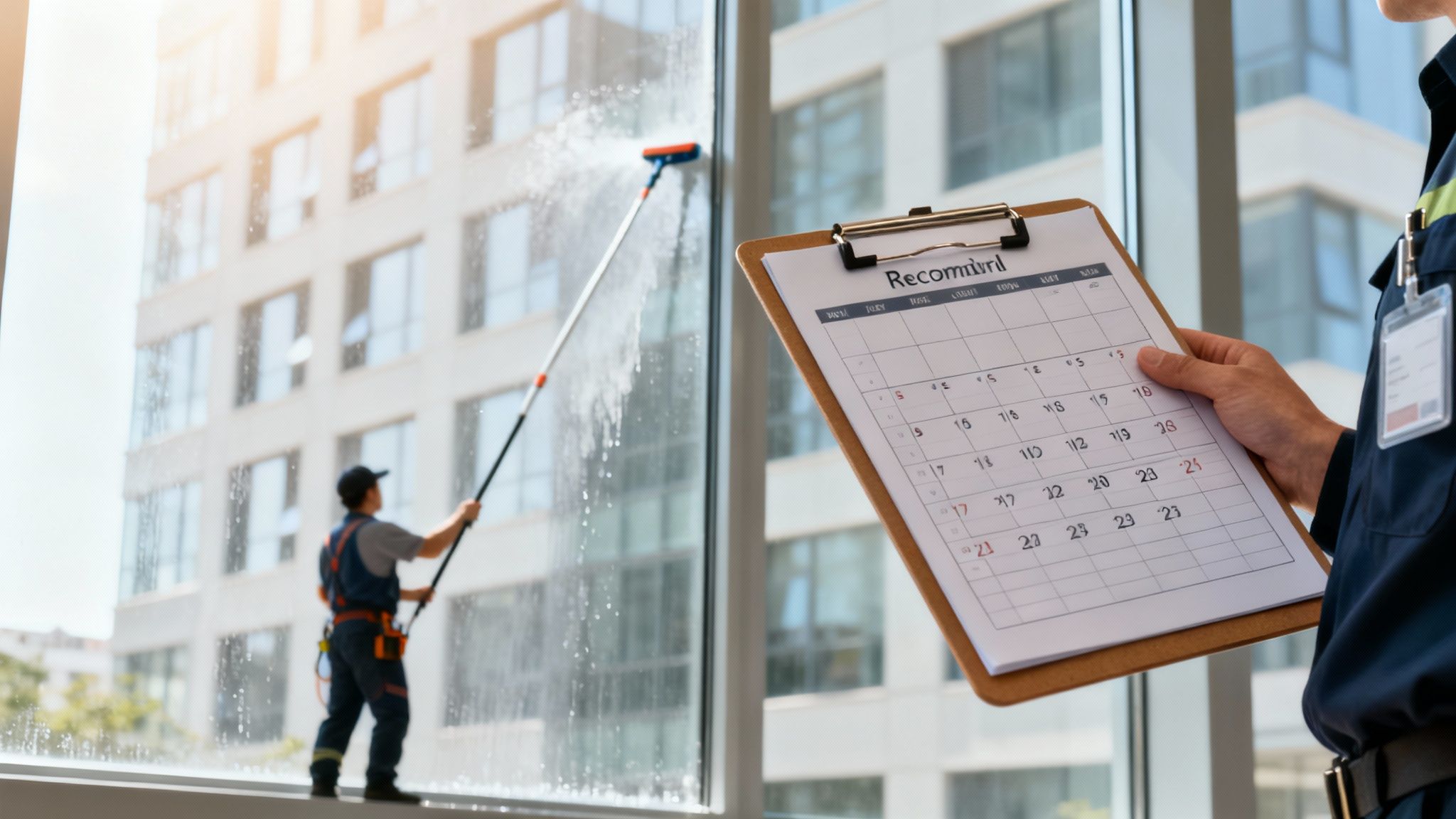
A one-off clean is great, but the real magic happens when you have a consistent plan. Keeping high-rise windows sparkling isn't just about looking good; it’s preventative care for your building's biggest asset.
Think of it like a regular health check-up for your building's facade. Consistent cleaning stops corrosive pollutants, grime, and hard water stains from building up and permanently etching the glass over time. It’s a small investment that protects a much, much larger one.
Finding Your Rhythm
So, how often is enough? It really depends. A tower right next to a busy motorway is going to need more attention than one tucked away in a quieter, suburban spot. Your building's location and exposure to the elements are the biggest clues.
Setting up a recurring service schedule is always the smartest move. Not only does it often come with better pricing, but more importantly, it ensures your building always looks its best without you having to constantly chase it up. For businesses providing these services, understanding the importance of effective scheduling is key to efficiency and client satisfaction.
This proactive approach is what’s driving the industry forward. The window cleaning sector in Australia is projected to reach USD 64.92 million by 2033, and that growth is fuelled by the continuous demand from high-rise buildings that need specialised, regular care.
At the end of the day, a good plan turns window cleaning from a reactive chore into a seamless part of your building management strategy.
Still Have Questions? Let's Clear a Few Things Up
We've gone through a lot, but it's natural to still have a few questions floating around. When it comes to something as complex as cleaning a high-rise, the details matter. Let’s tackle some of the most common queries we hear from facility managers just like you.
It's all about making sure you have total clarity.
How often do high-rise windows actually need cleaning?
As a solid rule of thumb, a full exterior clean twice a year is usually enough for most city buildings. However, if your building is right on the coast battling salt spray or next to a busy motorway kicking up grime, you’ll likely need it done three or four times a year to stop that build-up from becoming a bigger problem. A professional crew can give you a proper assessment based on your specific location and conditions.
What happens if the weather turns bad on the scheduled day?
Safety is non-negotiable. No reputable company will ever work in high winds, heavy rain, or lightning. A professional team will be watching the forecast closely, ready to pause work if conditions become unsafe. They'll simply reschedule for the next suitable day to get the job done right, and safely.
Ready to make sure your building always looks its absolute best with a reliable, professional partner?
Contact That Cleaning Crew for a free, no-obligation on-site quote. Let's work together to create a cleaning plan that fits your building perfectly. Find out more at https://www.thatcleaningcrew.com.au.