Medical centre cleaning is so much more than a simple tidy-up. It's a critical, science-backed process that directly impacts the safety of your patients and staff. Think of it as the first line of defence in infection control… creating a space that isn’t just visibly clean but fundamentally safe for everyone who walks through your doors.
Why Medical Centre Cleaning Is About More Than Just Appearances
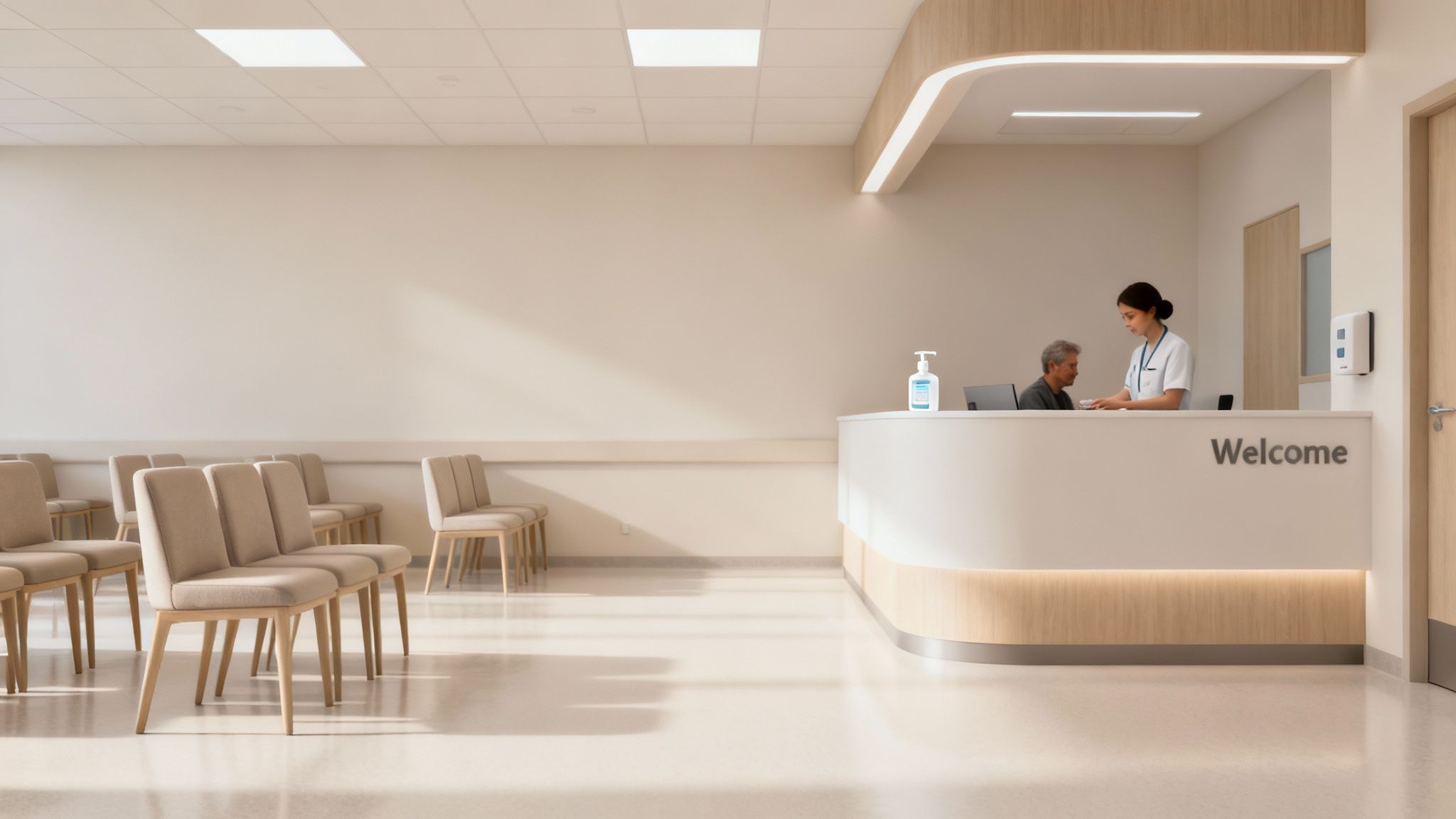
The word ‘clean’ means something entirely different in a medical clinic. It goes so much deeper than just looking tidy, doesn't it? Proper cleaning acts as an invisible shield. A non-negotiable process that protects everyone, from vulnerable patients to your dedicated staff.
When it's done right, medical centre cleaning is your single most effective strategy for preventing infections. We get it. You're juggling patient care, staff rosters, and a million other priorities. Worrying about whether the cleaning is truly up to standard shouldn't be another weight on your shoulders.
The Real Impact of a Truly Clean Space
A professionally cleaned medical facility does more than just shine. It actively contributes to better health outcomes and builds a powerful foundation of trust. Think about it… when a patient enters your clinic, their first impression sets the tone for their entire experience. A spotless, well-maintained environment immediately signals professionalism, care, and above all, safety.
This isn't just a feeling. It’s backed by some serious data. The risk of healthcare-associated infections (HAIs) is a constant concern. Shockingly, in Australian public hospitals, about one in 10 adult inpatients acquires an infection during their stay, leading to over 165,000 cases annually.
But targeted cleaning protocols have proven to be a powerful solution. One groundbreaking study showed that a bundled approach—combining dedicated cleaning hours, staff education, and regular audits—led to a remarkable 34.5% reduction in these infections. You can explore the full findings of this study on combating HAIs for yourself.
This shows that a methodical, professional approach to cleaning isn’t just a ‘nice-to-have’ service. It's a core component of patient care that delivers measurable, life-saving results. It’s about creating a space that feels safe because it is safe.
How Medical Centre Cleaning Differs from Standard Office Cleaning
It’s easy to assume cleaning is cleaning, but the gap between a standard office and a medical facility is massive. Here’s a quick comparison that highlights just how different the requirements are.
| Feature | Standard Office Cleaning | Specialised Medical Centre Cleaning |
|---|---|---|
| Primary Goal | Maintain appearance and general hygiene. | Prevent cross-contamination and control infection. |
| Cleaning Products | General-purpose cleaners and sanitisers. | Hospital-grade, TGA-approved disinfectants. |
| Key Areas | Desks, kitchens, bathrooms, floors. | High-touch surfaces, waiting rooms, clinical areas, sterile zones. |
| Staff Training | Basic cleaning techniques. | Infection control protocols, PPE usage, biohazard handling. |
| Regulations | General Work Health & Safety (WHS). | Strict adherence to RACGP Standards and NSQHS Standards. |
| Frequency | Daily or weekly routine cleans. | High-frequency cleaning of critical areas, risk-based schedules. |
| Verification | Visual checks. | Audits, surface testing, and detailed quality assurance. |
As you can see, medical centre cleaning operates on a completely different level. The stakes are infinitely higher.
Building Trust from the Ground Up
Ultimately, the goal is to create a space that doesn't just look clean but feels fundamentally trustworthy. Every disinfected doorknob, every sanitised surface, and every freshly cleaned floor contributes to that feeling.
It tells your patients and your team that their wellbeing is the absolute top priority. This is the real purpose of specialised medical centre cleaning—it’s proactive healthcare in action. Safeguarding your community one clean surface at a time. And we're here to help you understand what that looks like in practice.
The Fundamentals of Infection Control Cleaning
So, where do we actually start with stopping germs from spreading? It all begins with a simple, but absolutely critical, idea. The words ‘cleaning’ and ‘disinfecting’ aren't just different ways of saying the same thing. They're distinct steps in a process. And the order matters. A lot.
Think of it like preparing a wall for a fresh coat of paint. You wouldn't just slap new paint over old, peeling flakes and dirt, would you? Of course not. You have to prep the surface first by cleaning it down.
Cleaning is that essential first step. It’s the physical act of using detergent and water to remove visible dirt, dust, and grime. This is about clearing the battlefield. It gets rid of the muck where germs love to hide and multiply.
But cleaning alone doesn't kill the microscopic threats. That’s where disinfecting comes in. This is the second step, where a specific, hospital-grade chemical is used to eliminate pathogens like bacteria and viruses. Here's the catch… you can't properly disinfect a dirty surface. The disinfectant can't reach and kill the germs if they're hiding under a layer of grime. This is why cleaning always comes first.
A Smarter Way to Clean Your Medical Centre
Okay, so we know the process. But does every single surface in your clinic need the same level of military-grade attention? Probably not. Your administrative office floor doesn't carry the same risk as an examination table where patients are treated. It just makes sense, right?
This is where a risk-based approach comes into play. It’s all about being smart. Focusing the most intensive effort where the risk of transmission is highest. Professional medical centre cleaning services divide a facility into zones based on this exact principle.
This strategic zoning ensures that high-risk, high-touch areas receive the specialised, frequent attention they demand, while lower-risk areas are maintained efficiently. It’s not about cleaning less; it’s about cleaning with precision and purpose.
Understanding Risk Zones
Let's break down what these zones typically look like. It’s a pretty straightforward concept once you see it in action.
-
High-Risk Zones: These are the critical areas where direct patient contact happens. We're talking about treatment rooms, consultation rooms, and sterile environments. Think examination beds, medical equipment, and countertops where samples are handled. These spots need meticulous cleaning and disinfecting after every use or, at a minimum, several times a day. Dealing with spills or sensitive situations in these settings often requires understanding when to call in professional biohazard clean up services.
-
Medium-Risk Zones: This category includes high-traffic, high-touch areas that lots of people use throughout the day. Your waiting room, reception desk, patient bathrooms, and door handles all fall into this group. They are hotspots for germs and a major focus for preventing the spread of illness. You can find more practical advice on this in our guide explaining how to prevent cross-contamination in these shared spaces.
-
Low-Risk Zones: Finally, we have areas with less foot traffic and minimal patient contact. This includes administrative offices, staff break rooms, and storage corridors. While they still need regular and thorough cleaning, the frequency and intensity can be adjusted compared to the high-risk zones.
By creating and following a plan based on these zones, a medical centre cleaning protocol becomes incredibly effective. It ensures that no corner is overlooked. That the most vulnerable points in your facility are constantly protected. It’s a targeted strategy that moves beyond a simple checklist and into a truly proactive system for patient safety.
Developing a Robust Medical Centre Cleaning Protocol
Right, we've covered the 'why' and the 'what'. Now, let's get into the 'how'. This is where theory gets real, fast. A solid medical centre cleaning plan is like a recipe for a safe environment… it needs clear, step-by-step instructions that leave absolutely no room for guesswork.
Think of it as a blueprint for a repeatable, reliable, and compliant cleaning system. It’s not about just handing someone a mop and telling them to get to it. It’s a carefully built process designed to protect people.
This process follows a logical flow. You start with removing physical dirt and grime, then move to eliminating dangerous pathogens, all while keeping different clinic zones separate to stop germs in their tracks.
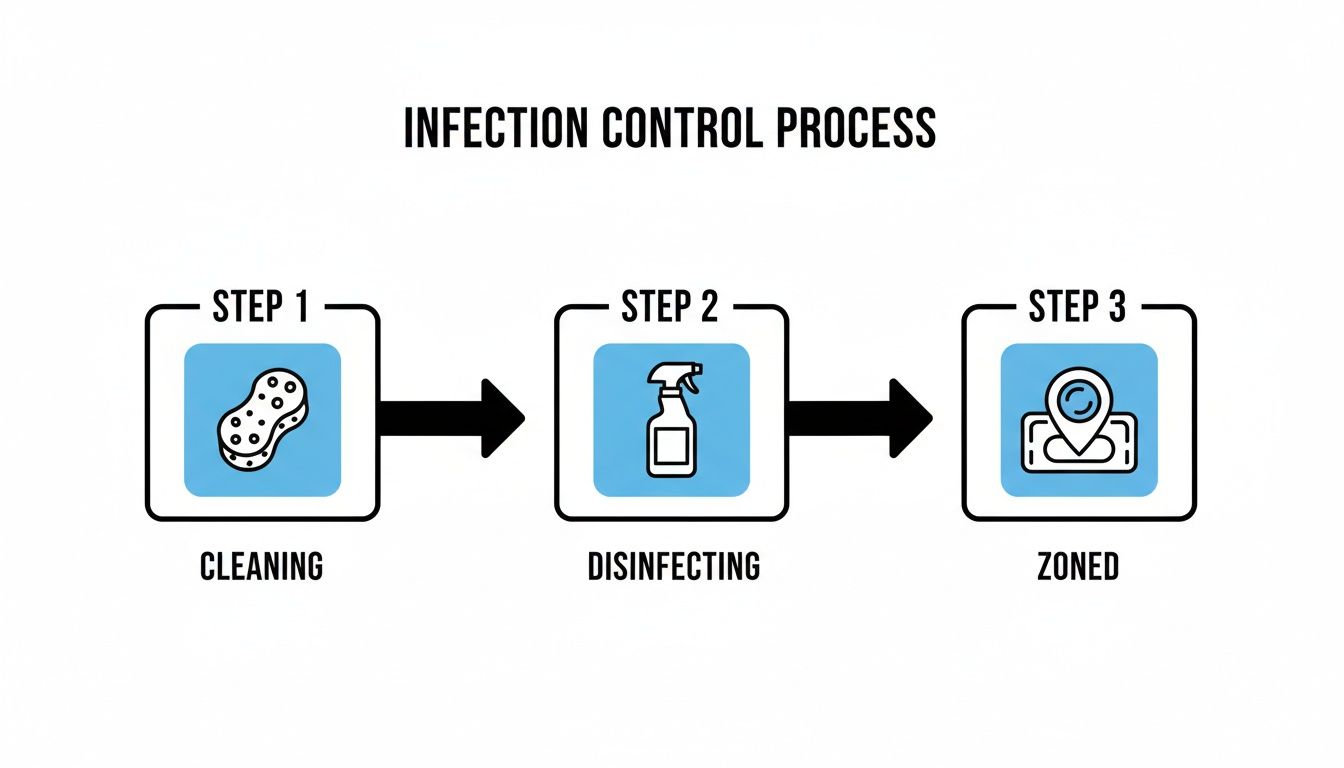
This visual breaks down the crucial flow from cleaning to disinfecting. And it highlights just how important a zoned approach is for keeping everything contained.
Starting with the Right Tools for the Job
You wouldn't send a surgeon into theatre with a blunt scalpel, would you? The same idea applies here. Your cleaning team needs the right gear to do their job safely and effectively.
First up is Personal Protective Equipment (PPE). This isn't optional. It’s a non-negotiable part of the uniform that protects your team from both chemical exposure and infectious agents.
What this typically includes:
- Gloves: To shield hands from cleaning chemicals and biological contaminants. They must be changed between tasks and different zones to prevent cross-contamination.
- Masks and eye protection: Essential when there's any risk of splashes from disinfectants or bodily fluids.
- Gowns or aprons: To protect clothing and skin from spills and contamination.
Then there are the chemicals themselves. You can’t just grab any old spray from the supermarket shelf.
For a medical environment, you need Therapeutic Goods Administration (TGA) approved, hospital-grade disinfectants. This approval means they have been scientifically tested and proven to kill the very pathogens you’re trying to eliminate.
The Operational Flow: Cleaning Step by Step
With the right gear sorted, the next step is mapping out the entire operational flow. This ensures consistency, no matter who is on shift. A clear, documented process is your best defence against human error, covering everything from the moment the team arrives to the second they leave.
To keep a robust cleaning protocol running smoothly, especially across various shifts, many facilities use communication software tailored for healthcare companies. These platforms help streamline instructions and keep everyone on the same page.
A great way to structure the workflow is by creating a detailed checklist. It breaks down a huge job into small, manageable tasks. Our own team uses an incredibly detailed version of this, and you can get a sense of what's involved by looking at a solid commercial cleaning checklist that covers all the bases.
Handling Clinical Waste and Soiled Linen
This is one area where medical centre cleaning is worlds apart from regular commercial cleaning. You can't just toss everything into the same bin. The safe handling of clinical waste and soiled linen is governed by strict regulations to prevent injury and the spread of infection. It's serious business.
Key Protocols for Waste Handling:
- Segregation: Waste has to be separated right at the source. Sharps go into designated puncture-proof containers, while contaminated items (like used dressings or swabs) go into specially marked biohazard bags.
- Containment: All clinical waste bags must be securely tied and handled by the neck to avoid contact with the contents. They should never be filled to the brim.
- Storage and Disposal: This waste needs to be stored in a secure, designated area away from patient and public access before being collected by a licensed disposal company.
The same level of care applies to soiled linen. It should be handled as little as possible, placed directly into designated leak-proof bags, and transported separately from clean linen to prevent any chance of cross-contamination. This systematic approach is fundamental to running a safe and compliant medical facility.
Using Audits And Quality Assurance to Maintain Standards
You’ve got a fantastic cleaning protocol in place. That’s a huge step. But how do you really know it’s working, day in and day out? You can't just cross your fingers and hope for the best. Not when patient safety is on the line.
This is where audits and quality assurance come in. It might sound a bit corporate and stiff, but it’s really just about checking your own work to make sure standards never, ever slip. It’s about creating a system of accountability that you can trust.
For a long time, this meant paper tick-sheets tacked to a wall. You know the ones… often filled out at the start of a shift before a single surface has even been wiped. It’s an old system that offers a false sense of security rather than genuine oversight. Thankfully, things have changed.
Moving Beyond the Paper Checklist
The modern approach to medical centre cleaning is all about data. It’s about using digital tools to provide real, hard evidence of what’s been done. Imagine getting a report that shows you exactly what was cleaned, when it was done, and who completed the task.
This isn't about catching people out or micromanaging. It’s so much more useful than that. It’s about spotting patterns, identifying areas for improvement, and having concrete proof that your medical centre is compliant and safe. This data-driven approach gives you complete transparency and, most importantly, peace of mind.
Digital metrics are changing the game, replacing those unreliable paper trails with real-time data. Digital cleaning run sheets can capture exactly what’s cleaned, when it happened, and even how long each task took. This reveals true completion percentages and helps pinpoint where extra attention or staff training might be needed, moving far beyond that traditional, tick-box sense of completion. You can discover more insights about harnessing digital metrics to see how powerful this shift can be.
What Does a Good Audit Look Like?
A quality assurance process is more than just a quick glance around the waiting room. A professional cleaning partner will have a structured system in place.
It often involves a mix of scheduled and unscheduled inspections. An auditor might use a specific checklist, looking at key risk areas and high-touch surfaces to ensure they meet the agreed-upon standard.
Here’s what a typical audit might cover:
- Visual Inspection: Checking for visible cleanliness, dust, and grime in all zones.
- Process Review: Observing the cleaning team to ensure they are following the correct protocols, like using the right PPE and avoiding cross-contamination.
- Documentation Check: Reviewing digital logs to confirm that all scheduled tasks have been completed and signed off.
- Feedback Loop: Discussing findings with the practice manager and the cleaning team to address any issues and celebrate successes.
This isn't a test with a pass or fail grade. It's a collaborative process designed to maintain the highest possible standards. It’s about continuous improvement, ensuring that the safety shield around your patients and staff remains strong and intact.
How to Choose the Right Professional Cleaning Partner
Choosing a cleaning company for your medical centre is a pretty big decision, isn't it? You’re not just hiring someone to mop the floors. You're entrusting them with the health and safety of your patients and your staff. That’s a massive responsibility.
So, how do you sort through the options and find a true partner? It starts with asking the right questions. The kind that go much deeper than just the price. You need to find a team that genuinely understands the unique rhythm and demands of a healthcare environment.
The Non-Negotiable Checklist for Vetting a Cleaning Partner
When you're meeting with a potential provider, you're essentially conducting an interview. Their answers will tell you everything you need to know about their experience and their commitment to safety.
Here are the critical questions you should be asking:
- Can you show me your specific experience in healthcare settings? Look for demonstrable proof, like case studies or references from other clinics similar to yours. General commercial cleaning experience just doesn't cut it here.
- What does your staff training program involve? They should be able to clearly explain how they train their team on infection control, PPE use, and the handling of clinical waste. Vague answers are a bad sign.
- What cleaning products do you use? The answer must include TGA-approved, hospital-grade disinfectants. If they can't confirm this, it's a major red flag and you should walk away.
- Are you fully insured and certified? Ask to see their public liability insurance and any relevant certifications. This protects you and shows they operate professionally.
This isn't just about ticking boxes. It’s about finding a partner who can give you confident, detailed answers that prove they don't just talk the talk. They need to live and breathe the high standards required for medical centre cleaning.
Beyond the Basics: What a True Partnership Looks Like
A great cleaning partner does more than just follow a list. They become an extension of your own team. They understand the need for flexibility, like working around patient hours or adjusting schedules to minimise disruption.
They also know how to respond to the unexpected. What's their protocol for an emergency bio-spill? A sudden outbreak? A truly professional service will have clear, pre-defined procedures for these situations, so you know they can handle the pressure calmly and effectively.
The commercial cleaning industry in Australia is growing fast. The market is projected to jump from $2.38 billion in 2023 to over $4.34 billion by 2032. This boom is largely driven by the intense demand for hygiene in healthcare, reflecting a new awareness of just how critical strict compliance is. This growth means more choices, but it also makes it more important than ever to pick a provider who is serious about healthcare compliance.
The Importance of Local Expertise
Finding a company with deep expertise in local standards, whether you're in Sydney, Newcastle, or the Hunter Valley, can make a huge difference. They’ll be familiar with state-specific regulations and the unique challenges of your area.
This local knowledge allows them to build a truly tailored plan that addresses the specific risks of your medical centre. They can work with you to develop a service agreement that makes sense for your facility. To get a better handle on this, you might find it useful to learn more about what goes into professional commercial cleaning contracts and what you should expect.
Ultimately, choosing the right partner is about finding peace of mind. It’s about knowing that one of the most critical aspects of your clinic’s safety is in expert hands, freeing you up to focus on what you do best… caring for your patients.
Common Questions About Medical Centre Cleaning
When you're running a busy practice, you have enough on your plate without adding cleaning queries to the mix. It makes sense that a few common questions pop up time and time again. We hear them often from practice managers and clinic owners who just want clear, straightforward answers.
So, let's sit down and go through some of them. Think of this as a quick chat to help you navigate the important decisions needed to keep your facility safe, compliant, and welcoming for everyone.
How Often Should a Medical Centre Be Professionally Cleaned?
This is probably the number one question we get, and the honest answer is… it depends. There’s no single, one-size-fits-all schedule. The only right way to approach it is with a risk-based plan, which we touched on earlier.
Your high-traffic and clinical areas are the top priority. We're talking about consultation rooms, treatment areas, and patient bathrooms. These spaces need a thorough clean and disinfection every single day, no exceptions. That daily schedule is your non-negotiable baseline for proper infection control.
Then you have lower-risk areas, like administrative offices or staff break rooms. While they still need to be spotless, they might not require the same intensive, daily disinfection as a treatment room. A professional cleaning partner can help you map out a schedule that makes sense for your specific facility, focusing the most effort where it matters most.
What Exactly Is the Difference Between Cleaning and Disinfecting?
This is a fantastic question. The two terms are often thrown around interchangeably, but they are two very distinct steps in one critical process. Getting this right is fundamental to effective medical centre cleaning.
Think about it like this: you wouldn't just slap fresh paint onto a dusty, grimy wall, would you? You’d wipe it down first to make sure the paint can actually stick to the surface.
Cleaning is that first step. It's the physical process of using detergent and water to remove the visible dirt, dust, and grime from surfaces. It’s about clearing away all the gunk that germs love to hide in. You always have to clean first.
Disinfecting is what comes next. This is where you use specific, TGA-approved hospital-grade chemicals to actually kill the microscopic germs on a surface. But here’s the key: a disinfectant can't do its job if it can’t reach the germs because they’re hiding under a layer of dirt. That’s why you must clean a surface before you can properly disinfect it.
Are Eco-Friendly Cleaning Products Good Enough for Medical Centres?
We love this question because it shows a real commitment to the health of both patients and the planet. And the good news is, you don’t always have to choose between the two.
Many 'green' or eco-friendly products are brilliant for that initial cleaning step—the part where you're physically removing dirt and grime. They can be highly effective and are a great choice for general-purpose cleaning.
However, when it comes to disinfection, there is zero room for compromise. It is absolutely critical that any disinfectant used in a clinical setting is a TGA-approved, hospital-grade product. This certification is your guarantee that the product has been scientifically proven to kill dangerous pathogens. Some products do meet both eco-friendly and TGA-approved criteria, which is fantastic. But when making a choice, efficacy against bacteria and viruses must always be the top priority.
What Kind of Training Should Cleaners for a Medical Facility Have?
The training for medical cleaning is worlds away from what’s needed for a standard office or shop. The stakes are simply higher. You’re not just cleaning for appearances; you’re cleaning to protect people’s health.
A cleaner working in your facility must have specific, documented training in several key areas.
- Infection Control Procedures: They need to understand how germs spread and the specific techniques used to stop them, like the top-to-bottom cleaning method.
- Proper Use of PPE: This includes knowing what to wear, how to put it on, and—just as importantly—how to take it off safely to avoid contaminating themselves.
- Cleaning vs. Disinfecting: They must be experts in the two-step process, including understanding chemical dwell times (how long a disinfectant needs to sit on a surface to work).
- Handling of Clinical Waste: This involves knowing the regulations for segregating, bagging, and storing biohazardous materials safely.
- Preventing Cross-Contamination: This is huge. It means using colour-coded cloths and mops for different zones so that what’s used in a bathroom is never used in a treatment room.
This specialised training isn't just a nice-to-have; it's what separates a general cleaner from a healthcare cleaning professional. It's absolutely essential for keeping your patients and staff safe.
When you partner with That Cleaning Crew, you’re choosing a team that understands these critical details. We provide specialised medical centre cleaning services built on a foundation of rigorous training, strict protocols, and unwavering commitment to patient safety. Let us give you the peace of mind that comes from knowing your facility is in expert hands. Find out more about our tailored cleaning solutions by visiting us at https://www.thatcleaningcrew.com.au.