Walking into a clean kitchen just feels right, doesn’t it? A consistently clean commercial kitchen is non-negotiable—it’s the absolute foundation of food safety, staff morale, and customer trust. You could almost call it the most critical ingredient you'll never see on a menu.
Why a Clean Kitchen Is Your Best Ingredient
Let's get one thing straight. A rigorous approach to cleaning a commercial kitchen isn't just about passing a health inspection or wiping down benches at the end of a shift. It’s about building a culture of excellence.
An immaculate kitchen sends a powerful message to everyone who steps inside. To your team, it says, "We care about our work, our safety, and each other." And to your customers, it silently promises quality and care, building their confidence with every single clean surface.
This commitment is so important that it actually supports a massive industry. In fact, the commercial cleaning services market in Australia is valued at over $20.2 billion. That number is steadily growing, too. Pushed by rising hygiene standards and tricky new rules, it just shows how seriously businesses are taking cleanliness. You can discover more about the Australian commercial cleaning services market and its growth right here.
So, how do you make this happen without it feeling like a constant battle? It’s all about finding the right rhythm.
Finding Your Kitchen's Cleaning Rhythm
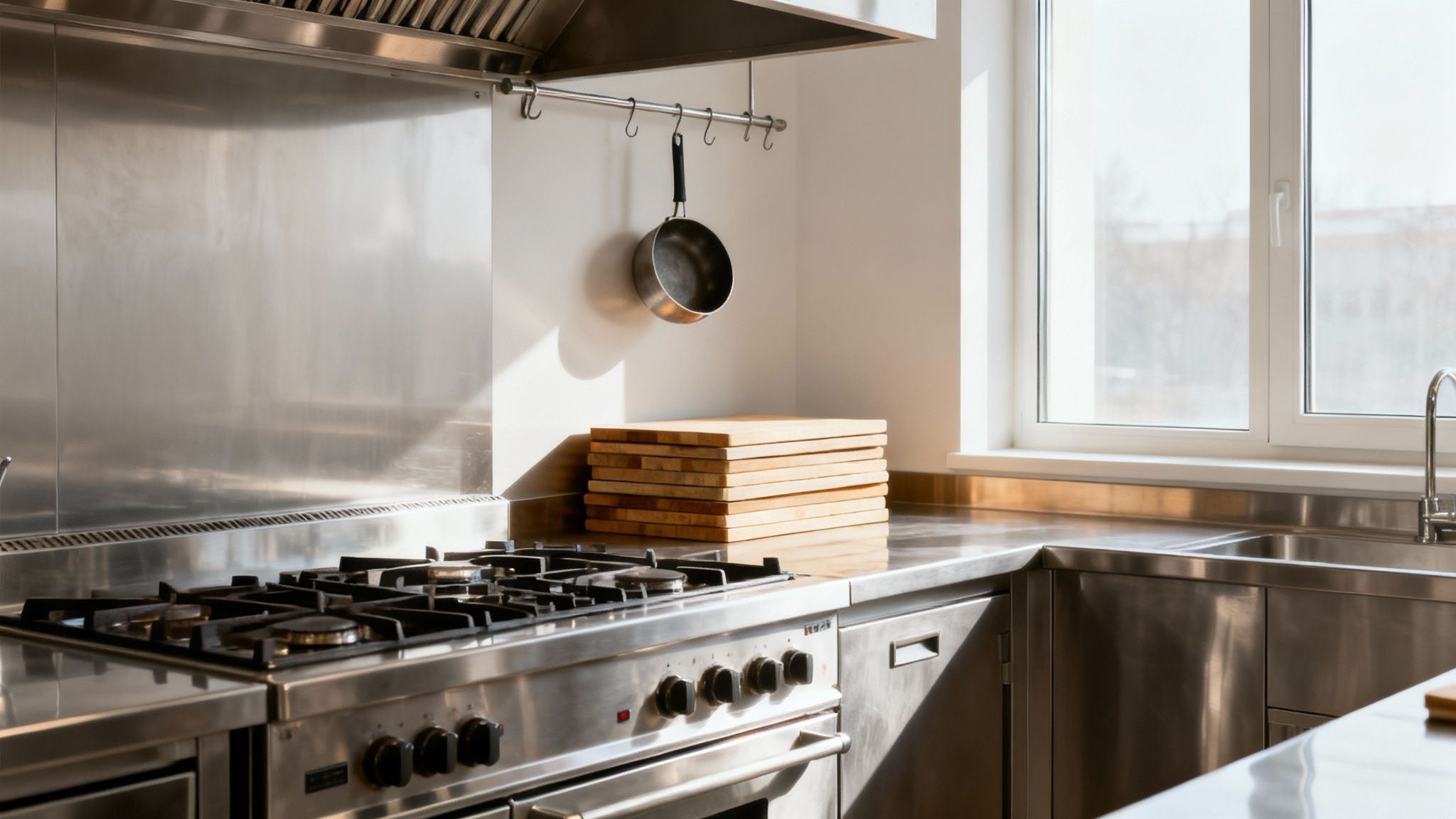
Imagine your kitchen's cleaning schedule like a heartbeat. It needs a steady, predictable rhythm to keep everything alive and well. You've got the quick, constant beats of daily tasks. The stronger pulse of weekly duties. And the deep, restorative thrum of monthly deep cleans.
Getting this rhythm right transforms cleaning from a dreaded chore into a seamless part of your kitchen's workflow. It’s no longer an afterthought… it’s just part of the process.
To keep things clear, here’s a quick breakdown of what those cleaning rhythms look like.
Kitchen Cleaning Rhythms At a Glance
| Frequency | Key Focus Areas | Main Goal |
|---|---|---|
| Daily | Surfaces, floors, high-touch points, immediate spills. | Prevent cross-contamination and immediate hazards. Keep the kitchen safe and operational throughout service. |
| Weekly | Equipment breakdown, delime sinks, sanitise walk-ins, floor drains. | Tackle grime build-up before it becomes a major issue. Maintain equipment efficiency and hygiene. |
| Monthly | Behind equipment, vents, dry storage areas, high shelves, light fixtures. | Address neglected areas and prevent long-term problems like pest infestations or mould growth. |
This table gives you a simple framework, but the real magic happens when your team understands the 'why' behind each task. It's about creating habits, not just checking boxes.
A truly clean kitchen doesn't happen by accident. It’s the result of a deliberate system, where every team member knows their role and understands that cleanliness is as vital as the food they prepare.
This mindset is everything. Once your team sees cleaning not as a punishment but as preparation for success, you're well on your way.
Your Essential Cleaning Tools and Chemicals
You wouldn't ask a chef to create a masterpiece with a blunt knife and a rusty pan, would you? Of course not. The same logic applies to cleaning a commercial kitchen. Having the right gear isn't just about looking professional… it’s about being professional.
Using the proper tools and chemicals is a genuine game changer. It makes the entire process faster, safer, and a whole lot more effective. Consider this your guide to stocking the cleaning cupboard with everything your team needs to win the daily battle against grease and grime.
Let's break it down, starting with the most important thing you need to protect: your people.
First Things First: Protect Your Team
Before a single drop of degreaser hits the floor, safety has to be front and centre. Commercial cleaning chemicals are powerful, and that means they demand respect and proper handling. Skimping on Personal Protective Equipment (PPE) is one of the riskiest shortcuts you can possibly take.
Think of PPE as your team's armour. It’s what stands between them and potential chemical burns, splashes, or skin irritation. It’s completely non negotiable.
Here’s the basic kit everyone should have access to:
- Heavy-Duty Gloves: We aren’t talking about thin, disposable gloves here. You need thick, reusable, chemical resistant gloves that protect hands and wrists from harsh substances.
- Safety Goggles or Glasses: A splash of a powerful degreaser in the eye can cause serious, lasting damage. Goggles are a must, especially when you're mixing chemicals or cleaning overhead areas like exhaust hoods.
- Non-Slip Footwear: This is a given in any kitchen, but it becomes even more critical when floors are wet during cleaning. Proper shoes prevent slips and falls, which are some of the most common kitchen injuries.
Decoding the Chemical Cabinet
The world of cleaning chemicals can feel a bit overwhelming. There are so many bottles, each promising to be the ultimate solution. In reality, it’s quite simple once you understand the main players and their specific jobs. You don't need a hundred different products; you just need the right ones.
It’s like having a specific knife for a specific task. You wouldn’t use a bread knife to fillet a fish, right? Same deal here.
The secret to effective cleaning isn't using the strongest chemical for everything. It's about using the correct chemical for each specific task, from breaking down grease to killing dangerous bacteria.
Let’s meet the main characters in your cleaning arsenal:
- Degreasers: This is your heavy hitter for oily, greasy messes. A good quality, food-safe degreaser is essential for cleaning stovetops, grills, deep fryers, and exhaust filters. It works by breaking down fats and oils, making them easy to wipe away.
- Detergents: These are your all purpose cleaners for general surface grime, dirt, and food spills on floors, walls, and benchtops. Think of them as the reliable workhorse for everyday cleaning.
- Sanitisers: This is a crucial final step. After a surface is visibly clean (thanks to your detergent or degreaser), a sanitiser is used to reduce bacteria to safe levels. It's vital for all food contact surfaces.
- Disinfectants: While people often get them mixed up with sanitisers, disinfectants are stronger and are used to kill a wider range of microorganisms. They're typically used in non food areas like bathrooms and rubbish bin areas.
Essential Tools for the Job
Once you have your safety gear and chemicals sorted, you need the right tools to apply them. Again, quality matters. Investing in durable equipment will save you money and headaches in the long run.
A great way to prevent cross-contamination is by using a colour-coded system. For instance, you might use red cloths for raw meat areas, blue for general surfaces, and yellow for sinks. This simple visual cue helps ensure a cloth used to wipe down a chicken prep station isn't later used on the vegetable chopping board.
Here are some must-have items:
- Microfibre Cloths: They trap dirt and bacteria far better than old rags.
- Heavy-Duty Scrub Brushes: For tackling baked on food and tough grime.
- Squeegees: Essential for leaving floors and windows streak free and dry.
- Buckets and Mops: Invest in a good quality mop system, preferably with separate buckets for clean and dirty water to avoid just spreading the grime around.
The Daily, Weekly, and Monthly Cleaning Checklist
Alright, let's roll up our sleeves and get into the practical stuff. We’ve covered the 'why' and the 'what with', so now it's time for the 'how and when'. This is where good intentions become a solid, repeatable system for keeping a commercial kitchen spotless.
A kitchen's cleanliness is a bit like a garden. You can't just water it once and expect it to thrive. It needs constant, consistent attention. That’s why breaking your cleaning schedule into daily, weekly, and monthly tasks is so effective.
It stops things from getting overwhelming. It ensures nothing gets missed. And it creates a rhythm your whole team can follow. It turns potential chaos into a smooth, predictable process.
The core of any good cleaning task, from a quick wipe down to a full sanitisation, follows a simple three step process.
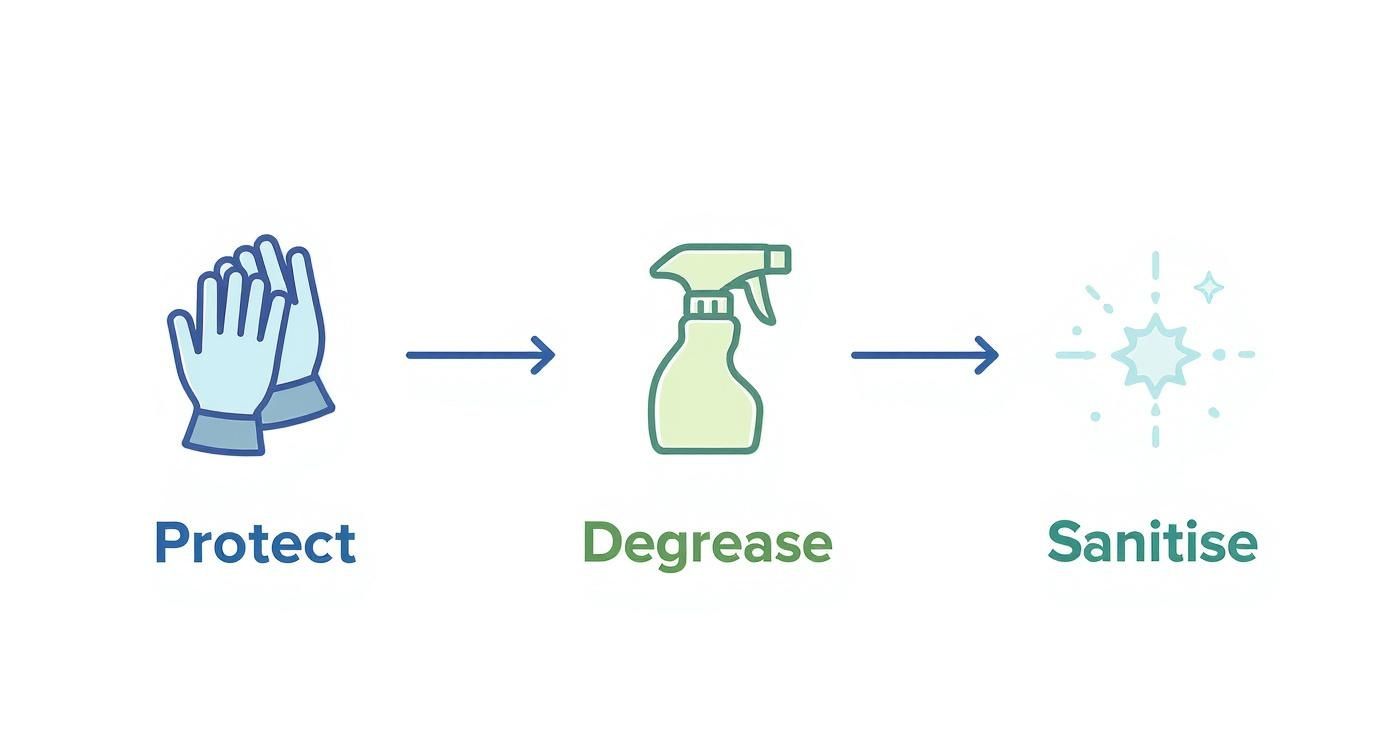
This sequence is key: always protect yourself first, cut through the grime with a degreaser, and then finish by sanitising to make sure the surface is completely food safe.
Your Daily Cleaning Battle Plan
Daily tasks are all about immediate safety and hygiene. These are the non-negotiables that have to happen during and after every single service. They stop the small spills and messes of a busy shift from becoming tomorrow's hazardous, crusty nightmare.
Think of it as hitting your kitchen's 'reset button' at the end of each day.
Here’s what your daily focus should be on:
- All Food Prep Surfaces: Wipe down and sanitise all benchtops, cutting boards, and prep stations between tasks… especially after handling raw meat. And then do it again at the end of the shift. This is your number one defence against cross contamination.
- Cooking Equipment: Clean the grill, stovetop, and fryer surfaces. Scrape off any food debris and degrease them while they're still warm. Trust me, it makes the job a lot easier.
- Floors: Sweep and mop to get rid of spills and tracked in dirt. Pay extra attention to the areas under equipment where food and debris love to hide.
- Sinks: Clean and sanitise every sink, from handwashing stations to the big pot wash areas.
- Waste Bins: Empty all rubbish and recycling bins, then give them a quick wipe down to prevent lingering odours that attract pests.
Daily cleaning isn't just about being tidy; it's an active practice in food safety. A clean slate at the start of each day gives your team the best possible environment to create amazing food.
Getting this daily routine right is the backbone of your entire cleaning system. Nail this, and everything else becomes much more manageable.
The Weekly Kitchen Reset
Weekly tasks are where you start to tackle the more significant build-up that daily spot cleaning can't always catch. This is your chance to get into the nooks and crannies and show your hard working equipment some proper love.
These jobs are all about maintenance and prevention. Doing them consistently stops grease and grime from turning into a serious problem that could damage equipment or fail a health inspection.
Here’s a snapshot of what a weekly reset could look like:
- Deep Clean Ovens and Grills: Go beyond the daily wipe. Use a powerful oven cleaner to remove that baked on carbon and grease from the interior.
- Delime Dishwashers and Sinks: Limescale can build up fast, hurting your dishwasher's performance and leaving spots on your glassware. Running a deliming cycle is essential.
- Sanitise Refrigeration Units: Empty out your walk-in fridges and reach-ins. Wipe down all the shelves and interior walls with a food safe sanitiser to stop mould and bacteria in their tracks.
- Clean Floor Drains: Pour a proper drain cleaner or even a mix of hot water and vinegar down your floor drains to break up grease and prevent nasty smells.
- Wash Floor Mats: Take all those anti fatigue mats outside and give them a thorough scrub with a deck brush and degreaser.
This weekly effort is an investment. It seriously extends the life of your expensive equipment and makes the monthly deep clean a much less daunting task.
The Monthly Deep Dive
Now for the big one. Monthly tasks focus on those often forgotten areas that, if neglected, can lead to serious safety hazards. This is where you pull equipment out, get up high, and tackle the jobs that require a bit more muscle. A huge percentage of commercial kitchen fires start with grease build-up in unseen places… a catastrophic and preventable event.
Think of your monthly deep clean as a crucial safety audit.
Your monthly hit list must include:
- Exhaust Hoods and Filters: While filters should be cleaned more often, the entire hood system needs a deep degreasing once a month. This is your number one priority for fire prevention.
- Behind the Line: This is so important. Pull all mobile equipment like fridges and prep tables away from the walls. You'll be amazed (and maybe a little horrified) at what you find. Clean the walls, baseboards, and floors behind them thoroughly.
- Dry Storage Areas: Wipe down all shelving in your pantry and dry storage. Check for any signs of pests and make sure every container is properly sealed.
- Walls and Ceilings: Wipe down any splashes or grease spots on walls, especially behind the cooking line. Dust away any cobwebs from ceilings and light fixtures.
To help you get started, we've put together a sample schedule that breaks these tasks down into a clear, manageable format.
Sample Cleaning Schedule
A structured schedule ensures nothing is forgotten and keeps everyone on the same page. Here’s how you can organise your tasks.
| Task Frequency | Cleaning Task Example | Why It's Important |
|---|---|---|
| Daily | Sanitise all food preparation surfaces after each use. | Prevents cross-contamination and the spread of foodborne illnesses. |
| Daily | Sweep and mop all kitchen floors at the end of service. | Removes immediate slip hazards and food debris that attracts pests. |
| Weekly | Delime the commercial dishwasher and coffee machines. | Maintains equipment efficiency and ensures proper sanitisation. |
| Weekly | Deep clean ovens, grills, and fryers. | Removes stubborn, baked-on grease that poses a fire risk. |
| Monthly | Degrease and clean the entire exhaust hood system. | Critical for fire prevention and maintaining proper ventilation. |
| Monthly | Pull out equipment to clean walls and floors behind it. | Eliminates hidden pest havens and removes accumulated grime. |
Having a clear, documented plan makes all the difference. It ensures consistency, no matter who is on shift, and creates a clear record of your commitment to hygiene and safety.
To ensure every corner of your kitchen meets the highest standards, a detailed checklist is vital. This comprehensive commercial kitchen cleaning checklist is a fantastic starting point. You can also download our own free guide to help build your schedule by visiting our article on creating a https://www.thatcleaningcrew.com.au/commercial-cleaning-checklist/.
How to Tackle Grease Traps and Exhaust Systems
Let's talk about the two jobs everyone loves to hate: grease traps and exhaust systems. They're out of sight, a bit messy, and it’s tempting to put them on the back burner. But ignoring them is like ignoring a ticking clock.
If you don't stay on top of them, you're setting yourself up for some seriously expensive, smelly, and downright dangerous problems. This is all about taming these two beasts, turning a dreaded task into a manageable part of your routine.
We’ll start with the one hanging right over your head.
Taming the Kitchen Exhaust System
That sticky, yellowish build-up you see in your rangehoods and ducts isn't just ugly. It’s a huge fire hazard. Grease is incredibly flammable, and when it collects in a hot environment like your kitchen's exhaust system, it's just waiting for a spark.
Cleaning your exhaust system isn't a single job. It’s a system of its own, with different parts that need different levels of attention.
The First Line of Defence: Your Filters
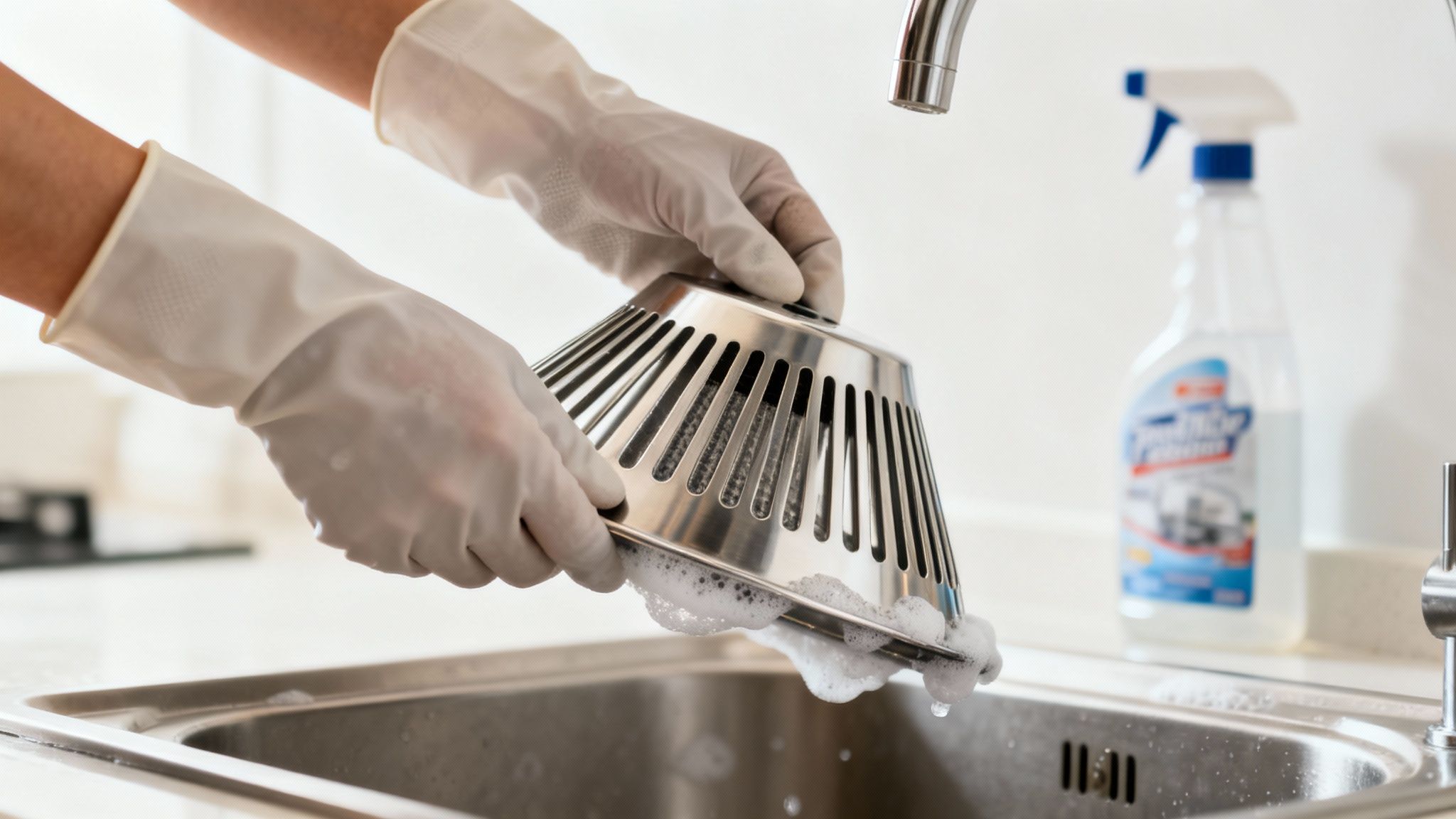
The baffle filters are designed to catch the majority of airborne grease before it ever gets into your ductwork. Because they do such a heavy duty job, they need cleaning often. Very often.
- Frequency: For most busy kitchens, filters should be cleaned weekly. High volume spots, especially those doing a lot of frying, might even need to do it every few days.
- Method: The best way is to soak them in a hot, degreaser solution in a deep sink. After a good soak, scrub them with a stiff brush to get rid of any stubborn bits, rinse thoroughly, and let them dry completely before putting them back.
If you're after a more detailed breakdown, our guide on how to clean rangehoods has some great tips you can apply here too.
Keeping those filters clean is the single most effective thing you can do to prevent dangerous grease buildup deeper in your system. It’s a small weekly task that prevents a massive fire risk.
Demystifying the Grease Trap
Okay, now for the less glamorous but equally important job: the grease trap. Its job is simple, really. It’s a plumbing device designed to intercept fats, oils, and grease (or FOGs, as they're known) before they enter the wastewater system.
Why is this so critical? Because when that hot, liquid grease hits the cold pipes of the sewer system, it solidifies. It's like pouring candle wax down your drain. Eventually, it builds up and causes massive blockages that can back up right into your kitchen. Not pleasant.
Regularly cleaning your grease trap prevents a whole host of problems:
- Foul Odours: A full trap is a breeding ground for bacteria, producing smells that can quickly fill your kitchen and put off customers.
- Costly Blockages: A major clog can shut down your entire kitchen and lead to eye watering emergency plumbing bills.
- Council Fines: Local councils have strict regulations about FOG disposal. Failing an inspection can result in hefty fines.
So, how do you handle it? For smaller, internal traps, your team can often manage the cleaning. You'll need to scoop out the solidified grease from the top and the sludge from the bottom, disposing of it in a sealed container for proper collection.
However, for larger, external interceptors, this is a job for the professionals. They have the specialised equipment to pump out the trap completely and dispose of the waste in line with environmental regulations. Most kitchens should have their grease trap professionally serviced every 1 to 3 months, depending on the size and volume of business.
Don’t wait for the warning signs like slow drains or bad smells. By then, the problem is already brewing.
Navigating HACCP and Food Safety Compliance
Keeping your kitchen sparkling clean is one thing. Being able to prove it’s clean and safe during a surprise inspection is a whole different ball game. This is where food safety systems like HACCP come into the picture.
It sounds a bit intimidating, I know. HACCP stands for Hazard Analysis and Critical Control Points. But don't let the name fool you… it’s actually a pretty logical system for spotting and managing potential food safety risks. Think of it less like a mountain of paperwork and more like a roadmap to keep your food, and your customers, safe.
When it comes to cleaning a commercial kitchen, HACCP is all about showing your work.
Your Cleaning Log: The Unsung Hero
The most important tool in your compliance toolkit is your cleaning log. This isn't just another checklist to tick off at the end of a long shift. It's your official record. Your proof that your team is doing what they’re supposed to do, every single day.
An inspector won't just take your word for it that the fridges were sanitised last week. They'll want to see a log, signed and dated, that confirms it.
This simple act of documenting everything builds a powerful culture of accountability. When everyone knows their cleaning tasks are being recorded, things just… get done. It also helps you spot patterns. If the same task keeps getting missed, you know you have a training gap to address.
Documentation isn't about bureaucracy; it's about evidence. A well-maintained cleaning log is your best defence in an audit and a clear signal to your team that you take hygiene seriously.
Training: Getting Everyone on the Same Page
Speaking of training, it’s absolutely vital. You can have the best cleaning schedules and the most detailed logs in the world, but they're useless if your team doesn't understand their role. This goes for everyone, from the head chef right down to the newest kitchen hand washing dishes.
Everyone needs to understand the 'why' behind each task. For example, it’s not just about wiping a bench. It’s about preventing dangerous bacteria from spreading. Our detailed guide on how to prevent cross contamination is a great resource to share with your team to drive this point home.
Effective training should cover:
- Correct Chemical Use: How to dilute chemicals safely and which product to use for which job.
- Cleaning Procedures: The specific steps for cleaning each piece of equipment and surface.
- Documentation: How to fill out the cleaning logs accurately and consistently.
- Safety Protocols: Proper use of PPE and what to do in case of a chemical spill.
This ensures consistency and competence across the board.
Preparing for a Health Inspection
With a solid HACCP-aligned cleaning system, a health inspection doesn't have to be a source of anxiety. It becomes an opportunity to proudly showcase your commitment to safety and professionalism.
When you have documented proof of your diligence, you can walk an inspector through your kitchen with confidence. You can show them your spotless equipment, your organised chemical storage, and your detailed cleaning logs.
For a deeper dive into the principles and implementation of this system, this guide on What is HACCP Certification? is a fantastic resource. It helps translate the technical requirements into practical steps.
Ultimately, HACCP compliance isn’t just about passing a test. It's about building a robust system that protects your business, your staff, and your customers from harm. It transforms cleaning from a simple chore into a critical, documented pillar of your entire operation.
Knowing When to Call in the Pros
Your crew is solid. They’re dedicated, they work hard, and they know the daily cleaning grind of your kitchen better than anyone. But let's be honest with ourselves… some jobs are just too big, too specialised, or too disruptive to tackle in house.
Recognising when it's time to call in a professional cleaning service isn't a sign of failure. It's the opposite. It’s a smart, strategic move that protects your equipment, your staff, and your reputation. Think of it as an investment in your peace of mind.
You wouldn't ask your head chef to fix the walk-in freezer's compressor, would you? You’d call a refrigeration expert. The same logic applies to deep cleaning tasks that demand specialised gear and certified know-how.
The Telltale Signs It's Time for an Expert
Sometimes the signs are impossible to miss, like the layer of fine dust that settles on every single surface after a renovation. Other times, the clues are more subtle. A stubborn, lingering smell you can’t quite place, or that greasy film building up in high, hard to reach places. These are signs your daily and weekly routines are no longer cutting it.
Here are a few clear indicators that you need professional backup:
- Stubborn Pest Problems: If you're seeing pests despite your team’s best efforts, it's a huge red flag. A professional deep clean gets into the hidden nooks and crannies to eliminate the grease and food scraps that are attracting them in the first place.
- A Full Exhaust System Degrease: This is a big one. While your team can and should clean the filters, the entire ductwork system is a different beast. It’s a serious fire hazard that requires specific tools and training to be cleaned safely and properly.
- After Major Kitchen Work: Post renovation or after installing new equipment, the level of dust and debris is off the charts. You need a specialised, top to bottom clean to make the space food safe again.
- Preparing for a Critical Audit: Bringing in professionals before a big health inspection or audit is one of the smartest things you can do. They ensure every last corner meets the strictest standards, giving you total confidence when the inspector walks through the door.
Calling in the pros isn't about replacing your team's efforts; it's about supplementing them. It’s for those big, messy jobs that fall outside the scope of daily operations, ensuring your kitchen is not just clean, but deeply, certifiably hygienic.
The Power of Scheduled Contract Cleaning
Beyond one-off emergencies, there's enormous value in putting a professional deep clean on the calendar. Setting up a regular quarterly or bi-annual service takes the pressure off your team and guarantees the job gets done to the highest possible standard, every single time.
This proactive approach is especially common in high-volume kitchens. In fact, restaurants are the biggest users of commercial kitchen cleaning services in Australia, making up 47.6% of the market in 2024. This is driven by strict food safety regulations and the absolute necessity of preventing grease fires. You can read the full research on the commercial kitchen cleaning services market to get a better sense of the industry trends.
A scheduled deep clean frees up your staff to focus on what they do best: creating amazing food. It stops the slow, creeping build up of grime in its tracks and can prevent costly problems like equipment failure or compliance issues before they even start. It’s not an expense; it’s an insurance policy for your business.
Answering Your Top Kitchen Cleaning Questions
We get a lot of questions about the finer points of cleaning a commercial kitchen. It’s a massive job, and it's completely normal to wonder if you're hitting all the right spots. So, we've pulled together some of the most common queries and given you some straightforward, practical answers based on what we see out in the field.
How Often Should a Commercial Kitchen Be Deep Cleaned?
This is a great question, and the honest answer is… it really depends on your kitchen's workload. As a solid rule of thumb, a full, top to bottom deep clean should happen every three to six months. This is the big one, where you're pulling everything out to scrub walls, ceilings, and the grime caked areas behind the cooking line.
But some parts of your kitchen need a much closer watch. Your exhaust hood filters, for instance, should be cleaned weekly. If you let them go, they quickly become a serious fire risk. The entire exhaust system itself needs a professional degreasing at least every six months. It’s all about matching the cleaning frequency to the risk and the usage.
A deep clean isn’t just a bigger version of your daily routine. It’s a planned, systematic overhaul of the areas that build up stubborn grease and grime, acting as a crucial safety reset for your entire operation.
What Are the Biggest Cleaning Mistakes You See?
One of the most common slip-ups is simply not having a proper, documented cleaning schedule. When tasks aren't written down and assigned to specific team members, crucial jobs inevitably get forgotten. It's just human nature.
Another huge issue is cross-contamination. This often happens innocently, like when someone uses the same cloth to wipe down a raw meat prep area and then moves straight to a vegetable station. It's a simple mistake with potentially serious consequences.
Finally, a classic mistake is neglecting the "out of sight, out of mind" spots. Drains, grease traps, and the dark, forgotten spaces under and behind heavy equipment are prime real estate for pests and bacteria. Ignoring them is just asking for trouble down the line.
Can I Just Use Household Cleaning Products?
Please don't. It's a really bad idea for a couple of key reasons. Commercial grade chemicals are specifically formulated to cut through the heavy duty grease and baked on food soils you only find in a professional kitchen. They're worlds apart in strength and effectiveness from what you'd buy at the supermarket.
More importantly, commercial sanitisers are tested and approved to meet the stringent food safety standards set by Food Standards Australia New Zealand (FSANZ). This means they are proven to kill the harmful bacteria that cause foodborne illness. You just don't get that same level of assurance with household products.
Keeping your commercial kitchen clean, safe, and compliant is a full-time job in itself. If you need a hand with the heavy lifting or just want the peace of mind that comes with a professional deep clean, That Cleaning Crew is here to help. We provide expert cleaning solutions that let you focus on what you do best… creating amazing food.