Keeping a commercial kitchen clean isn't just another job on the list. No, it's the absolute bedrock of a successful food business. I like to think of it as the most critical investment you can make. It’s what stands between you and some really serious risks… like foodborne illness, pest infestations, and even devastating grease fires. This is about more than just looking good; it's about being fundamentally safe.
Why Kitchen Hygiene Is Your Top Priority
When you're running a food business, you're constantly juggling. There's staff to manage, stock to order, and customers to keep happy. It's a lot. With all that going on, it’s easy to let deep cleaning slide down the priority list.
But here’s the thing. A genuinely spotless kitchen isn't a 'nice-to-have'. It's the very heart of your operation. Proper hygiene goes way beyond what you can see. It's about meeting Australia’s strict food safety laws, keeping your team safe from workplace hazards, and protecting the reputation you've worked so hard to build.
The Real Cost of a Dirty Kitchen
Letting cleaning standards slip can have some seriously grim consequences. We’re not talking about a grumpy customer or a bad online review here. We’re talking about the kind of problems that can shut a business down. For good.
- Foodborne Illness: Just one unsanitised surface can be the starting point for cross-contamination, leading to outbreaks that are catastrophic for both your customers and your business.
- Pest Infestations: Leftover food scraps and built-up grease are basically a welcome mat for pests, and that's a one-way ticket to a major health code violation.
- Fire Hazards: This is a huge one. Grease builds up in places you don't always see, like inside your exhaust hoods and ventilation systems. That buildup is highly flammable and creates a preventable fire risk you simply can't afford to ignore.
"A rigorously clean environment is less likely to suffer from infestations of vermin or flies, which can be dangerous, costly to deal with, and seriously bad for your reputation."
It's More Than Just Compliance
Think about it this way: consistent, thorough cleaning directly impacts your bottom line. When your team is working in a clean, organised space, they're not only safer, but they're also more productive. It sends a clear message that you value their wellbeing, which does wonders for morale and creates a far better work environment.
This intense focus on hygiene is why professional commercial cleaning services are in such high demand. The Australian commercial cleaning market was valued at around $13.25 billion in 2024 and is set to grow. A big part of that is driven by the more than 54,000 restaurants and cafes that all need to maintain these exacting standards. It’s a massive industry.
Building Your Daily Cleaning Routine
That end-of-service clean is so much more than just a chore. I like to think of it as a daily reset. It's the ritual that sets you up for a smooth, successful service the very next day. It's all about creating small, consistent habits that your team can actually stick to… not a frantic, stressful overhaul when everyone is already exhausted.
The key is a checklist that actually makes sense for your kitchen. It’s not about ticking boxes; it’s about building muscle memory. Of course, this covers the non-negotiables: wiping every single prep surface with a food-safe sanitiser, cleaning cooktops and grills while they're still a bit warm (trust me, this saves a world of scrubbing later), and giving the floors a proper sweep and mop to get rid of the day’s grime.
But the real magic is in the small details. The little things that make a huge difference over time.
The Little Habits That Matter Most
It's easy to focus on the big, obvious messes. The greasy stovetop. The sticky floor. But it's the high-traffic, low-key spots that can trip you up on hygiene.
We’re talking about things like emptying every single bin, every single night, without fail. Leaving them overnight is like sending a written invitation to pests. It’s also about regularly disinfecting those spots everyone touches constantly… think fridge and cool room handles, POS screens, and even light switches. These are hotspots for germs but often get overlooked in the rush.
Here, the infographic illustrates a core principle of kitchen safety: using a colour-coded system to prevent cross-contamination.
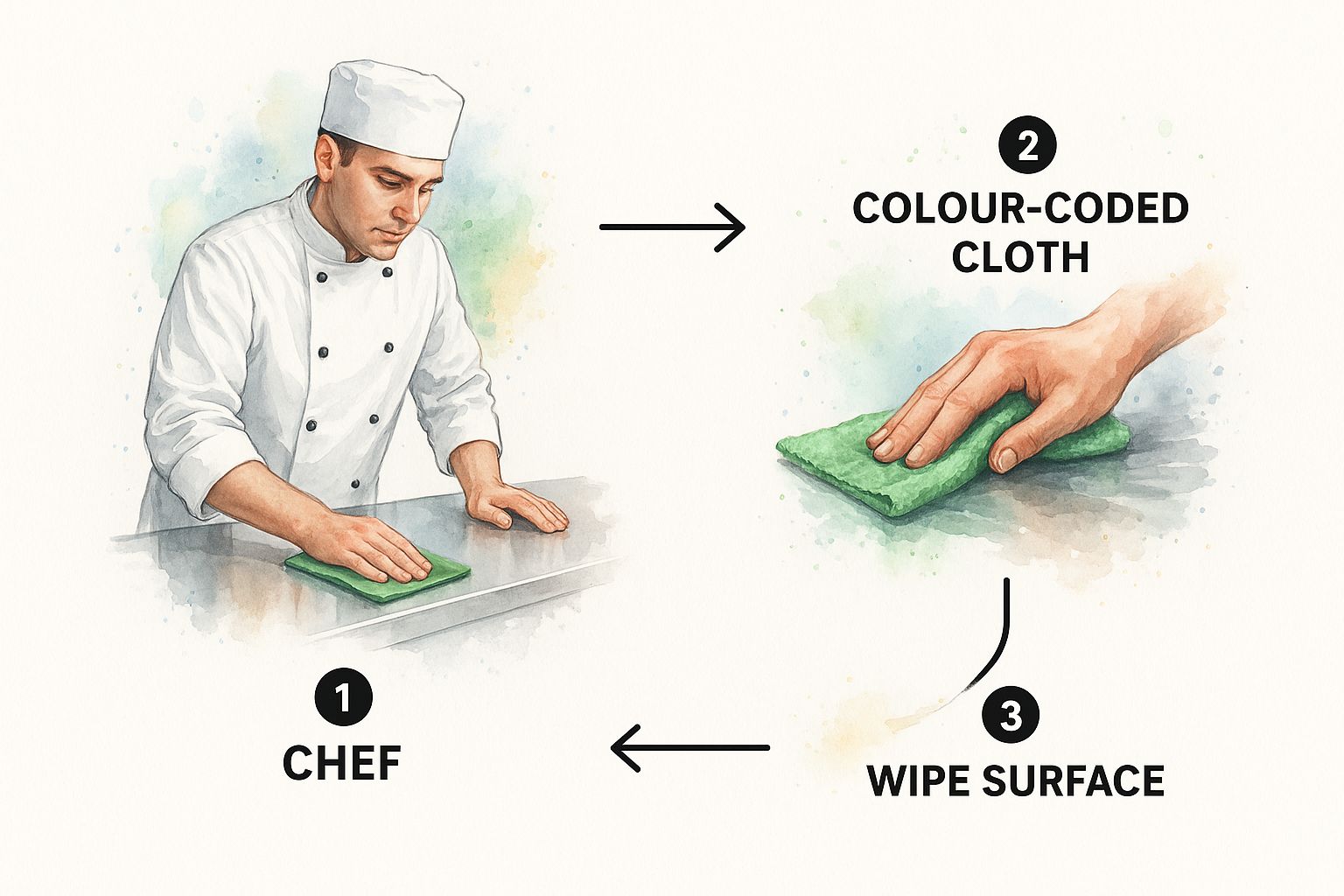
This visual shows one of the simplest yet most effective habits you can adopt. Using a specific cloth for a specific job is a cornerstone of professional kitchen hygiene.
One of the best pieces of advice I ever got was from an old-school chef about this exact system. He had a simple rule: green for go (vegetables and ready-to-eat foods) and red for danger (raw meat). This simple, visual cue stopped staff from accidentally wiping a raw chicken board and then moving straight to the salad prep area. It’s a powerful, low-tech solution that protects your food and your customers.
A great daily routine isn’t just about cleaning what’s dirty. It's about proactively stopping contamination before it even has a chance to start. Consistency is your best defence against grime and germs.
So, your daily checklist should be broken down into manageable zones.
- Cooking Line: Grills, flattops, and fryers get a thorough degreasing. All utensils are washed and sanitised.
- Prep Stations: Every counter, cutting board, and slicer is cleaned and sanitised. Don’t forget the shelves above and below.
- Floors and Drains: Floors are swept and mopped with a non-slip cleaner. Floor drains are cleared of any debris.
- High-Touch Points: Handles, knobs, switches, and screens are wiped down with disinfectant.
- Waste Area: All bins are emptied, liners replaced, and the area around them is cleaned.
Building this routine makes the daily task of cleaning commercial kitchens less of a burden and more of a streamlined, effective process. It's your frontline defence.
Your Weekly Deep Cleaning Checklist
You've made it through another busy week. Phew. Now it’s time for the weekly reset—a chance to tackle all those spots that get missed during the daily hustle. Think of this as your mini deep clean. It’s your opportunity to catch small problems before they grow into big, ugly, and expensive ones.
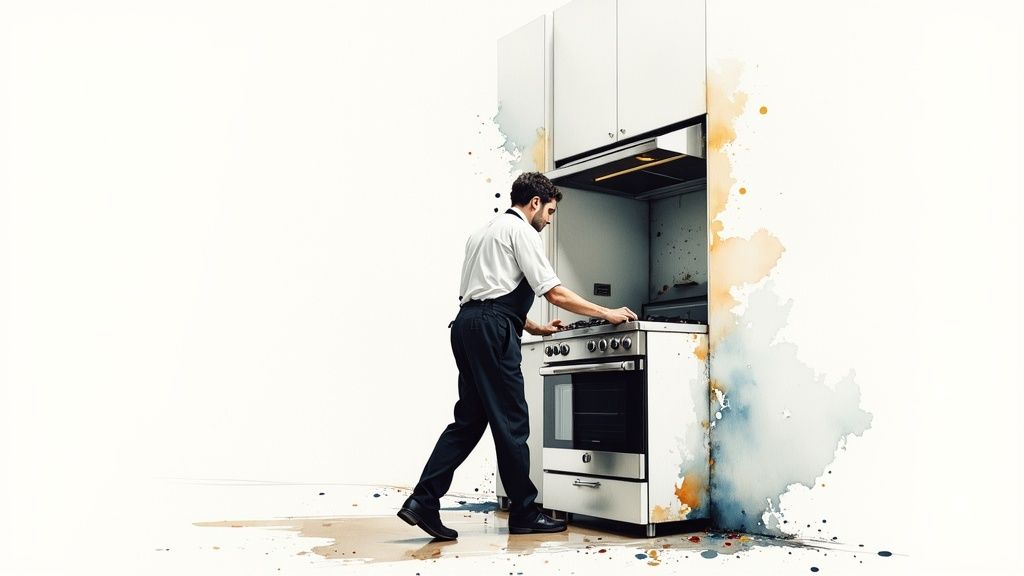
This isn’t just about wiping down the benches again. We’re talking about getting into the nitty-gritty. Pulling the big equipment away from the walls to clean behind and underneath… that’s where spills, crumbs, and all sorts of forgotten food scraps love to hide and become a five-star resort for pests.
It’s an extra bit of effort, for sure. But trust me, it saves you from major headaches down the track.
Tackling the Forgotten Zones
Your weekly clean is all about focus. It's the perfect time to zero in on the equipment and areas that work hard all week and need a bit more attention than a quick wipe-down can provide.
A few key areas deserve your full attention:
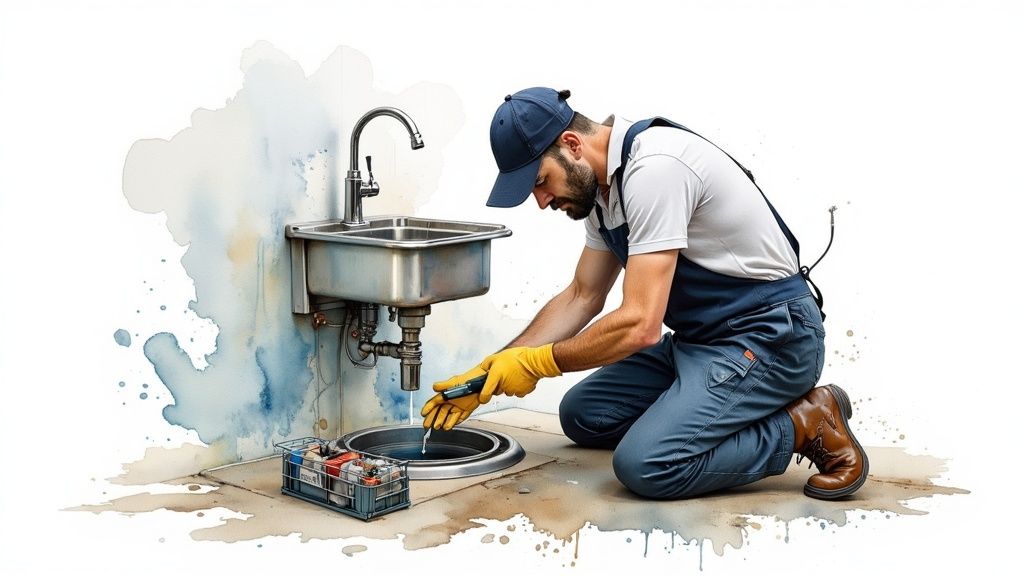
- Floor Drains: These are often out of sight, out of mind… until they're blocked and stinking up the whole kitchen. Regularly cleaning them out prevents nasty blockages and even worse odours.
- Appliance Maintenance: De-liming coffee machines and dishwashers is crucial. Scale buildup makes them work harder, use more energy, and eventually leads to breakdowns. A weekly de-lime keeps them running efficiently.
- Oven Degreasing: Your oven is a workhorse. Giving it a thorough degreasing once a week stops that baked-on grime from becoming a permanent fixture and, more importantly, a potential fire risk.
Organising Your Fridges and Cool Rooms
The weekly clean is also the perfect moment to get your cold storage in order. This isn't just a tidying exercise; it’s a critical food safety task that also helps you manage your stock and reduce waste.
Start by taking everything out. Yes, everything. This allows you to give the shelves and walls a proper clean and sanitise, getting rid of any hidden spills or drips. As you put items back, it's your chance to do a full stocktake and check all the use-by dates.
By dedicating time each week to sanitise fridges and cool rooms, you’re not only maintaining hygiene but also actively managing inventory. It’s a simple process that prevents food waste and ensures you’re always serving the freshest ingredients.
This is your moment to enforce the 'First In, First Out' (FIFO) principle. Move older stock to the front so it gets used first. It’s a small habit that makes a massive difference to your bottom line by cutting down on spoilage. Creating a solid routine can feel like a lot at first, but using a good guide can help. For a more detailed breakdown, our complete commercial cleaning checklist offers a great starting point for building your own schedule.
This weekly ritual of cleaning commercial kitchens ensures nothing gets overlooked, keeping your space safe, efficient, and ready for another busy week ahead.
Tackling Grease Traps and Exhaust Systems
Right, let's get into the heavy hitters. We’re talking about the jobs that are absolutely critical for safety and compliance… your kitchen's exhaust system and its grease trap. These aren't just cleaning tasks; they are massive parts of your risk management strategy.
A neglected exhaust canopy is, frankly, a ticking time bomb. It gets thick with flammable grease that can easily ignite. And a full grease trap? That’s a one-way ticket to foul smells, serious plumbing blockages, and some very costly emergency call-outs.
This is where calling in the professionals often becomes the smartest business decision you can make. It’s a bit of a tangent, but think of it like this… you wouldn't rewire your own switchboard, would you? You’d call an electrician. It’s the same logic.
Why Professionals Make a Difference
These specific jobs require more than just a bit of elbow grease. They demand specialised equipment, powerful (and often hazardous) chemicals, and a deep understanding of council and insurance requirements.
Bringing in a professional service for these high-risk areas means:
- Compliance is Covered: They know the local regulations inside out and provide the necessary certification to prove the work was done to standard, which is vital for your insurance.
- Safety First: Pros have the right personal protective equipment (PPE) and training to handle potent degreasers and work safely in confined or awkward spaces.
- A Thorough Job: They use high-pressure steam cleaners and specialised tools to remove every last bit of grease from deep inside your ductwork, places your team simply can't reach.
The demand for this kind of expert service is growing for good reason. Concerns over fire risk and stricter food safety rules are pushing more businesses to invest in professional help. This trend is driving growth in the commercial kitchen cleaning market, not just in Australia but globally. This isn't just about cleaning commercial kitchens; it’s about investing in your business’s safety and continuity.
The decision to hire professionals for your exhaust and grease trap isn't an expense. It's an investment that protects your property, your staff, and your reputation from catastrophic failure.
When looking for a service, ask for references, check their insurance, and make sure they provide detailed reports and certification after the job is done. It’s worth the effort. For particularly tough jobs that go beyond standard cleaning, exploring specialty cleaning services can connect you with experts equipped for these exact challenges.
Choosing the Right Cleaning Tools and Chemicals
You wouldn’t send a chef into service with blunt knives, would you? Of course not. The same exact thinking applies to your cleaning supplies. Using the right products and tools makes the entire job faster, safer, and a whole lot more effective.
It’s all about working smarter, not harder. Arming your team with the correct gear is the foundation of keeping a commercial kitchen properly clean. It turns what feels like a gruelling task into something manageable and routine.
Understanding Your Chemical Arsenal
It’s easy to get overwhelmed by all the different bottles under the sink. Let’s break it down. Think of it like your pantry… you have different ingredients for different jobs.
- Cleaners: These are your everyday soaps and detergents. Their main job is to lift visible dirt, grease, and food scraps off surfaces. They get things looking clean, but they don’t kill germs.
- Sanitisers: This is the critical next step. Sanitisers are used on any food-contact surface after it's been cleaned. Their purpose is to reduce the number of germs to a safe level. This is non-negotiable for prep benches, cutting boards, and anything else that touches food.
- Disinfectants: These are the heavy hitters. Disinfectants pack more punch, using stronger chemicals to kill a wider range of viruses and bacteria. You’ll use these for high-touch, non-food areas like door handles, light switches, and bathrooms.
The most important takeaway is this: you must clean a surface before you can properly sanitise it. Trying to sanitise a dirty bench is like trying to paint over rust… it just won’t work. The leftover grime acts as a shield, stopping the sanitiser from getting to the germs underneath.
Investing in Quality Tools Pays Off
It can be tempting to save a few dollars on cheaper tools, but trust me, it’s almost always a false economy. Quality gear not only does a better job but also lasts longer and, importantly, makes the work safer for your staff.
So, what’s actually essential? You absolutely need a heavy-duty degreaser for cooktops, fryers, and exhaust filters. A good, food-grade sanitiser is a must-have for all prep areas. And a quality, non-slip floor cleaner is crucial for preventing slips and falls—one of the biggest risks in any kitchen.
But it’s the smaller things, too. A proper squeegee leaves your stainless steel benches perfectly dry and streak-free, which helps prevent water spots where bacteria can thrive. High-quality microfibre cloths are also a game-changer; they trap and lift dirt far more effectively than old rags, which often just smear the mess around.
Safety Is Not Optional
We’re talking about commercial-grade chemicals here, not the stuff you use at home. They’re powerful. And they need to be treated with respect. That means safety is paramount, and there are absolutely no shortcuts.
Every staff member who handles chemicals must be trained on how to use them correctly, including the proper dilution ratios. And personal protective equipment, or PPE, is non-negotiable.
This means gloves to protect skin from harsh chemicals and goggles to protect eyes from accidental splashes. It’s such a simple step, but it’s one that prevents serious, avoidable injuries.
Got Questions About Commercial Kitchen Cleaning? We've Got Answers.
We get it. Running a commercial kitchen is complex, and the cleaning side of things is packed with details. It's easy to worry you're missing something crucial. To help clear things up, we've tackled a few of the most common questions we hear from kitchen managers just like you.
How Often Should I Get a Professional Deep Clean?
Honestly, this really comes down to how much traffic your kitchen sees. For a high-volume restaurant, having your exhaust system professionally cleaned every 3 to 6 months is a wise move, not just for hygiene but to meet fire safety standards. Your local council has specific rules on this, so it's always best to check their guidelines to make sure you’re fully compliant.
Grease traps are another beast entirely. Depending on your output, they might need servicing anywhere from monthly to quarterly. Don't leave that one to chance… a backup is a nightmare you don't want.
Can I Just Use Household Cleaners in My Kitchen?
That’s a hard no. Commercial kitchens demand commercial-grade, food-safe products for a reason. Household cleaners simply aren't formulated to cut through the heavy-duty grease and grime that builds up in a professional cooking environment.
Even more importantly, they almost certainly aren't certified as safe for food preparation surfaces. You have to stick to products designed specifically for commercial use to stay on the right side of food safety laws. No shortcuts here.
Training isn't a one-off event. It's about building a culture. The goal is to create a team where everyone takes ownership of cleanliness, not because they have to, but because they understand why it matters so much.
What's the Best Way to Train Staff on Cleaning Protocols?
In my experience, the best training is simple, hands-on, and visual. Forget dense manuals. Create easy-to-read, laminated checklists for daily and weekly jobs and post them where everyone can see them. Showing is always better than telling.
Run short, regular training huddles where you physically demonstrate the right way to do things. This could be anything from how to safely dilute chemicals to the correct procedure for breaking down a machine for cleaning. Make it a routine, not an afterthought.
It’s a huge area of employment, too. In 2024, there are about 43,966 commercial cleaning businesses operating across Australia, with around 151,300 people working in the sector. You can dig into the industry’s growth and its vital role in public health with recent IBISWorld business data. This just goes to show how essential these skills are across the country.
Feeling the pressure of keeping your commercial kitchen compliant and spotless? The expert team at That Cleaning Crew is here to help. We provide reliable, high-quality cleaning services that take the stress off your plate, so you can focus on what you do best. Get a free on-site quote from That Cleaning Crew today!