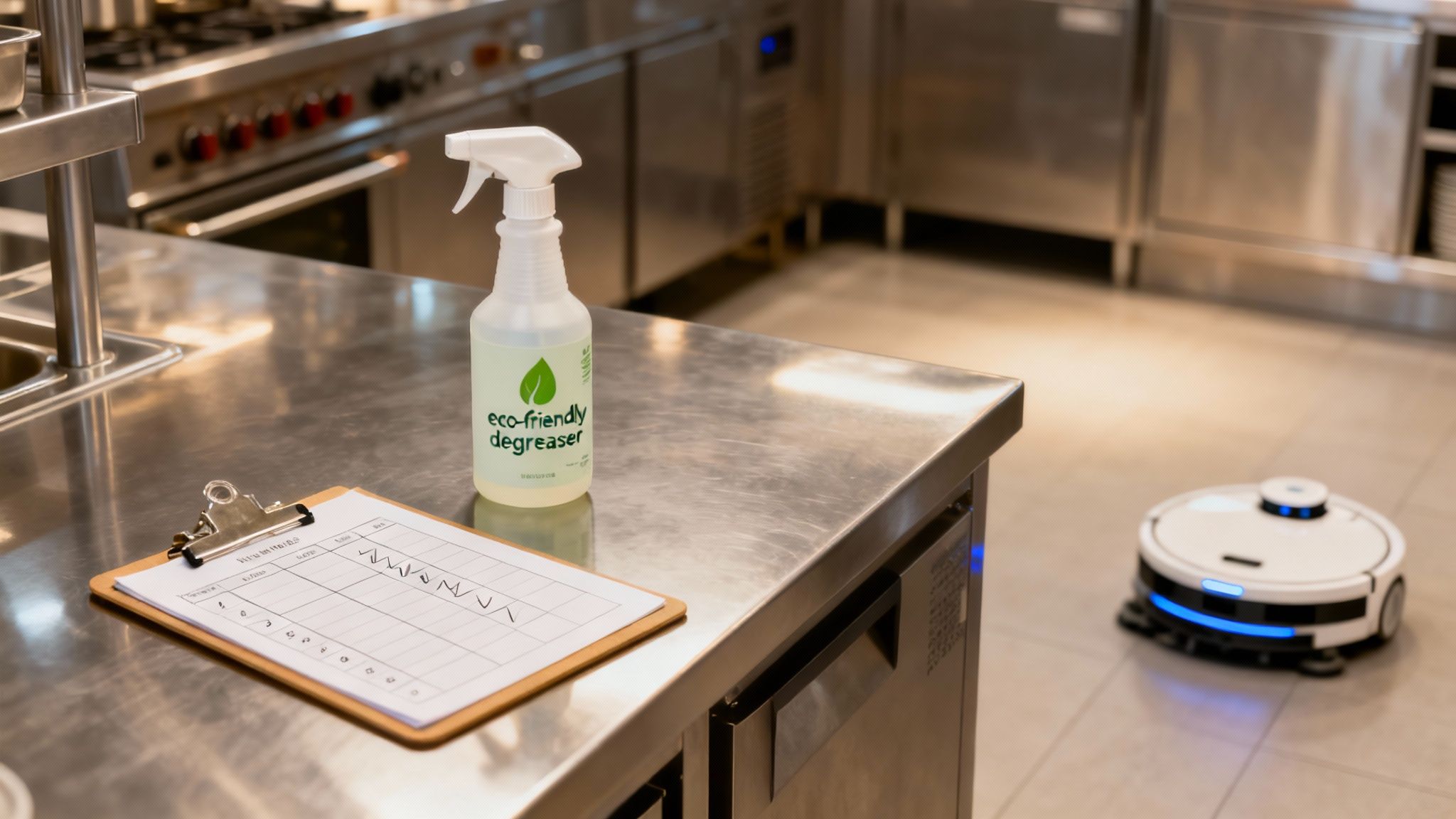
Commercial kitchen cleaning is what makes sure your prep zones tick all the hygiene boxes, every single day. It covers daily wipe-downs, weekly deep scrubs and specialised treatments that keep both chefs and customers smiling.
Understanding Commercial Kitchen Cleaning Essentials
Commercial kitchen cleaning isn’t just about shiny floors. It’s a system designed to tackle grease, grime and those hidden hazards… every single time.
- Daily Wipe-Downs: Get rid of food residue on benches, cutting boards and service counters before each shift.
- Weekly Deep Cleans: Hit drains, grills, ovens and floors to shift stubborn build-up.
- Pro-Level Treatments: Bring out steam blasters or heavy-duty agents for exhaust hoods, vents and filters.
Assign each team member a zone, so benches are clean before the morning rush. Slot deep-cleans after a quiet service window—that way, grills and fryers get the attention they need without interrupting dinner. For those awkward, hard-to-reach spots, steam or robotic scrubbers can work wonders on exhaust systems.
Seeing these routines in action really makes a difference.
This snapshot shows just how wide commercial cleaning’s scope can be, from equipment sanitisation to waste disposal.
Industry Trends And Growth
The Australian commercial cleaning services industry was worth around USD 13.25 billion in 2024. That jump comes from tighter health rules, new robotics and greener cleaning methods. You can get more insights on the Australian commercial cleaning services market at Expert Market Research.
Chefs live by one rule: consistency wins over intensity every time.
"A polished kitchen every day slashes cross-contamination risks and boosts team confidence."
These days, AI-powered inspections and sensor cameras can find overlooked spots before they turn into serious hazards. Swapping single-use wipes for reusable cloths, or standard degreasers for eco-friendly ones, also cuts down on chemical waste and ticks the sustainability box.
Real-World Examples
- A local café swapped out harsh solvents for plant-based degreasers, cutting staff skin irritation in half.
- A busy hotel kitchen introduced a robotic hood-filter cleaner, freeing up night staff to focus on front-of-house prep.
Key Benefits Of Clean Kitchens
- Less risk of foodborne illness and compliance fines
- Longer equipment life thanks to fewer grease blockages
- Happier, more confident staff in a safer workspace
- Better customer impressions—and those all-important five-star reviews
You can also check our guide on commercial cleaning service costs for more budgeting tips.
And remember, proper sanitation is central to effective roach prevention through sanitation.
Next up, we’ll go into daily and weekly schedules, clarify who does what and share checklists so nothing slips through the cracks.
Daily And Weekly Cleaning Routines
A busy kitchen runs on predictable rituals. Whether you’re flipping tacos in a food truck or plating degustation courses in a fine-dining room, a solid daily and weekly plan keeps chaos at bay.
Consider this—an unnoticed spill at midday turns into a slip hazard within minutes, and an oven left unchecked for days builds up carbon that’s a nightmare to shift. Pinning down exactly when each task happens takes the guesswork out of cleaning.
- Wipe down prep benches with food-safe sanitiser between every service window.
- Sweep and mop floors using an antibacterial detergent at the end of each shift.
- Brush grill seams after peak cooking to stop grease turning into a fire risk.
Roles become second nature once you put them on paper. In any commercial kitchen, clarity and consistency are everything.
Staff Roles And Timing
Assigning tasks to specific people removes uncertainty. In a small café or a large hotel kitchen, a clear structure keeps everyone on the same page.
Early-shift porters might start with floor sweeps and drain checks, while line cooks focus on benches and equipment. Supervisors tick off each job, creating an audit trail and spotting gaps before they become issues.
“A well-structured checklist is the backbone of any high-functioning kitchen,” says a Sydney chef who’s run his brigade this way for over ten years.
Flexibility matters too. You need room to breathe during quieter hours, and surgical precision at peak times. Hitting that sweet spot stops burnout and keeps standards high.
Daily And Weekly Task Schedule
Below is a handy overview of core cleaning duties, how often they should happen and who owns each job. Tweak it to match your kitchen’s rhythm.
| Task | Frequency | Responsible Person |
|---|---|---|
| Bench Wipe-Down | Before & After Shifts | Line Cook |
| Floor Sweep & Mop | End Of Every Shift | Kitchen Porter |
| Grill Brush & Clean | Every 4 Hours | Line Cook |
| Oven Strip & Sanitise | Weekly | Sous Chef |
| Hood Filter Inspection | Weekly | Maintenance Lead |
| Sink & Drain Sanitisation | Daily | Dishwasher |
Use this as your go-to reference. Once tasks have owners and timings, they become routines rather than afterthoughts.
Key Sanitation Principles
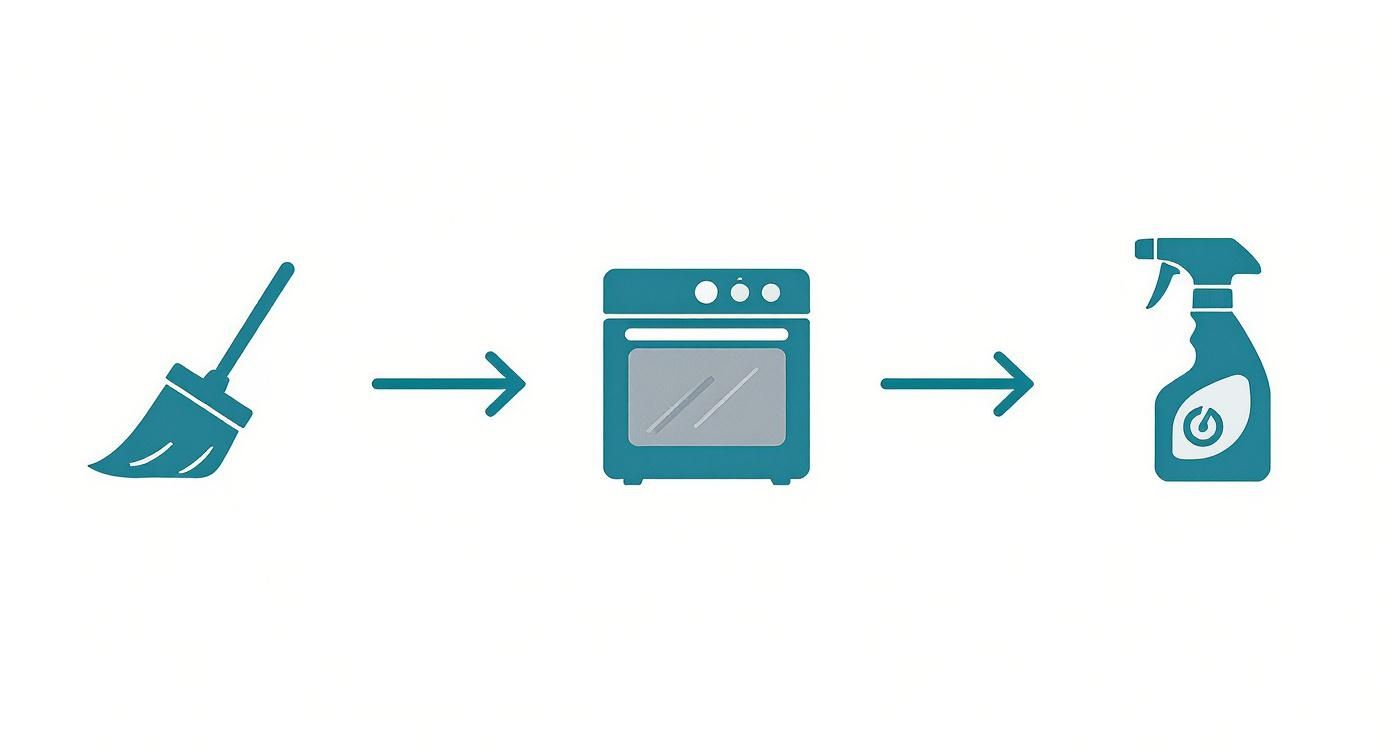
This graphic outlines the basic flow—cleaning off visible dirt, then sanitising. It’s worth remembering that dirt removal is only the beginning.
If you run a food truck or do off-site catering, focus deep-clean tasks on your weekly stops. Each layover becomes a mini-inspection—filters in, grease traps emptied, vents checked—before gunk sets in.
- Skipping the right order of sanitiser and detergent leaves residues behind.
- Ignoring grill seams means grease can lurk until it sparks a fire hazard.
- Bundling all your deep-clean tasks into one marathon day exhausts your crew.
A fine-tuned schedule steers you away from these traps and keeps your kitchen safe and compliant.
Checklists And Visual Tools
Visual cues beat memory every time. A colour-coded whiteboard or a shared tablet is all you need to keep everyone on track.
• Lay out today’s to-dos before the lunch rush.
• Tick off tasks as soon as they’re done.
• Carry over unfinished jobs to the next shift.
• Wrap up the week with a progress review—and a pat on the back for a job well done.
When tasks have names and times attached, audits feel straightforward. Engagement and accountability rise too.
At one Sydney café, adding a colour-coded board led to 100% daily task completion. Staff morale got a real boost and infractions dropped to zero in six months.
Invite your frontline team to suggest tweaks. They’re the ones who see clashes or hidden hazards before theory meets practice. With solid routines and regular reviews, kitchen cleaning hums along with service rather than slowing it down.
Deep Cleaning Checklists And Schedules
After a hectic service or before a big audit, a full deep clean is non-negotiable. It’s the reset that leaves no grease trap unturned—or hood filter unsprayed.
I’ve seen a local diner split grout-line cleaning mid-week so they never closed their doors. And a small bistro I work with divides its deep clean into two shorter shifts to dodge the dinner rush.
Preparing For A Deep Clean
Gather all your tools and PPE before you start—nothing stalls a session faster than running out of gloves or degreaser.
- Disconnect and empty grease traps, then soak components in an alkaline degreaser.
- Remove hood filters and scrub the housing with a citrus-based cleaner.
- Brush floor drains, then flush them with an enzymatic solution to break down buildup.
- Buff stainless surfaces with a pH-neutral polish for a showroom shine.
Having a clear staging area turns a big job into a series of small wins. Each step feels like a tick on the path to a spotless kitchen.
According to IMARC Group, 58.6% of the Australian commercial kitchen cleaning market focuses on deep clean services—proof of how vital they are for health and fire safety. Discover more insights on IMARC Group.
Smart Scheduling For Deep Cleans
Timing is everything. Block out a slow service window so cleaning flows around operations, not against them.
- Reserve a post-lunch slot for quick wipe-downs before the heavy scrubbing begins.
- Split your crew—one team on hoods and trays, the other on surfaces and drains.
- Set calendar alerts every 30 days for filter maintenance, so ventilation stays top-notch.
You can find a complete deep-clean timeline in our commercial cleaning checklist, which maps every duty to shifts perfectly Check out our guide on the commercial cleaning checklist.
Tasks are grouped by equipment and priority, so you can tick them off without missing a beat.
Deep Cleaning Task Breakdown
Here’s how to pick the right agents and tools for each stage:
| Stage | Tasks | Recommended Chemicals |
|---|---|---|
| Grease Trap Maintenance | Disconnect, scrape and soak in heated solvent | Alkaline degreaser |
| Exhaust Hood Cleaning | Remove filters, soak and scrub housing interiors | Citrus-based degreaser |
| Drain Scouring | Brush sides, flush with hot water | Enzymatic drain cleaner |
| Stainless Polishing | Wipe down, buff and rinse | pH-neutral polish |
With this breakdown, you remove the guesswork from each phase—just follow the steps, and you’ll get consistent results.
A thorough deep clean can halve your reactive maintenance calls for the year and keep audits stress-free.
Final Tips And Tricks
- Pair a reliable deep-clean schedule with the right chemicals for every surface.
- Use visual boards or mobile reminders so nothing gets skipped.
- Rotate cleaning areas and split shifts to avoid service clashes.
- Document each stage for audits, staff training and quality checks.
Stick with the process, keep an eye on every corner and watch your kitchen gleam under that fresh, spotless surface.
Meeting HACCP And Safety Standards
HACCP isn’t just paperwork. It’s the roadmap that stops hazards before they happen. Cross-contamination hides in tiny cracks, so you need a system that spots risks early.
Combine printed check sheets from That Cleaning Crew with digital reminders, and you can cut audit prep time in half.
HACCP Control Points
Critical control points are your checkpoints to halt hazards. Every cooking station, storage zone and pass-through area deserves a tailored list.
- Temperature Logs to confirm chillers and ovens hit safe ranges
- Surface Swabs to catch residue hiding on benches and equipment
- Grease Trap Inspections to prevent blockages, odours and fire risks
A boutique bistro in Melbourne started logging temperatures every two hours. The result? A big drop in incidents and their next health inspection returned zero non-compliance notices.
Australia sees about 4.7 million foodborne illness cases each year. Rigorous cleaning helps stop cross-contamination and keeps you onside with mandatory health checks. Read the full research about foodborne illness cases
Logging And Monitoring Routines
Old-school paper logs feel reliable, but a quick app reminder catches the moments even the busiest chef might forget.
Chefs report that blending manual logs with mobile alerts cuts audit prep from eight hours down to four. A small switch, big payoff.
- Record ambient and fridge temperatures at shift start
- Note sanitiser strength after every wipe-down
- Track cycle counts for hood filters, drains and grease traps
Inspectors often start with temperature logs and cleaning tags—keep them neat and legible for instant compliance.
Spend the last few minutes of each day reviewing entries. That way you catch missing fields before an inspector ever does.
Australian Standards And Best Practices
For a safe, compliant kitchen, stick to the full set of Australian workplace safety standards. Cleaning isn’t optional—it’s non-negotiable.
A thorough, documented routine shows auditors you mean business. Plus it protects your team from mishaps and fines.
- Designate separate zones for prep, cooking and storage
- Label every cleaning product with instructions and dilution rates
- Place time-stamped stickers on filters, drains and hoods
One café used colour-coded clips on their log boards. Overdue tasks jumped out instantly, and guesswork vanished.
Digital Reminders And Templates
Ready-made spreadsheets or apps have you cleaning in no time.
Set pop-ups for hood filter changes and monthly grease trap alerts. Consistency is the secret sauce.
Pair digital alerts with printed check sheets as a double safety net. When one fails, the other has you covered.
- 50% reduction in missed cleaning cycles
- 100% compliance with temperature logs
- Zero foodborne incidents over six months
Clear sheets, timely nudges and hands-on habits add up to rock-solid standards—and stress-free inspections.
Inspection Preparation Tips
Inspections are not surprises. Think of them as a chance to show off your rigour. A walk-through a few days ahead spots dust in vents and streaks on splashbacks.
Standardise your sheets to capture date, time, initials and actions taken. Your QA team will see patterns—like fridge temps dipping too low or filters skipped too often.
- Colour-code zones on a floor map for quick walkthroughs
- Check expiry dates on sanitisers and chemicals
- Do a mock audit with your digital tools
In Perth, a café started mock audits a week before each quarterly check. They flagged a vent grate clog every time—an extra minute on their daily list now saves two major maintenance calls a year.
When auditors see consistent schedules and spot-on logs, inspections become predictable instead of nerve-wracking.
Key Takeaways
- Regular logging and monitoring is your first defence against cross-contamination
- Digital reminders can halve your audit prep time
- Mock audits reveal hidden hazards before they become show-stoppers
- Clear, purpose-built templates drive seamless inspections
Stick to these real-world tips. Your kitchen will be inspection-ready every single time.
Waste Management And Cleaning Agents And PPE
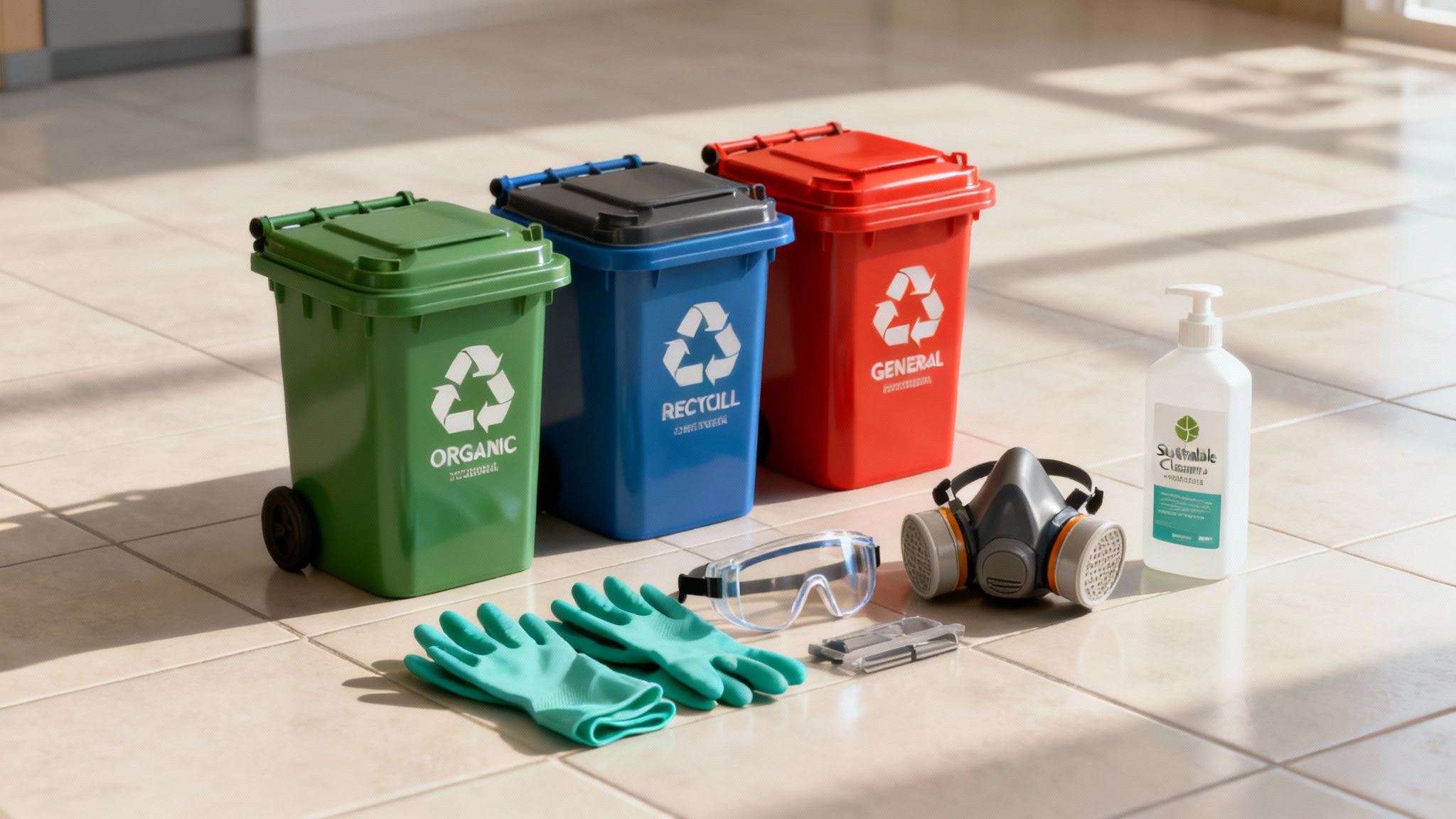
Waste management in a commercial kitchen might not be glamorous, but it fixes a lot of headaches. If grease traps overflow or bins clog, you’ll be chasing issues all day. A few simple routines keeps things flowing—and saves you from fines.
Effective Waste Segregation
Separating organic, recyclable and oily waste traps grease before it turns into a major problem.
• Label bins clearly so recyclables don’t end up in general waste.
• Have a dedicated caddy for cooking oils and fats—ready for pick-up.
• Fit drain screens at prep sinks and clear them at least twice daily.
Over at a busy Sydney bistro, rotating drain-screen checks every eight hours cut grease blockages by 65%.
“A clear waste plan saved us hours of unplanned downtime in peak service,” says a hospitality manager.
The right bins and on-time trap pumps don’t grab headlines, but they keep the kitchen flowing smoothly.
Eco-Friendly Cleaning Agents
Switching to green-certified detergents looks after staff and surfaces alike.
| Product Name | Surface Use | Feature |
|---|---|---|
| Citrus Degreaser | Grease Traps | Biodegradable |
| pH-Neutral Multi | Stainless Steel | Food-Safe |
| Enzymatic Drain Gel | Drains & Pipes | Residue-Free Formulation |
A café in Wollongong swapped to a plant-based citrus degreaser on fryer stands and ovens. The result? 30% fewer staff skin irritations.
When you pick a green cleaner, remember to:
- Choose products certified by Ecolabel or Green Seal.
- Test small batches in discreet spots first.
- Train your team on proper dilution and safe handling.
PPE Essentials
Right personal protective equipment keeps everyone safe.
• Chemical-resistant gloves protect hands from tough degreasers.
• Splash-proof goggles keep eyes safe from steam and spray.
• Respirators with organic vapour cartridges shield lungs during hood or pipe cleans.
Proper PPE use cuts injury reports by 42% in food service environments.
When you crank up the steam cleaner on greasy hoods, oils can aerosolise fast—so strap on your respirator before you start.
Best Practices For Integration
Build these steps into daily routines and compliance feels effortless.
Start each shift by auditing the waste station—check bin liners, trap status and oil caddies ready for collection. Rotate cleaning-agent inspections and PPE checks weekly to catch wear and tear early. Short refreshers keep staff confident and on the same page.
“Safety and cleanliness go hand in hand; you can’t have one without the other,” says a seasoned kitchen supervisor.
Cleaning Agent Selection Criteria
Choosing the right cleaner means balancing clean power with safety.
• Match pH levels to the surface material.
• Look for low-foaming formulas if you use high-pressure washers.
• Verify eco or food-safe certifications—no compromises.
Our head chef refuses any cleaner without a five-star eco rating.
A clear chemical policy prevents accidental misuse and builds team trust.
Integrating PPE Checks Into Shift Routines
PPE checks should be on your start-of-shift list to stop minor issues becoming big problems.
• Inspect gloves for tears and swap them after 40 hours of use.
• Wipe respirator seals with a soft cloth after each task.
• Check goggles for scratches or fogging before any high-pressure clean.
Consistency here keeps small faults from turning into safety hazards.
Tools For Waste Tracking
Digital tools take bin weights and trap logs from guesswork to clear data.
| Tool | Function | Frequency |
|---|---|---|
| Waste Tracking App | Record bin weights | Daily |
| Trap Clean Log | Note pump dates | Weekly |
| Dashboard Alerts | Flag overdue tasks | Real time |
With these, audits become transparent—and overdue tasks can’t hide.
Go-To Products And Sources
These picks keep kitchens running without a hitch:
• Bio-Grease Trap Cleaner – gentle on pipes and planet
• AquaSafe Floor Degreaser – low-odour, fast acting
• ProShield Nitrile Gloves – textured grip, chemical-resistant
• SteamGuard Respirator – lightweight, easy to clean
Buying bulk saves money and makes sure you never run out. Store agents and PPE in locked, labelled cabinets away from food prep. And always check stock levels and expiry dates.
Staff Training And Handover Templates
Bringing new team members up to speed doesn’t have to be stressful. Short, focused sessions slot into busy days without slowing service.
At one kitchen, day porters spend 15 minutes each morning with the head chef, spotting hidden grease hotspots and practising the sanitiser sequence in real time. Seeing workflows, not slides, speeds up learning.
Bite Sized Training Sessions
Keep training under 20 minutes and focus on one task—like cleaning hood filters or floor drains.
-
Hands-On Demo
Walk through removing and cleaning a grease trap mid-service. -
Quick Quiz
Three simple questions to check everyone’s on the same page. -
Feedback Loop
Ask newbies for suggestions to tweak the next session.
Finish with a one-page visual cheat sheet. It’s the go-to refresher when things get busy.
Shift Handover Forms
A well-structured form stops tasks getting lost. Many kitchens use tables like this:
| Task | Status | Initials |
|---|---|---|
| Bench Wipe-Down | Done | AB |
| Floor Sweep & Mop | Pending | CD |
| Hood Filter Check | Done | EF |
During audits, this shows who did what, and when.
Three Minute Morning Huddles
Before the first tickets start rolling, pull the team together for a quick stand-up.
-
Today’s Priorities
Any special events or menu tweaks. -
Cleanliness Focus
A peek at the colour-coded board for urgent tasks. -
Safety Reminder
A quick tip on PPE or chemical handling.
“Our morning huddle cut missed cleanings by 70%,” says a Newcastle café manager.
These mini-meetings sharpen communication and boost accountability naturally.
QA Checklists For Accountability
Turning routines into habits means consistent clean-ups. Use checkboxes for daily, weekly and monthly duties, then colour-code:
- Red for immediate attention
- Yellow for upcoming tasks
- Green for completed items
Printed sheets combined with digital reminders give you a double layer of reliability.
Seamless Service Handovers
Digital templates make shift swaps a breeze. Outgoing staff share updates in real time, so incoming teams know exactly what’s done and what’s pending.
That means fewer “Did you finish this?” moments, less repeat work and a real morale boost.
You may also like our guide on commercial cleaning contracts for tips on responsibilities and KPIs.
Every handover template you introduce cuts down miscommunication and builds a culture of natural accountability.
Ongoing Training Reviews
Lock in a weekly follow-up to keep skills sharp and spot any gaps early. A brief survey or debrief works wonders:
- Quick review after night shifts to capture fresh observations
- Monthly rotation of trainers so new eyes pick up missed steps
These review loops make improvements stick. Soon enough, accountability becomes part of your kitchen’s rhythm.
Don’t forget to include chemical-safety demos. Hands-on practice builds muscle memory faster than any slide deck.
FAQ
Deep cleans are the backbone of any solid kitchen routine. Doing one every 4–6 weeks digs grease out of hidden corners—think hood ducts, drains and ovens. If you’re at full tilt, bringing pros in every three months keeps you audit-ready.
- Aim for post-service days when things are calmer.
- Split the space into zones to speed up the process.
- Note stubborn spots and schedule targeted touch-ups.
In a pinch, a mix of vinegar and warm water can tackle light grime. But for baked-on fat or weeks of build-up, you won’t beat a pro-grade degreaser. Always keep that heavy-duty stuff on hand.
Quick Oven Grime Fixes
A baking soda and water paste has saved many ovens.
• Mix equal parts baking soda and water into a paste.
• Spread it on oven surfaces—steer clear of elements.
• Leave it for 30 minutes, then wipe off, rinse and dry.
“Baking soda halved our oven clean-down time,” says a Sydney pastry chef who swears by it.
Efficient Weekly Scrubs
Weekly scrubs don’t have to wipe out your team. Over time, I’ve learnt that pairing up for heavy tasks and keeping sprints under 15 minutes maintains momentum.
• Team up for hood-filter scrubs or floor mopping.
• Break the checklist into 15-minute bursts.
• Treat everyone to a coffee break once you finish.
A quick huddle and clear checklists turn chores into collective wins.
Elevate your commercial kitchen cleaning today. Book a quote with That Cleaning Crew.