You've probably heard the buzz about using clove oil for mould, and you might be wondering… does it actually work? The short answer is yes, it absolutely can. Its power comes from a key component called eugenol, a natural fungicide that kills mould spores rather than just hiding the problem.
What You Need to Know First
So, you've spotted some unwelcome mould setting up camp in a corner of your home. It happens. Especially here in Australia, where humidity can turn a poorly ventilated bathroom or a damp wardrobe into a perfect breeding ground for fuzzy spots of black or green.
Before you reach for the harshest chemical you can find, it's smart to ask if a natural approach could do the job.
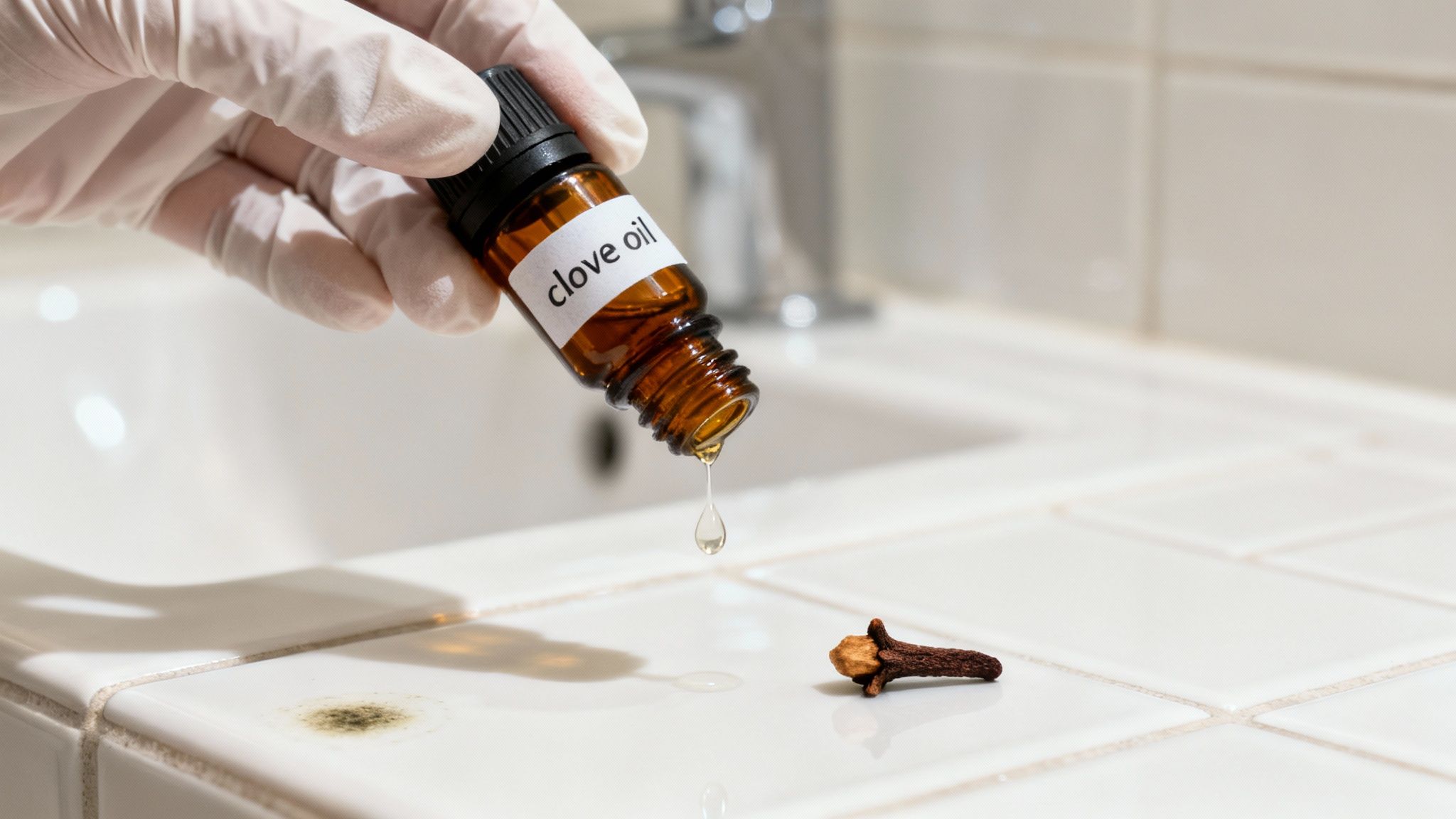
The idea of using clove oil isn't just some old wives' tale. It has a solid reputation in natural cleaning circles for a very good reason. Unlike bleach, which often just whitens the mould without killing its roots (meaning it grows right back), clove oil actually attacks the mould spores themselves.
Think of bleach as painting over a rust spot on your car. It looks better for a short while, but the rust is still there, eating away at the metal underneath. Clove oil, on the other hand, is more like a rust converter. It gets to the heart of the problem and stops it in its tracks.
Why Is Clove Oil So Popular for Mould?
The conversation around clove oil has really taken off, particularly in Australian homes. Cleaning expert Shannon Lush, who many of us trust for practical advice, often recommends a simple, specific dilution of clove oil for tackling mould.
Her suggestion of about a quarter teaspoon of oil of cloves per litre of water has become a go-to recipe for people wanting an effective, natural solution. It's this kind of expert backing that has helped elevate clove oil from a pantry staple to a respected mould-fighting tool. You can find more on this popular home remedy by exploring natural cleaning guides and tips online.
But… and this is a really big but… it's not a magic bullet for every mould situation.
It’s perfect for small, surface-level issues on hard, non-porous surfaces. We’re talking about things like:
- A few spots on your bathroom tiles.
- The beginning of mildew on a window sill.
- A bit of mould on a sealed countertop.
This is the most important thing to remember: Clove oil is a tool, not a total solution. For small-scale, surface mould, it's fantastic. For large, embedded, or systemic mould problems, it's completely out of its depth.
Understanding this distinction is key. Before we dive into exactly how it works and the step-by-step method to use it safely, it's crucial to know its limits. Using it in the right context can save you time and hassle. Using it in the wrong one? Well, that can create much bigger problems down the line. We'll explore that next.
Understanding How Clove Oil Works on Mould
So, we know it can work. But the real question is how. What’s actually happening when you spray that clove oil solution onto a mouldy surface? It’s not just a nice-smelling trick. There’s some proper science behind it, and it's surprisingly straightforward when you break it down.
Imagine mould as a tiny, microscopic plant. Like any plant, it has a structure, a body, and a way of protecting itself. It's got a cell wall and a cell membrane… think of it like the mould's skin and bones. This structure is what keeps it all together and allows it to grow and spread.
This is where clove oil comes in.
The Secret Weapon Called Eugenol
The real star of the show isn't the oil itself, but a powerful compound within it called eugenol. It’s the component that gives cloves their distinctive, spicy aroma. It’s also what gives mould a massive headache.
When eugenol comes into contact with a mould spore, it doesn’t just clean the surface. It gets aggressive. It works by attacking and disrupting the mould's cell wall and membrane. Picture it like a key breaking a lock. The eugenol effectively punctures the mould’s protective outer layers, causing the internal contents of the cell to leak out. Without its structure, the mould spore simply can't survive. It breaks down and dies.
That’s the critical difference. Bleach might strip the colour from the mould, making you think it's gone, but it often leaves the underlying structure intact to grow back. Clove oil, thanks to eugenol, goes for the kill by fundamentally destroying the spore itself.
From the Lab to Your Walls
Okay, so it works in theory. But what about in the real world? Does it last? Fortunately, researchers have looked into this, and the results are pretty encouraging, especially for our humid Australian climate.
It’s one thing to kill mould in a petri dish. It's another thing entirely to see how it holds up on a bathroom ceiling in February. One particularly interesting Australian study looked at particle boards treated with clove oil. They found that these boards were able to resist the growth of common mould species like Aspergillus for up to five weeks. You can explore the findings of this research which highlight clove oil's effectiveness against fungal growth.
This tells us something incredibly useful. Clove oil isn’t just a one-hit wonder; it has a residual effect. This means it can hang around on a surface and continue to prevent new mould spores from taking root for a decent amount of time.
How Clove Oil's Power Breaks Down
To really get your head around it, think of the process in a few simple steps. It's not just a single action, but a chain reaction that leads to the mould's demise.
- Contact and Penetration: The diluted clove oil solution makes direct contact with the mould spores. The eugenol immediately begins to work its way through the spore's outer defences.
- Cell Wall Disruption: This is the main event. The eugenol compromises the integrity of the cell wall, creating weak spots and essentially breaking it apart.
- Membrane Failure: Once the wall is breached, the inner cell membrane fails. This is the point of no return for the mould spore.
- Cell Death: With its structure destroyed, the spore dies completely. It can no longer reproduce or spread.
This process explains why clove oil is often considered a genuine natural mould killer and not just a surface cleaner. It’s tackling the problem at its biological source. However, as we’ll soon see, knowing how it works is only half the battle. Knowing how to use it safely and when to leave it alone is even more important.
Your Step-by-Step Guide to Using Clove Oil Safely
Alright, so you’ve decided to give clove oil a shot on a small patch of mould. Great. But getting it right is about more than just splashing some oil around. To be effective and, more importantly, safe, you need to follow a few key steps.
Let's walk through the exact process. Think of this as your playbook for doing the job properly.
First Things First: Your Safety Gear
Before you even touch the bottle, you need to protect yourself. We're dealing with mould spores and a pretty potent essential oil, so this part is non-negotiable.
Grab these items before you start:
- Gloves: A good pair of rubber or disposable gloves will keep the oil and mould off your hands.
- A Mask: A P1 or P2 face mask is what you want. This stops you from breathing in any airborne mould spores.
- Eye Protection: Goggles are a smart move to protect your eyes from any accidental splashes.
- Ventilation: This is a big one. Open up windows and doors, and get a fan going if you can. Good airflow is your best friend here.
It might feel like overkill for a tiny spot of mould, but it’s always better to be cautious. You’re protecting your skin and lungs from both the mould itself and the concentrated oil.
The Perfect Clove Oil Recipe for Mould
You might be surprised by how little clove oil you actually need. In this case, more is definitely not better. A strong concentration can be irritating to your lungs and can even damage some surfaces.
The most recommended and effective recipe is beautifully simple.
Here’s what you’ll need:
- A clean spray bottle.
- 1 litre of plain tap water.
- ¼ teaspoon of 100% pure oil of cloves.
That’s it. Just a tiny quarter of a teaspoon. Mix the oil and water in the spray bottle and give it a really good shake to combine everything. Because oil and water don’t stay mixed, you’ll need to shake it regularly while you’re using it.
This simple mix allows the active compound in clove oil, eugenol, to get to work disrupting and killing mould spores.
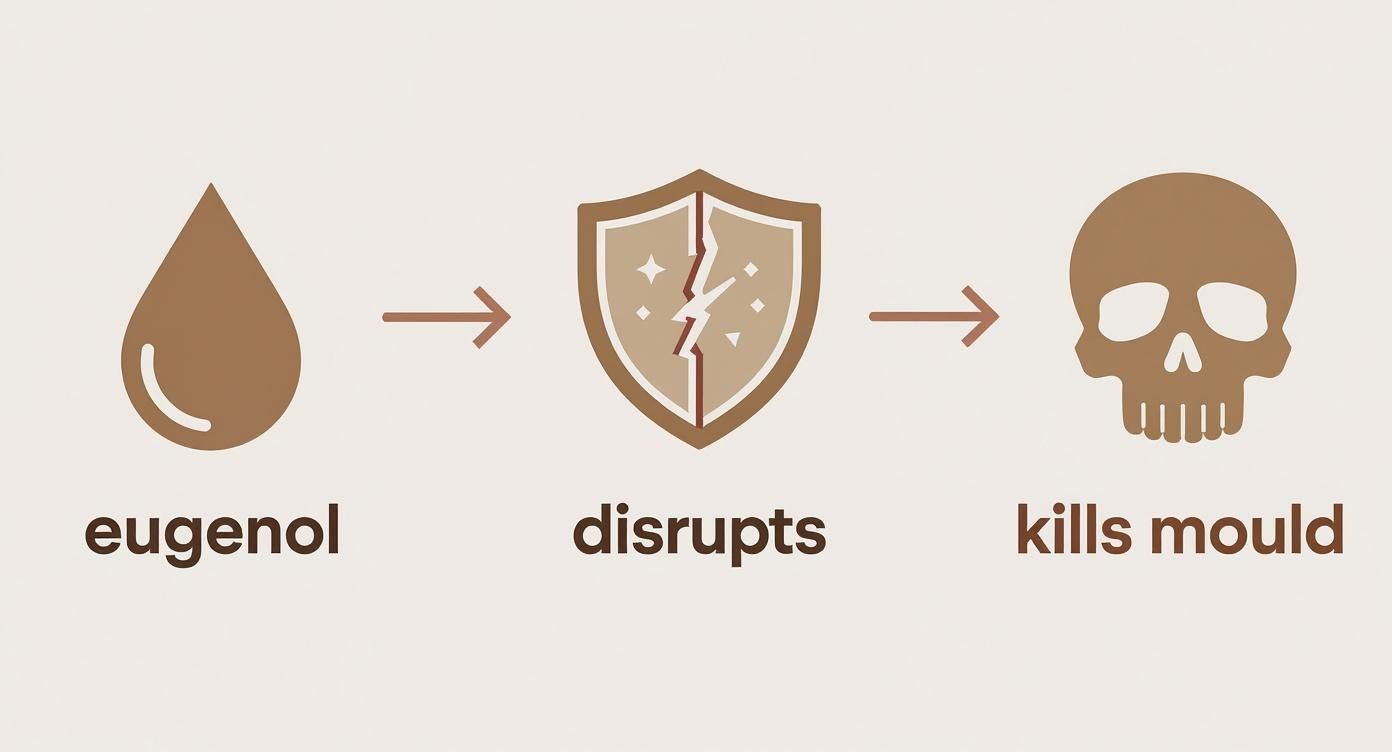
This process is what makes clove oil a mould spore killer, not just a surface cleaner.
Applying the Solution, Step by Step
With your safety gear on and your solution mixed, you're ready to tackle that mould. Follow these steps carefully for the best results.
-
Initial Surface Clean: First, you need to clean the visible mould off the surface. Don't use your clove oil spray for this part. Instead, use a mix of soap and water. Gently wipe the surface mould away with a disposable cloth and throw it out immediately. The goal here is to remove the bulk of the growth so the clove oil can penetrate and deal with the spores left behind.
-
Apply the Clove Oil Spray: Now it's time for the clove oil mix. Lightly mist the entire affected area. You don't need to drench it; a fine, even spray is perfect. Make sure you cover the spot itself and a small border around it.
-
Let It Sit: This is the most crucial step. Don't wipe it off. Leave the solution on the surface for at least 24 hours. This gives the eugenol enough time to penetrate the mould spores and kill them completely. It needs time to do its job.
-
The Final Wipe-Down: After a day, you can come back and wipe the area down with a clean, damp cloth. By now, the mould spores should be dead and easy to wipe away.
A quick tip: This method works best on hard, non-porous surfaces like tiles, glass, or sealed benchtops. Be very careful on porous materials like unsealed wood or plasterboard, as the oil can easily stain. Always do a spot test in a hidden area first.
For more detailed advice on tackling specific surfaces, our guide on how to clean mould from walls offers extra tips. Following these steps ensures you’re not just cleaning what you can see, but you’re actually killing the problem at its source.
The Hidden Risks of DIY Mould Removal
Okay, let's have a serious chat for a moment. It’s empowering to know that something as natural as clove oil can actually kill live mould spores. It feels effective, simple, and a lot less harsh than chemical options. But honestly, killing the visible spores is just one small piece of a much larger, and often more serious, puzzle. This is where we need to be crystal clear about the limitations and the hidden dangers you might not see.
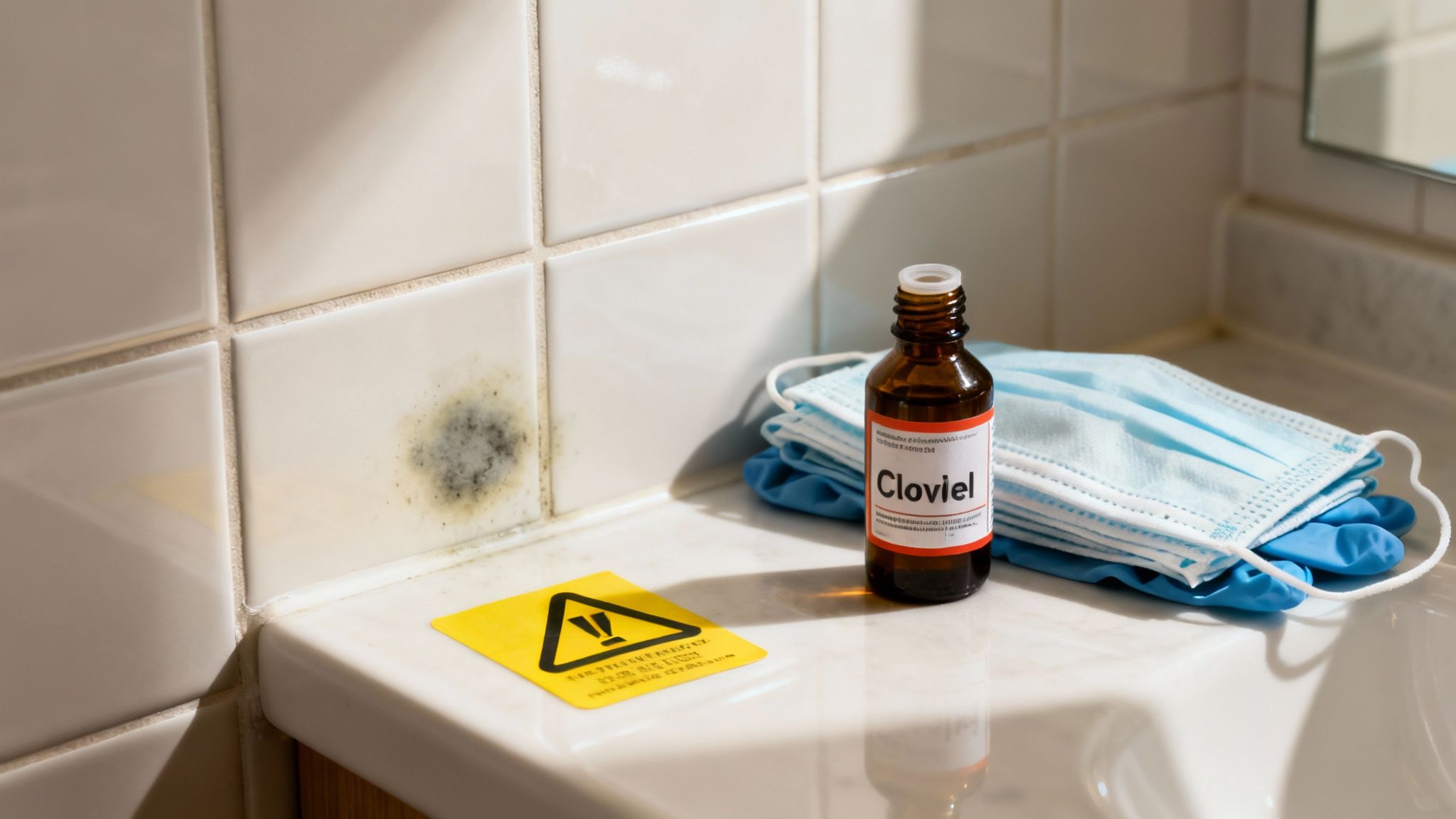
Here’s the thing that trips most people up: even dead mould spores can make you sick. That’s right. Killing the mould doesn't automatically make the area safe. The real troublemakers left behind are called mycotoxins.
Think of mycotoxins as the toxic ghosts of mould past. They're harmful substances produced by certain types of mould, and they don’t just vanish when the mould dies. Instead, they linger on surfaces and in the air, ready to cause health issues. Clove oil simply can't remove them.
Why Dead Mould Is Still a Danger
This isn't just a minor detail. It’s a critical health and safety issue. In many water-damaged buildings, a huge portion of mould spores are already dead but still loaded with these harmful toxins. Research shows that around 70% of mould spores in these environments are no longer living but continue to carry mycotoxins that can trigger allergies, asthma, and other respiratory problems.
This is a major reason why professional mould remediation standards, like the internationally recognised IICRC S520, strongly advise against simply spraying biocides like clove oil in serious situations. Killing the spores without physically removing all traces of the contamination… including the dead spores and their mycotoxins… doesn't solve the underlying health hazard.
What this means is that spraying a mould patch with clove oil can give you a false sense of security. You might think you've fixed the problem because the visible mould is gone, but the invisible toxic threat could still be very much present.
The Risks of Clove Oil Itself
On top of that, we have to talk about the risks of using clove oil itself. Just because it's natural doesn't mean it's completely harmless. Clove oil is incredibly potent.
- Respiratory Irritation: For people with asthma, allergies, or other respiratory conditions, inhaling the strong fumes from concentrated clove oil can be a serious irritant, potentially triggering an attack or breathing difficulties.
- Skin Sensitivity: If undiluted clove oil gets on your skin, it can cause significant irritation, rashes, or even burns. This is why wearing gloves is absolutely essential.
- Surface Damage: Clove oil can also stain or damage certain materials, especially porous surfaces like unsealed wood, fabrics, and plasterboard.
While clove oil can be effective for a small patch of surface mould, it's crucial to understand the complexities of hidden mould. For example, the challenges involved in identifying and removing mold behind baseboards often require a much more thorough approach than a simple spray can provide. These hidden problems are where the real dangers often lie.
Ultimately, understanding these risks helps you see the line between a quick, small-scale fix and a genuine health hazard that needs a professional touch. Sometimes, the most effective tool is knowing when not to do it yourself.
When to Call a Professional Mould Expert
So, you’ve learned how clove oil works and you know the risks. Now for the most important question of all: when can you tackle a small mould spot yourself, and when is it time to pick up the phone and call in the experts?
Getting this decision right can make a huge difference to your property and your health.
Drawing that line can feel a bit blurry, but it’s actually quite simple when you know what to look for. Think of the DIY clove oil method as first aid. It’s perfect for a small scrape, but you wouldn't use it for a broken arm.
For a tiny patch of surface mould on your bathroom tiles that’s smaller than your hand? Clove oil is a great option. But for anything more, you’re stepping firmly into professional territory.
The Band-Aid On A Broken Arm Problem
Using clove oil on a large or persistent mould problem is like putting a band-aid on that broken arm. It might cover up the visible issue and make you feel like you’ve done something… but it does absolutely nothing to fix the underlying break.
The real problem is still there, getting worse just under the surface.
A professional mould remediation service is about so much more than just spraying a solution and wiping it away. It's a systematic process designed to handle the entire problem, from the visible growth right down to the root cause.
Professionals bring in specialised gear and a level of expertise you just can't replicate with a DIY approach. They use strategies that contain the problem and stop it from getting worse.
- Containment: The first thing they do is seal off the affected area with heavy-duty plastic sheeting. This creates a negative air pressure environment, ensuring that no disturbed mould spores can escape and contaminate the rest of your building.
- Air Scrubbing: They use industrial-grade air scrubbers with HEPA filters. These machines run for hours, pulling microscopic airborne spores and mycotoxins right out of the air, making it safe to breathe again.
- Source Identification: This is the most critical step. A professional won't just clean the mould; they'll find out why it’s there in the first place. Is it a leaky pipe inside a wall? Poor ventilation? Rising damp? They find the moisture source and make sure it’s fixed for good.
Without fixing the moisture issue, the mould will always come back. Always.
When DIY Is Not an Option
There are a few clear signs that tell you to step back and call a professional immediately. If you see any of these, don't even think about tackling it yourself.
- The mould covers an area larger than one square metre. This is the general rule of thumb for when a problem is considered too big for DIY.
- The mould keeps coming back in the same spot. This is a massive red flag that you have an unresolved moisture issue that needs expert investigation.
- You can smell a strong, musty odour but can't see the mould. This often means you have a hidden problem festering behind walls or under floors.
- Anyone in the building has respiratory issues, allergies, or a weakened immune system. In these cases, the health risk is simply too high to take any chances.
Your health is the number one priority. A widespread or hidden mould issue can have serious long-term consequences, and it's not something to gamble with. Before committing to a new property, for example, it’s wise to consider thorough assessments like pre-purchase building inspections to uncover any hidden mould issues before they become your problem.
To help you decide, here’s a quick look at how the two approaches stack up.
DIY Clove Oil vs Professional Remediation
| Feature | DIY Clove Oil Method | Professional Mould Remediation |
|---|---|---|
| Best For | Small, non-porous surfaces (e.g., tiles, glass) where mould is less than 1 square metre. | Any situation, especially large areas, porous surfaces, or recurring mould problems. |
| Scope of Work | Kills surface mould and spores. Does not address the underlying moisture source. | Identifies and eliminates the moisture source, removes all mould, and purifies the air. |
| Equipment Used | Spray bottle, microfibre cloths, basic PPE (gloves, mask). | Commercial-grade HEPA air scrubbers, containment barriers, moisture meters, and specialised biocides. |
| Safety | Risk of spreading spores if not done correctly. Potential for skin/respiratory irritation from clove oil. | High level of safety. Professionals use containment and air filtration to prevent cross-contamination. |
| Effectiveness | A temporary fix. Mould will likely return if the moisture problem isn't solved. | A long-term solution. Addresses the root cause to prevent regrowth. |
| Cost | Low initial cost for supplies. | Higher upfront investment, but prevents much larger costs down the line (structural damage, health issues). |
Ultimately, while clove oil has its place for minor touch-ups, it can't compete with the comprehensive, root-cause approach of a professional team.
For a deeper understanding of what a full cleanup involves, check out our professional guide on how to get rid of mould. It gives you a clear picture of the steps we take to ensure a property is truly safe and mould-free. Making that informed decision is the smartest first step you can take.
Making the Final Call on Clove Oil
So, we've walked through the science, the safety steps, and the serious risks. It’s a lot to take in. The big question now is, what’s the final verdict on using clove oil for mould? When does it actually make sense to pull it out of the cupboard?
Let's cut through the noise. Clove oil is a fantastic tool, but for a very specific job. It's for the small, manageable, surface-level stuff. The kind of spot that makes you think, "Oh, I should probably deal with that soon."
But it's not a silver bullet. It’s definitely not the answer for a deep-seated, recurring mould issue that hints at a bigger problem lurking behind your walls. That's your signal to switch from a DIY mindset to calling in a professional.
Your Clove Oil Checklist
To make it really simple, let's turn this into a quick checklist. If you can confidently tick every single one of these boxes, then giving the clove oil method a go is a reasonable next step.
- Is the mould patch small? We're talking about an area no bigger than your hand or a small dinner plate. Anything larger is an immediate red flag.
- Is it on a hard, non-porous surface? Think bathroom tiles, glass, or a sealed kitchen benchtop. It's not for plasterboard, wood, or carpet where mould can sink its roots deep inside.
- Is this the first time you've seen it? If mould keeps coming back in the same spot, it's a clear sign of an underlying moisture problem that clove oil simply can't fix.
- Are you sure there’s no hidden water damage? A musty smell with no visible source, peeling paint, or warped walls all point to a much bigger issue. Don’t just treat what you can see.
- Is everyone in the building in good health? If you’re managing a space with children, the elderly, or anyone with respiratory issues or a compromised immune system, the risk is too high. Don't take the chance.
If you hesitated or answered 'no' to any of these questions, it’s your cue to stop. At that point, the smartest and safest decision is to step back and call for professional help.
Ultimately, knowing does clove oil kill mould is only half the battle. Yes, it does… under the right circumstances. The real expertise lies in recognising when those circumstances just don't apply.
The best decision you can make as a facilities manager is always the one that puts health and safety first. Sometimes, that means tackling a tiny problem yourself with the right knowledge. And other times, it means admitting a problem is out of your depth and bringing in the experts who have the tools, training, and experience to solve it for good.
A Few Common Questions About Using Clove Oil
It’s smart to ask questions before you start spraying anything around your home, especially when it comes to mould. We get a lot of enquiries about clove oil, so let's walk through some of the most common ones we hear from facilities managers and homeowners.
How Long Does It Take for Clove Oil to Kill Mould?
That's a great question, and the answer isn't what most people expect. Clove oil doesn't work instantly. After you've cleaned the visible mould and sprayed your diluted solution, the real work begins, and it needs time.
You'll want to leave the solution on the surface for at least 24 to 48 hours. Don't be tempted to wipe it off right away. This dwell time is crucial because it allows the eugenol… the active compound in the oil… to penetrate the mould's structure and destroy its spores. The magic is happening on a microscopic level, so patience is key here.
Can I Use Clove Oil on Any Surface?
Definitely not, and this is a big one. Clove oil is most effective on hard, non-porous surfaces where mould can't establish deep roots. Think of materials like:
- Bathroom tiles and grout
- Glass and mirrors
- Sealed benches and countertops
Be extremely careful with porous materials like plasterboard, unsealed timber, carpet, and fabrics. On these surfaces, the oil can easily cause staining or simply soak in without reaching the hyphae (the roots) of the mould colony. We always recommend doing a small spot test in an inconspicuous area first to see if it causes any discolouration or damage. It’s a simple step that can prevent a lot of regret.
Is Clove Oil Safe Around Pets and Children?
This is a critical point for any home or workplace. While clove oil comes from a plant, "natural" doesn't automatically mean "safe." The oil is quite potent and can be toxic if ingested, particularly for pets like cats and dogs who are much more sensitive to essential oils.
It can also trigger skin and respiratory irritation in sensitive individuals, including young children. If you decide to use it, you absolutely must ensure the area is well-ventilated. More importantly, keep pets and children completely out of the area until it has been thoroughly wiped down and has had plenty of time to air out.
Given the risks, if you're in a home with pets or young children, or a commercial space with occupants, professional remediation is always the safest bet. Your family's or employees' health isn't worth the gamble.
What Should the Mixture Smell Like?
Your nose is a pretty good tool here. A properly diluted clove oil solution… just a quarter teaspoon per litre of water… should have a mild, spicy scent that's noticeable but not overwhelming.
If the aroma is so strong it makes your eyes water, you've definitely used too much oil. An overpowering smell isn't just unpleasant; it's a red flag for a higher risk of respiratory irritation. The goal is a subtle fragrance, not an intense one. If it smells too strong, it probably is.
When you're up against a mould problem that’s more than a tiny patch on your shower tiles, don't leave it to chance. The health of your building and the people inside it is too important for a DIY experiment. For a professional, safe, and guaranteed solution that gets to the source of the problem, you need an expert team.
Contact That Cleaning Crew for a free on-site quote and let us take care of your mould worries for good. Find out more at https://www.thatcleaningcrew.com.au.