Ever look up at one of Sydney's massive towers and just… wonder? How in the world do they keep all that glass so clean? It's a fair question. Especially with everything our city throws at them. Harbour salt. City grime. That relentless sun. Keeping hundreds of storeys sparkling seems like an impossible task.
It's not magic, that's for sure. And it's a completely different universe from your standard window cleaner.
High-rise window cleaning is a super specialised field. It’s a careful mix of technical skill, a bit of athleticism, and safety rules that are practically military-grade. For facilities managers like you, it's way more than just another line item in the cleaning budget. It's a huge part of protecting the value and integrity of your building.
Think of this as a quick chat. A bit of a primer before we dive into the nitty-gritty of safety compliance and checklists. Let's just get on the same page about what this service really is and why it's so important for any landmark building in a city like Sydney.
More Than Just a Squeegee and a Smile
At its heart, professional high-rise window cleaning is all about preservation. Over time, all that grime, salt spray, and pollution doesn't just block the stunning view. It actually starts to damage the building's facade. Those corrosive bits and pieces can etch into the glass and wear down the rubber seals around the panels, which can lead to much bigger… and way more expensive… headaches later on.
When you bring in a professional crew, you're getting so much more than a streak-free shine. Here’s what’s really going on up there:
- Protecting Your Asset: Regular, pro cleaning physically gets rid of the gunk that causes long-term damage. It’s preventative maintenance. The kind that makes your building’s entire facade last longer.
- Upholding Your Image: A sparkling building sends a really powerful message. It tells tenants, visitors, and everyone else that this is a premium property that's managed well. First impressions are everything.
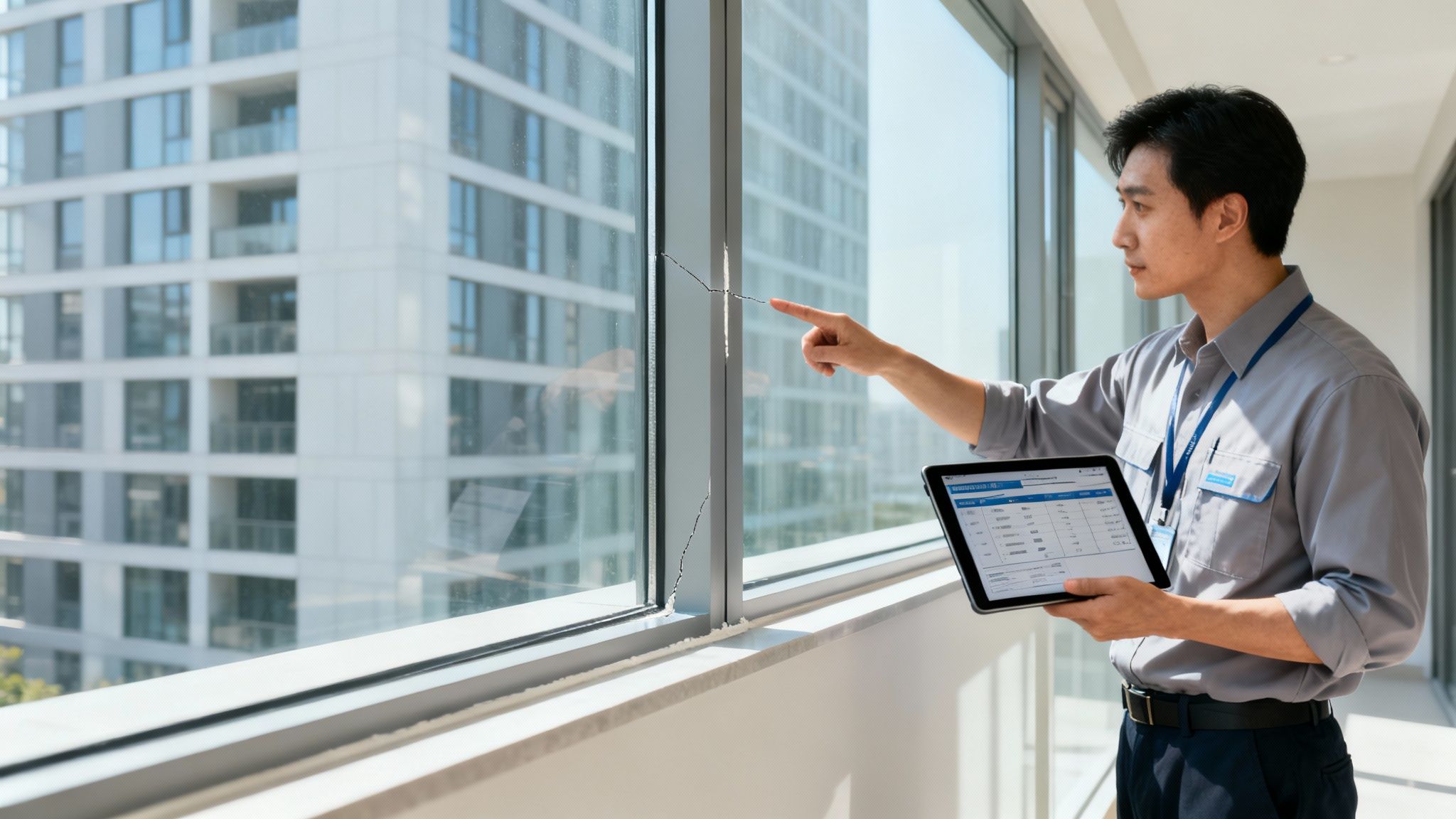
- Eyes in the Sky: Your window cleaning team gets a close-up look at your building that no one else does. Seriously. They're often the first people to spot the early signs of trouble, like a tiny crack in a panel, a sealant that's starting to fail, or rust stains that could point to a bigger problem.
You’ll see them out there, using different gear for different buildings. On some of Sydney's more complicated structures, you'll find technicians using rope access—what most of us just call abseiling—to get to every nook and cranny with surgical precision. On others, a permanently installed building maintenance unit (BMU), or cradle, is the way to go. And for the lower levels, you might even see water-fed pole systems doing their thing.
Each method has its place. Knowing the basics is the first step towards making smart, cost-effective decisions for your property. It's all about keeping your building safe, looking sharp, and standing tall on that beautiful skyline.
The View From The Top: Methods Explained
So, how does it all actually happen hundreds of metres in the air? You might be surprised to learn there isn't just one answer. The best method for high-rise window cleaning really depends on your building's unique personality. Its height, its shape, and how easy it is to get to all that glass.
Let's break down the main techniques you'll see crews using across Sydney. Think of it like a toolbox. You wouldn't use a hammer to fix a leaky tap, would you? It’s all about picking the right tool for the job.
Rope Access: The High-Flying Specialists
This is what most people picture. It’s often called industrial abseiling, and honestly, it’s the closest thing to a real-life superhero job you can get. Highly trained and certified technicians use a whole system of ropes, harnesses, and specialised gear to move down the building's facade.
It’s kind of like rock climbing… but with a squeegee instead of a pickaxe. This method is incredibly versatile. It’s perfect for buildings with tricky architecture, weird angles, or setbacks where a big rigid platform just can’t reach. It also means there's hardly any equipment on the ground or roof, which means less disruption for everyone in the building.
Building Maintenance Units: The Built-In Solution
If your building is one of the more modern skyscrapers, it might already have a Building Maintenance Unit (BMU). You've probably seen them. They're those permanent crane-like things on the roof with a cradle or platform that moves up, down, and sideways along the building.
A BMU is basically a window washer's personal lift. It gives the team a stable, secure platform, letting them carry more equipment and often work a bit faster on those big, flat glass surfaces.
They're an amazing, purpose-built solution. The only catch? They're complex machines themselves and need regular, certified maintenance to make sure they're always safe and ready to go.
This diagram helps show the key things we think about—asset protection, safety, and appearance—that drive how we approach building maintenance.
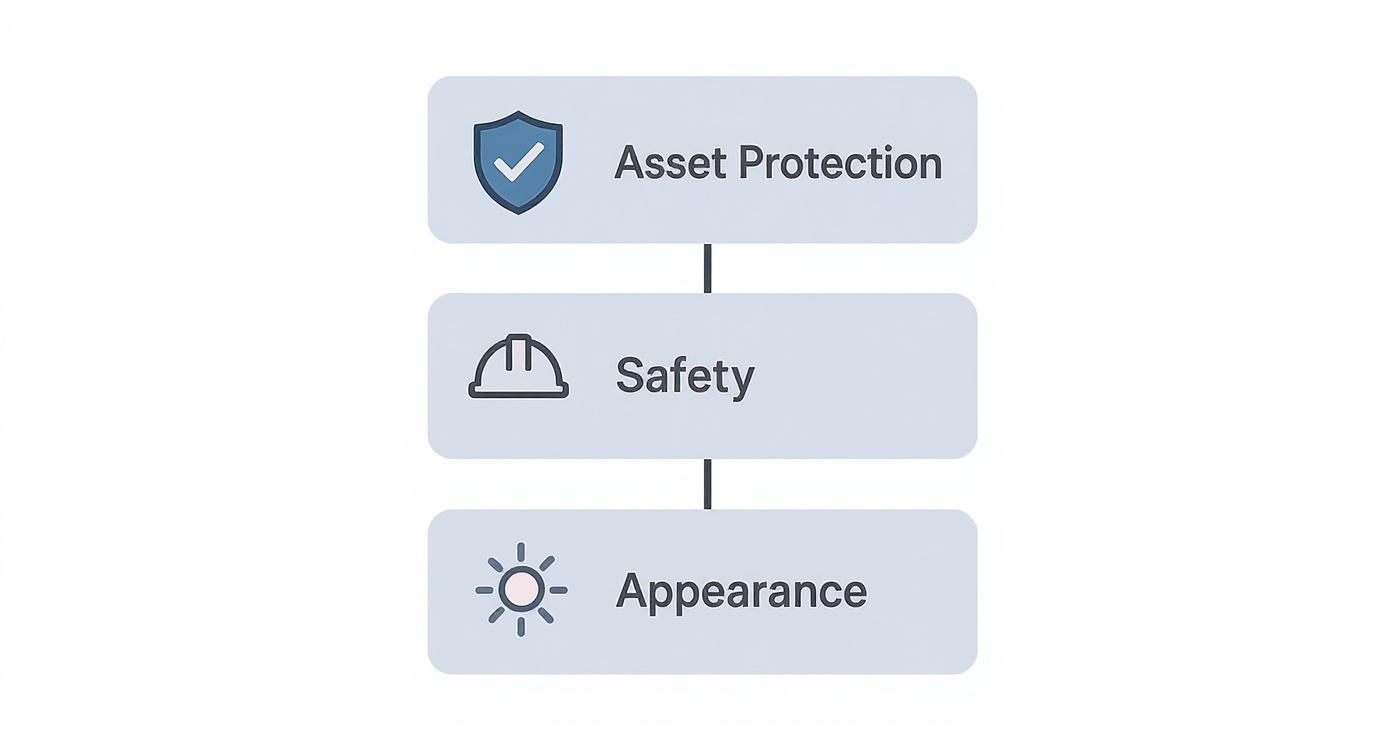
Ultimately, each of these elements feeds into a bigger maintenance strategy. One that protects the building's value and makes sure it's a safe, appealing place to be.
Water-Fed Poles: Reaching New Heights from the Ground
What about the lower floors? Or buildings that aren't quite skyscrapers but are still way too tall for a ladder? This is where water-fed pole systems come into play. These aren't just any old poles; they're long, telescopic poles made from super lightweight stuff like carbon fibre that can reach surprisingly high, sometimes up to several storeys.
The real magic is the water. The poles feed highly purified, de-ionised water up to a brush at the very end. This pure water is a natural cleaner. And because it has no dissolved minerals, it dries to a perfect, streak-free finish. No squeegees needed.
Many modern high-rise window cleaning services employ advanced techniques to ensure a streak-free finish. For further details on specialized window cleaning practices, including the use of purified water, consider this resource.
Comparing High Rise Window Cleaning Methods
To make it all a bit clearer, here’s a quick rundown of which method works best for which situation.
| Method | Best For | Key Advantage |
|---|---|---|
| Rope Access | Buildings with complex architecture, ledges, or difficult-to-reach areas. | Unmatched versatility and minimal disruption at ground level. |
| BMU / Cradle | Modern skyscrapers with large, flat glass surfaces and an existing system. | Stability, speed, and efficiency for straightforward facades. |
| Water-Fed Poles | Lower levels of high-rise buildings (up to a few storeys) or mid-rise structures. | Ground-based operation that's safe, fast, and delivers a streak-free finish. |
Choosing the right approach isn't just about cleaning glass. It’s about doing it safely, efficiently, and with the least amount of fuss for everyone in and around your building.
The amount of glass in our city centres is just staggering. Sydney and Melbourne are the epicentres of high-rise development in Australia, with the most tall structures in the country. Sydney is home to over 100 high-rise buildings, while Melbourne has more than 70. Together, that's millions of square metres of glass. Which really highlights why you need professional services… your in-house staff just can't safely handle these kinds of heights.
Your Guide To Safety And Compliance
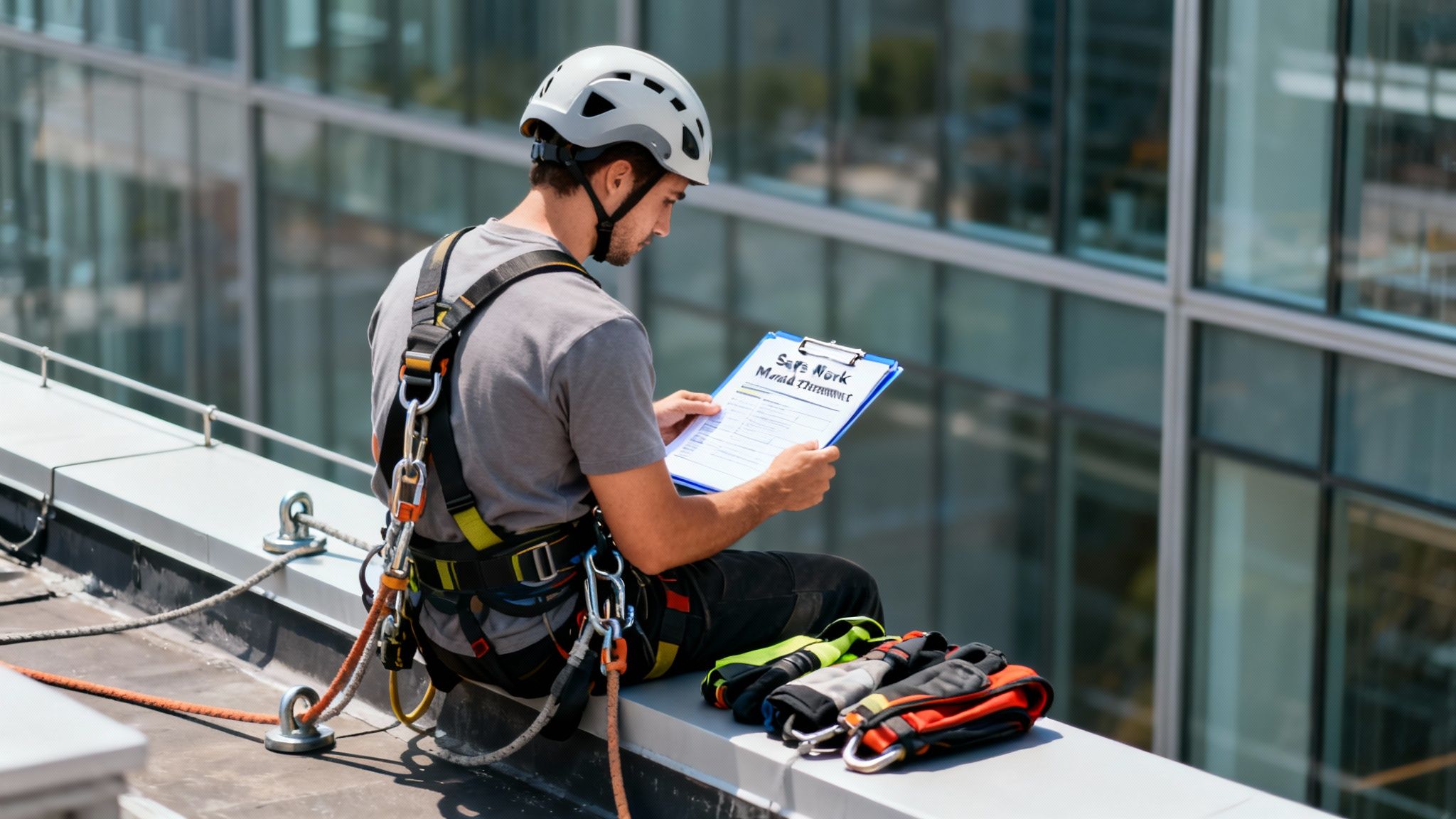
Okay, let's get serious for a moment. This is easily the most important part of our whole chat. When you're dealing with high-rise window cleaning, you have people working hundreds of metres in the air. There is absolutely no room for error. None.
This isn't about you needing to memorise every single SafeWork NSW rule. Not at all. It’s about knowing the right questions to ask so you can confidently tell a professional team from a bunch of cowboys.
Think of this as your safety checklist. A way to make sure the team you hire is not just good with a squeegee, but completely obsessed with getting everyone home safe at the end of the day. Because that’s the only result that matters.
The Non-Negotiable Paperwork
First up, documents. I know, not the most thrilling topic, but these bits of paper are the foundation of a safe operation. They prove a company doesn't just talk about safety. They live it.
A professional team will give you these without you even asking, but you should always check.
- Public Liability Insurance: This one's a biggie. You’re looking for a serious policy, often $20 million or more, which is standard for this kind of high-risk work. It protects you, your property, and the public from the unthinkable.
- Workers Compensation Insurance: This is mandatory. It makes sure the technicians are covered if an injury happens on your site. It’s a basic responsibility.
- Safe Work Method Statements (SWMS): This is a critical one. A SWMS (pronounced 'swims') is a document that breaks down a high-risk job into steps. It points out potential hazards for each step, and then it outlines the specific safety controls needed to manage those risks.
A generic, one-page SWMS is a huge red flag. A good one will be detailed and specific to your building. It'll talk about its unique challenges, from pedestrian access down below to the anchor point locations on the roof.
Certifications And Training Matter
You wouldn't let an unlicensed electrician rewire your building, right? Same logic applies here. The certifications the technicians have are proof of their skill and their commitment to safety standards.
For rope access work, the global gold standard is IRATA (Industrial Rope Access Trade Association). It’s a tough training and certification system with three levels of qualification.
Think of IRATA like a pilot's license for working on ropes. Level 1 is the starting point, Level 2 is an experienced technician, and a Level 3 is a supervisor who's responsible for the safety of the entire team on site.
The industry is subject to strict safety regulations, with certified cleaning providers required to adhere to strict protocols. A huge percentage of certified Australian cleaning providers have achieved higher levels of service compliance, which shows a deep commitment to quality. You can discover more insights about these high standards for high-rise window cleaning and how they minimise risk for everyone.
Building A Culture Of Safety
At the end of the day, compliance is more than just ticking boxes. It’s about a company’s culture. It’s in the way they check their gear before every single use. The way they secure the work zone on the ground. And how they communicate with you and your tenants.
For an in-depth look at legal expectations and effective strategies, it's worth exploring comprehensive resources on workplace safety procedures that protect your team.
When you’re checking out a potential partner, listen to how they talk about safety. Is it an afterthought, or is it woven into everything they say and do? The best companies are fanatical about it. And that’s exactly who you want when the stakes are this high.
Understanding Window Cleaning Costs
Okay, let's get down to brass tacks. The money. You’ve probably got a few quotes for your building’s window cleaning, and if you're like most facilities managers, they’re all over the place. One seems way too low. Another feels sky-high. So, what's going on?
It’s a question I hear all the time. The cost of cleaning a high-rise isn't just a number pulled out of thin air. It’s a careful calculation based on a few key things. Getting your head around these is the first step to setting a realistic budget and knowing you’re getting real value. This isn't about finding the cheapest price… it's about making a smart, informed financial decision for your building.
The Big Price Drivers
So, what actually makes up that final number on a quote? It really boils down to three main things: your building's unique design, the methods needed to clean it safely, and how often the work gets done.
-
Building Height and Complexity: This one’s pretty obvious. A 60-storey skyscraper in the Sydney CBD is a totally different beast to a 15-storey apartment block in Parramatta. But it's not just about height. The architecture plays a massive part. Does your building have deep setbacks, wide overhangs, complicated facades, or dozens of balconies? These things demand more time, highly specialised rigging, and a serious amount of skill from the team, which all gets reflected in the price.
-
Access Method: As we've already covered, the way our technicians actually get to the glass is a huge cost factor. If your building has a well-maintained, built-in BMU ready to go, the setup time is pretty minimal. But if a complex rope access system needs to be rigged from scratch for every single clean, that means more labour and very specialised expertise, which naturally affects the overall cost.
Frequency and Grime Level
How often you schedule your cleans has a massive impact on the budget. A building that gets a quarterly clean will have a much lighter build-up of grime than one that’s left for a full year to battle Sydney's dust, salt, and pollution.
Think of it like mowing your lawn. A quick trim every couple of weeks is way easier and faster than hacking through an overgrown jungle once a season. It’s often more cost-effective in the long run to schedule more frequent cleans. Each job is quicker, and it stops that heavy, stubborn grime from baking onto the glass, which takes a lot more work—and time—to get off.
A detailed quote isn't just a price; it's a plan. It should clearly spell out the scope of work, the methods being used, and any specific inclusions or exclusions so there are no surprises later.
The commercial window cleaning industry in Australia is a big deal financially, with the wider commercial cleaning market valued in the billions. Within that, exterior window cleaning is always one of the top revenue generators. If you're interested in how the market works, you can explore the 2024 Australian window cleaning industry statistics.
Ultimately, a good quote gives you clarity and confidence. If you're looking for more specific details on what to expect, our guide on understanding window cleaning service costs offers a deeper dive into the budgeting process. It helps you see beyond the final number to the real value and expertise you’re investing in for your property.
How To Choose The Right Cleaning Partner
Alright, let's get into what really matters. Picking a partner for your high-rise window cleaning is a huge decision. And it’s about so much more than just getting the glass clean.
You’re not just hiring a cleaning service. You’re trusting a team with the safety of your building, your tenants, and every single person walking on the busy Sydney street down below. It’s a serious responsibility. And it deserves a serious vetting process.
So, how do you sort the genuine pros from the ones who just talk a good game? It all comes down to asking the right questions and demanding proof. A little bit of homework now will save you a world of headaches later and give you some genuine peace of mind.
Look For Proof, Not Promises
Anyone can say they’re the best. The real experts can prove it. When you're talking with a potential company, don't just take their word for it. You need to see actual evidence that they have the experience and professionalism to back up their claims.
Think of it as doing your due diligence.
Start by asking for case studies or references. Here’s a pro tip: ask for examples of buildings that are similar to yours. If you manage a heritage-listed site with tricky sandstone features, a glowing review from a brand new glass tower isn’t nearly as helpful. A reputable company will be proud to share their work and put you in touch with other facilities managers they’ve worked with.
Next, dig into their safety record and documents. We’ve already covered how critical this is, so insist on seeing their current Public Liability Insurance certificate, Workers Compensation details, and examples of their site-specific Safe Work Method Statements (SWMS). A professional outfit will have this organised and ready to show you without any fuss.
Communication Is Everything
Picture this. The crew is meant to start on Monday morning, but the forecast suddenly predicts gale-force winds are about to whip through the CBD. What happens next?
A great partner will be on the phone to you proactively. They'll be discussing a backup plan and rescheduling. A not-so-great one? You might just be left wondering where everyone is.
You're looking for a partner who communicates clearly and consistently. This isn't just about the work itself; it's about building a trusting relationship where you always know what's going on.
This is especially true in a city like Sydney, where the weather can turn on a dime. A rock-solid communication plan is non-negotiable. It shows they respect your time, your budget, and your tenants' schedules.
A Quick Vetting Checklist
Finding the right team means asking pointed questions that go beyond the sales pitch. We've put together this simple checklist to help you cut through the noise and find a truly professional high-rise cleaning partner in NSW.
Vendor Vetting Checklist
| Category | Question to Ask | Why It Matters |
|---|---|---|
| Proven Experience | Can you provide case studies for buildings with similar architecture, height, or access challenges to ours? | This confirms they have relevant, real-world experience, not just general knowledge. |
| Safety & Compliance | Can we see your current insurance certificates and a sample site-specific SWMS you've prepared for another job? | This is non-negotiable. It verifies they are insured and take site-specific safety planning seriously. |
| Team Credentials | Are all your rope access technicians IRATA certified? What is the experience level of the on-site supervisor? | Certification is the industry standard for safety and skill. An experienced supervisor ensures the job runs smoothly and safely. |
| Communication Process | What is your process for communicating with us about scheduling, weather delays, and on-site progress reports? | A clear process shows professionalism and respect for your role, preventing surprises and keeping you informed. |
| Contract Flexibility | How flexible are your service agreements? Can we discuss different scheduling or service models? | Your facility's needs might change. A good partner works with you to create a contract that makes sense for the long term. |
At the end of the day, it's about finding a company that shares your own standards for safety, quality, and professionalism. Discussing different agreement options is key, and you can learn more about how to structure effective commercial cleaning contracts to make sure they meet your facility's specific needs.
When you find that fit, you get more than just clean windows. You get a reliable partner who is dedicated to protecting your asset.
Creating A Smart Maintenance Plan
So you've chosen your window cleaning crew. That’s a huge step. But the work doesn’t stop there. Now, it’s about moving from a one-off clean to a smart, proactive maintenance plan. One that keeps your building looking its absolute best, all year round.
This is where a real partnership starts. It’s about building a schedule that works for your building’s unique situation. After all, a tower right next to a busy Sydney motorway is going to get grimy a lot faster than one tucked away in a quieter spot.
A good partner will help you figure out the perfect rhythm. Maybe it’s a full clean twice a year, with some targeted cleans of the high-traffic lower levels in between. It should always be a conversation, not a one-size-fits-all deal.
Planning For The Unpredictable
Of course, we're talking about Sydney. And that means the weather can, and will, change everything. One minute it’s perfect sunshine. The next you're dealing with crazy winds that make any high-rise work impossible.
This is exactly why your relationship with your cleaning provider is so important. You need a team that’s flexible and communicates brilliantly. A team that will call you first thing to say, "Hey, it's not safe to go up today, but here are the next two dates we can lock in for you."
This isn't just about cleaning windows anymore. It’s about asset management. A proactive plan shifts your thinking from reacting to problems to preventing them in the first place.
This kind of flexibility stops frustrating delays and makes sure the work gets done safely and efficiently, with as little disruption to your tenants as possible.
More Than Just A Clean
Here’s something a lot of people overlook. Your window cleaning team gets a view of your building that nobody else does. They are literally inches from every pane of glass, every window seal, and every single panel.
They are your eyes in the sky.
A truly great team does more than just clean. As they work, they're constantly looking at the condition of your facade. They're trained to spot the small things before they become massive, expensive problems.
Here are just a few things a sharp-eyed technician might notice:
- Worn or cracked sealants that could let water in.
- Minor cracks or chips in the glass that could get worse over time.
- Early signs of corrosion on metal facade parts.
- Loose or damaged panels that might be a safety risk.
This proactive feedback is priceless. Finding and fixing a small sealant issue might cost a few hundred dollars. Leaving it until water gets inside and causes internal damage? That could run into the tens of thousands. Having a clear plan of action is essential, and our commercial cleaning checklist can be a great starting point for organising your maintenance tasks. It’s all about protecting the long-term value of your property.
Your Questions Answered
We get asked a lot of questions about high-rise window cleaning. And it makes sense. It’s a pretty complex job when you stop and think about it. Here are a few of the most common questions we hear from facilities managers around Sydney, with some straightforward answers to help you out.
How Often Should Our Building’s Windows Be Cleaned?
Honestly, there’s no magic number here. The right schedule really depends on your building’s specific location and what's around it. A tower right in the heart of the CBD, breathing in traffic fumes all day, is going to need a wash far more often than one in a quieter, less polluted spot.
As a general guide, most high-rise buildings in Sydney look their best with a full clean twice a year. That said, some of our clients with high-profile buildings prefer quarterly cleans to keep that pristine look all the time and stop heavy grime from ever taking hold. We can always help you figure out a schedule that makes the most sense for your building and your budget.
Is High-Rise Window Cleaning Safe?
Absolutely. But only when it’s done by a professional, certified team. The entire industry is built on a foundation of super strict safety protocols and regulations. We can’t speak for every company out there, but for a professional one, safety isn't just a priority. It's the only way we work.
This is non-negotiable and involves:
- Certified Technicians: Our rope access specialists are IRATA certified, which is the global gold standard for technical skill and, most importantly, safety.
- Site-Specific Planning: Before a single rope is dropped, we create a detailed Safe Work Method Statement (SWMS) that's tailored to your building’s unique layout and risks.
- Rigorous Equipment Checks: Every piece of gear, from ropes and harnesses to cradles and anchors, goes through obsessive pre-use checks. Every single time.
What Happens If The Weather Is Bad On A Scheduled Cleaning Day?
That’s a great question, especially with Sydney's unpredictable weather. We watch the forecast like hawks. High winds or heavy rain make working at height impossible and unsafe, and that's a risk we will never, ever take.
If the forecast looks bad, we’ll be on the phone to you proactively to reschedule for the next available safe weather day. It's all about clear communication and flexibility.
The safety of your tenants, the public, and our team always comes first. There’s no room for negotiation on that. We’ll simply find another suitable time to get the job done right, ensuring there's minimal disruption and maximum safety for everyone.
Ready to see your building in its best light? The team at That Cleaning Crew provides professional, safe, and reliable high-rise window cleaning services across Sydney. Get in touch for a free on-site quote today.