
So you've spotted something suspicious in your carpet. Maybe it’s a faint, musty smell you can’t quite place, or a patch of discolouration hiding under the sofa. Your gut is telling you it’s mould.
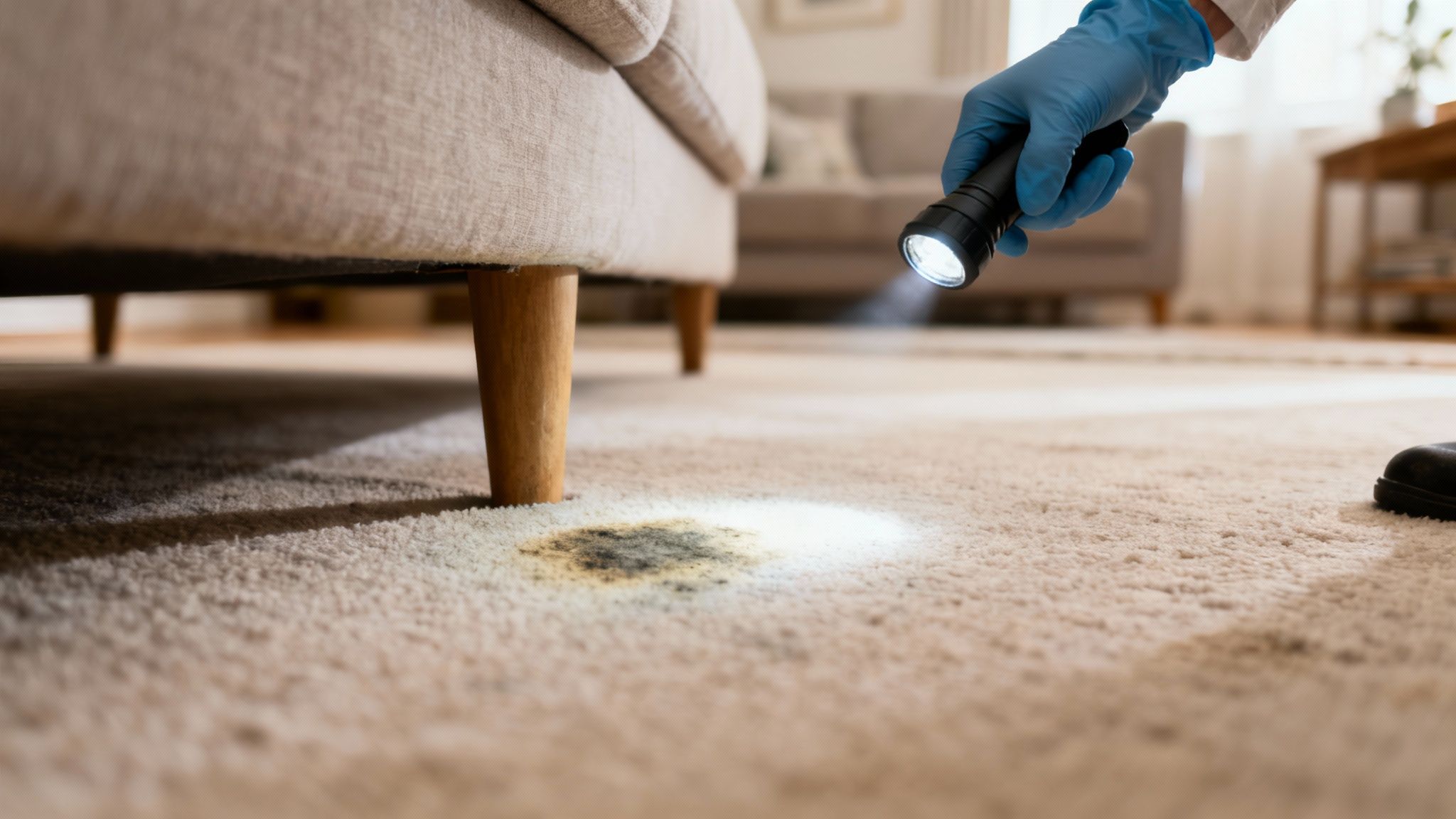
Before you do anything else, just take a breath. Panicking and scrubbing wildly is the worst thing you can do right now… it can actually spread the spores. The most important thing is that you've found it. Now we can figure out what to do next.
This is your triage moment. A time to calmly and safely assess the situation before you even think about cleaning.
Confirming It’s Actually Mould
First things first, let's make sure we're actually dealing with mould and not just a stubborn dirt stain. What does it look like? Mould often appears as fuzzy or slimy patches and can be green, black, white, or even brown.
And what about the smell? You know the one. That distinct, earthy odour that smells like a damp basement or wet socks left in a gym bag for too long. That's the classic calling card of mould. If you've got both the look and the smell, chances are you've found your culprit.
Why You Need to Act Fast
Here’s the thing about mould… it doesn't hang around waiting. It spreads. And in Australia's climate, it spreads surprisingly fast. Mould growth in carpets can become a serious issue within just 24 hours of moisture exposure.
Carpets are like giant sponges, trapping moisture deep within their fibres and creating a perfect little home for mould spores to multiply. This rapid growth can cause health problems, especially for the 10-15% of Australians with mould sensitivities. You can learn more about how quickly carpet mould becomes a problem by exploring this insightful article.
Don't put it off until the weekend. A small, manageable spot today can become a much bigger, more complicated problem by next week. The sooner you act, the easier the fix will be.
When to DIY and When to Call for Help
Now for the big question: can you handle this yourself, or do you need to bring in the professionals?
Think of it like this. If the mouldy patch is small… say, smaller than your hand… and it seems to be just on the surface, you're likely in DIY territory. This is especially true if you know exactly what caused it, like a spilled drink that wasn't dried properly. A simple mix of white vinegar and water can often do the trick for these minor spots.
However, there are clear red flags that mean you should stop, step away, and call a professional mould remediation service. Don't risk it if you see any of these signs:
- A Large Affected Area: If the mould covers a significant part of the room, it's a sign of a much bigger moisture issue that needs expert attention.
- A Strong, Pervasive Smell: A very strong musty odour often means the mould has penetrated deep into the carpet underlay or even the subfloor beneath. You can't scrub that away.
- Flood or Major Leak Damage: If the mould is the result of a flood, burst pipe, or serious water damage, the problem is almost certainly too big for a home remedy.
- Health Concerns: If anyone in your home has asthma, severe allergies, or a compromised immune system, it's not worth the risk. Professionals have the right gear and containment procedures to keep everyone safe.
Getting these first steps right is crucial. By taking a moment to properly assess the situation, you’ll know exactly what you're up against and feel confident about what to do next.
Assembling Your Mould Cleaning Toolkit
Before you even think about scrubbing, we need to have a serious chat about preparation. This part is absolutely non-negotiable, because the last thing you want is to be breathing in a cloud of invisible mould spores while you work.
Think of it like a chef preparing their ingredients before cooking. Having everything ready makes the process smoother, safer, and way more effective. It's all about protecting yourself first. Seriously. This isn't the time to grab an old t-shirt and hope for the best.
Your Personal Protective Gear
Mould spores are tiny and can easily get into your lungs or irritate your skin and eyes. Gearing up properly isn't just a suggestion; it's essential for your health. Let’s make sure you have the right stuff.
- A Proper Respirator Mask: Forget the flimsy paper dust masks. You need an N95 or P2 rated respirator. This is designed to filter out microscopic particles like mould spores, ensuring you don't breathe them in.
- Safety Goggles: You want goggles that wrap around your eyes, not just regular glasses. Spores can get into your eyes and cause irritation, and you definitely don't want cleaning solutions splashing into them either.
- Durable Gloves: Go for rubber or nitrile gloves that extend a bit up your wrist. They'll protect your hands from both the mould and the cleaning products you're about to use.
This isn't about being overly dramatic. It's about being smart and safe when you're dealing with something that can seriously affect your health. Once you’re protected, we can gather the cleaning supplies.
Choosing Your Cleaning Weapon
You don't need a whole arsenal of expensive, complicated products. Some of the most effective solutions are probably already in your pantry. We'll look at both natural and store-bought options, so you can choose what works best for you.
You'll also need a few basic tools to get the job done right. A stiff-bristled brush will be your best friend for lifting surface mould from the carpet fibres. And a vacuum is essential… but not just any vacuum.
A vacuum cleaner with a HEPA (High-Efficiency Particulate Air) filter is critical for the final cleanup. A standard vacuum will just suck up the tiny mould spores from the carpet and shoot them right back out into the air, spreading the problem around your entire house. A HEPA filter is fine enough to trap them for good.
Here’s a quick breakdown of your cleaning supply options:
Natural Solutions (Great for small spots)
- White Vinegar: Don't underestimate this kitchen staple. Its acidic nature is fantastic for killing mould at the root, especially on porous surfaces like carpet. A simple mix of equal parts white vinegar and water in a spray bottle is often all you need.
- Baking Soda: This is your go-to for absorbing moisture and odours. Sprinkling it on the area before and after cleaning can help draw out dampness and get rid of that musty smell.
Specialised Cleaners (For a bit more power)
- Commercial Mould Removers: If you're dealing with a more stubborn patch, a store-bought carpet mould cleaner can provide extra strength. Just make sure to read the label carefully and test it on a hidden spot first to check for any potential discolouration.
With your safety gear on and your cleaning supplies ready, you're prepared to tackle the job safely and effectively from the very start. No mid-clean panic runs to the shops required.
A Practical Guide to Removing Mould From Your Carpet
Alright, you've got your gear, you've chosen your cleaning solution, and you’re ready to tackle that mould patch. This is the part where we get it out of your carpet for good. Let’s walk through this together, one step at a time, to make sure it’s done right.
The first thing we need to do is something most people skip. And it’s a big mistake.
We have to stop the mould from going on a trip around your house.
Containing the Spores
Think of mould spores like glitter. If you're not careful, you'll be finding them everywhere for weeks. Before you even think about scrubbing, you need to contain the area. This stops those tiny spores from becoming airborne and settling in new, unwelcome spots.
It’s actually pretty simple to do.
- Seal the Room: Close the door to the room you're working in. If there's no door, you can hang a plastic sheet over the entryway with tape to create a temporary barrier.
- Turn Off the Airflow: Shut down any central heating or air conditioning systems that could blow spores from this room into others. Don't forget to close any air vents in the room as well.
- Open a Window: While you want to stop air from circulating out of the room, you do want fresh air for yourself. If possible, open a window to the outside to help ventilate the space you're in.
This simple setup creates a little containment zone. It’s a small step, but it’s what separates a successful cleanup from accidentally making the problem a whole lot worse.
The Cleaning Process: Choosing Your Method
Now for the main event. We’re going to look at a few different methods for cleaning mould out of carpet, from gentle natural options to something with a bit more punch. The right choice really depends on how stubborn your mould patch is.
Your carpet can be a surprisingly dirty place. In fact, research shows that a single square inch of carpet can be home to 200,000 bacteria and fungal spores. Far more than you'd find on a toilet seat. These little organisms just love damp, humid environments, which is why tackling mould properly is so important for a healthy home.
Here's a quick look at the tools you might need, broken down into key categories.
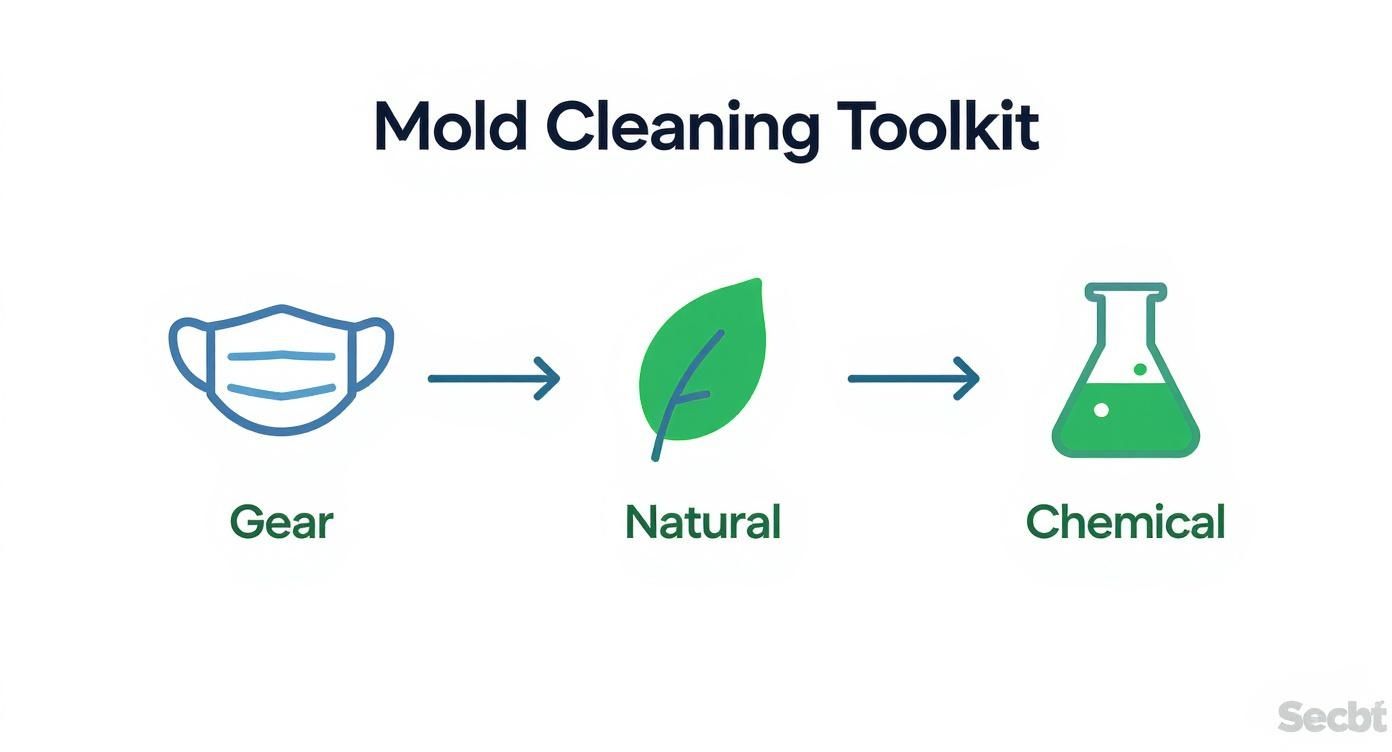
This visual shows that your approach can be customised. Whether you prefer sticking to natural solutions or need the strength of a commercial cleaner, the key is to always start with the right safety gear.
Method 1: Using White Vinegar
For small to medium-sized surface mould, white vinegar is brilliant. It’s acidic, so it gets down into the carpet fibres and kills the mould at its roots.
- Mix a solution of one part white vinegar and one part water in a spray bottle.
- Lightly mist the mouldy area. Don't absolutely soak it… we're trying to remove moisture, not add more.
- Let it sit for at least an hour. This gives the vinegar time to work its magic and break down the mould.
- After it's had time to sit, use your stiff-bristled brush to gently scrub the area. Work from the outside of the patch inwards to avoid spreading it around.
- Finally, blot the area with a clean, dry cloth to soak up as much of the vinegar solution as possible.
For a deeper dive into other household items that can help, check out our guide on finding the perfect natural mould killer.
Method 2: The Baking Soda Paste
If you're also dealing with a lingering musty smell, baking soda is a great addition. You can use it on its own after cleaning, or create a paste for a bit more scrubbing power.
Simply mix a small amount of baking soda with a few drops of water to form a paste. Apply it to the mouldy spot, let it dry completely, and then scrub it with your brush before vacuuming it all up.
Method 3: A Commercial Mould Cleaner
Sometimes, you just need something a bit stronger. If the mould is persistent, a commercial mould remover designed specifically for carpets might be your best bet.
When using any store-bought product, please, please read the instructions carefully. And always test it on a small, hidden patch of your carpet first… like inside a wardrobe… to make sure it doesn't cause any discolouration.
Follow the product's directions exactly, which usually involves spraying, waiting, and then blotting or rinsing.
The Most Important Step: Drying Everything Thoroughly
I can't stress this enough. This is where most DIY mould cleaning jobs fail. If you leave even a little bit of moisture behind, you’re basically rolling out the welcome mat for the mould to come straight back.
Your goal is to get the carpet, the underlay, and even the subfloor beneath it completely bone-dry.
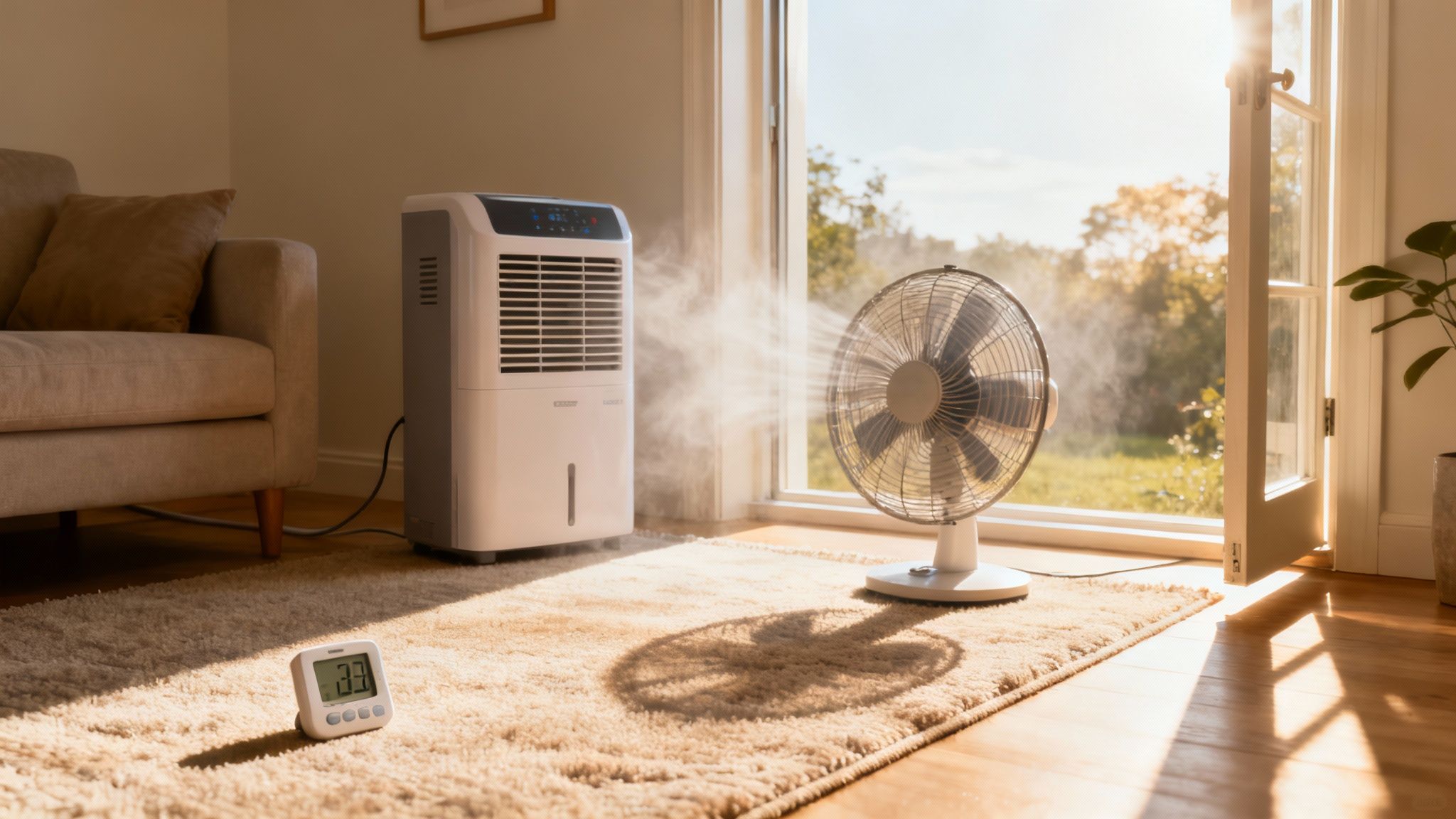
- Get the Fans Going: Position several fans to blow directly across the damp area. You want constant, circulating air.
- Bring in a Dehumidifier: If you have one, a dehumidifier is your secret weapon. Place it in the room and let it run for at least 24 to 48 hours. It will pull every last bit of moisture out of the air and the carpet.
- Use Towels: In the beginning, you can press down hard with clean, dry towels on the wet patch to absorb a lot of the initial moisture. Stand on them if you have to!
The carpet should feel completely dry to the touch, with no cool or damp spots whatsoever. Don't rush this part. Be patient.
The Final Cleanup
Once the carpet is completely dry, it's time for the final sweep. This is where your vacuum with the HEPA filter comes in.
Go over the entire area several times. Then, vacuum the rest of the carpet in the room, and even some of the surrounding furniture. This helps capture any stray spores that might have escaped during the cleaning process, leaving you with a clean, mould-free space.
Knowing When to Call a Mould Removal Professional
Look, there’s a certain satisfaction that comes from rolling up your sleeves and fixing a problem yourself. I get it. But sometimes, a DIY job just isn’t the right answer. And knowing when to step back and bring in the experts is a smart move, not a failure.
Let's talk honestly about the limits of doing it yourself. There are definite red flags that signal a mould problem is bigger, deeper, and more complicated than you should handle alone. It’s like trying to fix a major plumbing leak with just a roll of duct tape… you might slow it down, but you’re not solving the real issue.
The Problem Is Bigger Than It Looks
The most obvious sign is the size of the mould patch. If the affected area is larger than a square metre, stop what you're doing. A patch that big is a huge indicator that the underlying moisture problem is significant and widespread.
It’s often not just what you can see on the surface.
If that mould has a strong, persistent, musty smell that fills the room, that’s another massive clue. It means the problem has likely soaked right through the carpet fibres and is living in the underlay, or worse, the subfloor beneath. You can scrub the top of the carpet all day, but you'll never reach the source.
The real danger of a large-scale mould issue isn't just the visible stain. It's the hidden growth within your home's structure and the sheer volume of spores being released into the air you breathe.
Another clear sign is the cause. If the mould appeared after a major water event like a flood, a burst pipe, or a serious roof leak, it's a job for the pros. The sheer volume of water involved means moisture has almost certainly penetrated deep into places you can't see or reach.
When Health Is the Top Priority
This is the most important factor of all. If anyone in your home has severe allergies, asthma, or a compromised immune system, don’t even hesitate. The risk of exposing them to a high concentration of airborne mould spores during a DIY cleanup is just not worth it.
Professional mould remediation isn't just about cleaning; it's about containment and safety. Our teams use specialised equipment like commercial-grade air scrubbers and HEPA vacuums, along with proper containment barriers to stop spores from spreading. This is a crucial part of our expert mould remediation process, ensuring the air quality remains safe for everyone.
Deciding whether to tackle mould yourself can be tricky. This table breaks down common scenarios to help you make the right call.
DIY vs Professional Mould Removal: When to Choose Each
| Situation | Recommended Approach | Reasoning |
|---|---|---|
| Small spot (<1 sq metre), no smell | DIY | Likely a surface-level issue from a minor spill. Can be managed with proper cleaning and drying. |
| Large patch (>1 sq metre) | Professional | Indicates a significant underlying moisture problem that requires expert assessment and equipment. |
| Strong, persistent musty odour | Professional | A strong smell means mould has penetrated deep into the underlay or subfloor, beyond a DIY reach. |
| Mould after major flooding/leak | Professional | Water has likely saturated structural materials, requiring industrial drying and remediation. |
| Family members have asthma/allergies | Professional | Protects vulnerable individuals from airborne spores released during cleaning. Professionals use containment. |
| Mould keeps coming back | Professional | A recurring problem signals the root moisture source hasn't been fixed. Pros can find and resolve it. |
Ultimately, professionals offer a level of safety and thoroughness that's tough to achieve on your own, especially when health is on the line.
What Professionals Actually Do
So, what happens when you call in a team? It's a lot more than just a deep clean. Professionals will first identify and address the source of the moisture… because if you don't stop the leak, the mould will always come back.
They use specialised tools to measure moisture levels in the carpet, underlay, and subfloor. When considering your options, it's insightful to compare professional mold inspection versus DIY kits to understand the depth of a proper assessment. Professionals also have access to powerful, industry-approved antimicrobial treatments that are far more effective than anything you can buy at the shops.
The cost can be a concern, but it's an investment in your property and health. In Australia, the cost of professional mould removal for carpets can vary. Hourly rates for specialised carpet cleaning often sit around AUD 30 to AUD 40 depending on your state.
Ultimately, making that call gives you peace of mind. You’ll know the job was done completely and safely, protecting both your home and your family.
Your Prevention Plan to Keep Mould From Coming Back
You've put in the hard work, scrubbed, dried, and finally kicked that mould out of your carpet. Brilliant! Now, let's make sure you never, ever have to go through that again.
Honestly, this part is the most important. Prevention is always, always easier than the cure. Think of your home like a garden. You can spend all day pulling weeds, but if you don't fix the soil conditions, they'll just keep popping back up.
Mould is exactly the same. We need to change the conditions in your home so it becomes a terrible place for mould to live. It really comes down to mastering three key things.
Taming the Moisture in Your Home
Mould needs moisture to survive. It's not optional for it; it's essential. So, our number one job is to make your home as dry and unwelcoming as possible for any wandering spores. This is about controlling the overall environment, not just reacting to spills.
The goal is to keep your indoor humidity levels below 50%. This is the magic number where mould really struggles to get a foothold.
Here are a few simple habits that make a massive difference:
- Run Those Exhaust Fans: Every single time you cook or shower, flick on the exhaust fan. Let it run for a good 15-20 minutes afterwards to pull all that steam and moisture out of the air.
- Invest in a Dehumidifier: For naturally damp spots like a laundry room, a stuffy bedroom, or a sub-tropical living room, a dehumidifier is a game-changer. It actively pulls water from the air, keeping your carpets and furnishings dry.
- Give Your Dryer Vent Some Love: Make sure your clothes dryer is properly vented to the outside. A poorly vented dryer pumps litres of warm, moist air directly into your home… a perfect recipe for mould.
This isn't about turning your home into a sterile lab. It’s about making small, consistent changes that stop moisture from building up in the first place. For a more detailed look at tackling dampness throughout your home, you can find heaps of practical tips in our guide on how to get rid of mould.
Letting Your Home Breathe
Good ventilation is like giving your house a nice, deep breath of fresh air. It pushes out the old, stale, moisture-filled air and brings in the new. Stagnant air is a mould-friendly zone.
Think about it… when you leave a wet towel bunched up in a corner, it gets musty and gross, right? But if you hang it on the line where the air can move around it, it dries quickly. Your home is no different.
Creating regular airflow is one of the simplest and most effective ways to prevent mould. It costs nothing but can save you a world of trouble down the line.
You don't need a fancy system. Just open your windows for 15 minutes each day, even in winter. Create a cross-breeze by opening windows on opposite sides of the house to really get the air moving. This simple act flushes out moisture and any lingering spores.
Your Quick Response Spill Plan
Life is messy. Spills are going to happen. The difference between a minor cleanup and a future mould problem is how quickly you react. The goal is to stop moisture from soaking deep into the carpet fibres and underlay.
Here’s your emergency plan:
- Blot Immediately: Grab a clean, dry cloth or paper towel and blot the spill. Don't rub… that just pushes the liquid deeper. Press down firmly to absorb as much as you can. Stand on the towel for extra pressure.
- Dry Thoroughly: Once you've blotted up the excess, aim a fan directly at the damp spot. Let it run for several hours, even if the surface feels dry to the touch. It's the hidden moisture underneath that causes the problems.
To truly keep mould from returning, it's also crucial to address any underlying issues. Sometimes the source is less obvious than a spilled drink; learning how to detect water leaks in your home is a vital preventative step against hidden moisture.
Finally, regular professional carpet cleaning is your best long-term insurance policy. It removes the deep-down dirt and organic matter that mould loves to feed on, keeping your carpets healthy and resilient for years to come.
Got Questions About Carpet Mould? We’ve Got Answers
Staring down a patch of mould on your carpet can bring a million questions to mind. You’re not the only one who feels that way. It’s completely normal to wonder if you’re doing the right thing.
So, let's clear the air. Think of this as a quick myth-busting session to give you straightforward, practical answers so you can move forward with confidence.
Can I Just Pour Bleach on It?
It’s a thought that crosses almost everyone's mind. Bleach kills germs, so it must kill mould, right? Well… it's not that simple, and when it comes to carpets, it’s a really bad idea.
While bleach can handle surface mould on hard, non-porous things like tiles, it’s useless on carpet. It just can't get deep into the fibres to kill the mould's roots. It’s like pulling the top off a weed but leaving the root in the ground… it’ll just grow right back.
Worse still, bleach is almost guaranteed to strip the colour from your carpet, leaving a permanent, damaged patch. A simple solution of white vinegar is a much better choice. Its acidity lets it seep down and kill the mould at its source without the harsh side effects.
What About a Steam Cleaner? Will That Get Rid of Carpet Mould?
This one is a classic double-edged sword. On one hand, yes, the high heat from a steam cleaner is fantastic at killing mould spores on contact. It sounds like the perfect solution.
The problem is what it leaves behind: moisture. A lot of it. The process injects hot, wet steam deep into the carpet and its underlay. If you don't get that carpet completely and utterly bone-dry very quickly afterwards, you’ve just created the perfect warm, damp paradise for new mould to thrive.
If you’re set on using a steam cleaner, you absolutely must follow it up with an aggressive drying strategy. We’re talking multiple fans, a powerful dehumidifier running for at least 48 hours, and as much ventilation as you can get. Otherwise, you could easily make the problem worse.
Is Black Mould on Carpet Always Dangerous?
"Black mould" gets a lot of scary media attention, and it’s true that some types can be harmful. But here’s the thing: any colour of mould has the potential to cause health issues.
Moulds of all shades… green, white, orange, black… release spores that act as irritants. They can trigger allergies, make asthma worse, and cause respiratory problems, especially for kids, the elderly, or anyone with a sensitive immune system.
The best approach is to treat all mould with caution. Your goal isn't to become a mycologist overnight and identify the specific species. Your goal is to get it removed safely and, most importantly, fix the moisture problem that let it grow in the first place.
How Do I Know if the Mould Is Actually Gone?
This is the big one, isn't it? After all that work, how can you be sure you’ve won the battle?
There are two key signs to look for once you've cleaned and thoroughly dried the area.
First, your eyes. The fuzzy, active growth should be completely gone. You might be left with some slight staining on the carpet fibres, but the mould colony itself should be physically removed.
Second, and perhaps more telling, is your nose. That distinct musty, earthy smell of mould should disappear completely once the carpet is dry. If that smell lingers, it’s a huge red flag that some mould is still hiding, probably deep in the underlay or even the subfloor. If the smell just won't go away, it’s time to call in a professional for a closer look.
Dealing with recurring mould or a job that feels too big to handle on your own? The team at That Cleaning Crew has the expertise and professional equipment to safely and completely remove mould from your commercial property, ensuring a healthy environment for everyone. Find out more about our professional mould remediation services.