Right, let's talk about what industrial pressure washing really is.
You've probably seen those pressure washers at Bunnings. They're fantastic for getting the winter grime off your driveway or giving the patio furniture a quick spruce up. They get the job done for small tasks around the home.
But industrial pressure washing? It's in a completely different league. Think of it like the difference between a family sedan and a massive mining haul truck. Sure, both are vehicles, but they're built for entirely different worlds and wildly different jobs. One is for picking up groceries… the other is for literally moving mountains. That's the kind of jump we're talking about here.
This isn't just a matter of cranking up a power dial. It involves highly specialised equipment, professionally trained operators who understand surfaces and chemistry, and a deep knowledge of how to remove tough industrial residues without causing a bigger mess.
More Than Just High Pressure
So, what actually sets it apart? It boils down to a few key things that go way beyond just blasting dirt with water. A genuine industrial service is about looking at the entire picture.
- Specialised Equipment: We’re talking about machines that can generate seriously high pressure and flow rates. Many of our units are also hot water enabled, capable of melting away grease and oil that cold water simply slides over.
- Trained Technicians: An operator needs to know far more than just how to point and shoot. They understand how intense pressure affects different materials… from porous concrete to coated steel. This ensures they clean without etching, stripping paint, or causing thousands of dollars in damage.
- Targeted Cleaning Solutions: Sometimes, water alone just won't cut it. Professional services use specific, industry approved detergents and degreasers to break down chemical spills, stubborn oils, or biological growth like mould and algae.
This professional approach is a crucial part of Australia's wider commercial cleaning market. In fact, building cleaning businesses, which include specialist pressure washing firms, report an average profit margin of 21%. This makes them one of the nation's most profitable business sectors. You can dig into more on the Australian pressure washing industry statistics to see just how vital these services are. This isn't some niche add on; it's a critical part of maintaining commercial and industrial properties across the country.
Industrial pressure washing is a calculated process. It’s about applying the right method to the right surface to get a specific result… whether that’s boosting safety, prepping a surface for painting, or meeting environmental regulations.
Ultimately, you should see it as a strategic investment in your facility. It's about maintaining the value of your assets, ensuring a safe environment for your team, and ticking all your compliance boxes. This isn’t just cleaning for appearance's sake… it's cleaning with a clear purpose.
Choosing the Right Cleaning Method
When you're dealing with industrial level grime, just grabbing any old pressure washer won’t do the trick. It’s a bit like cooking; you wouldn't use a tiny paring knife to chop a pumpkin, would you? You need the right tool for the job. And picking the right cleaning method is absolutely crucial for getting the results you need without accidentally causing damage.
Let's break down the main options you’ll come across. Think of them as different tools in a professional cleaner's toolkit.
Cold Water Pressure Washing
This is what most people picture when they think of pressure washing. It’s your classic, go to solution for blasting away general dirt, caked on mud, loose paint, and other surface level grime.
Cold water is brilliant for things that aren't chemically bonded to the surface. It uses pure mechanical force… the sheer power of the water jet… to lift and remove contaminants. It's effective, straightforward, and perfect for a wide range of general cleaning tasks around a facility.
This diagram helps show how industrial cleaning is a big step up from typical residential work, requiring bigger, stronger solutions.
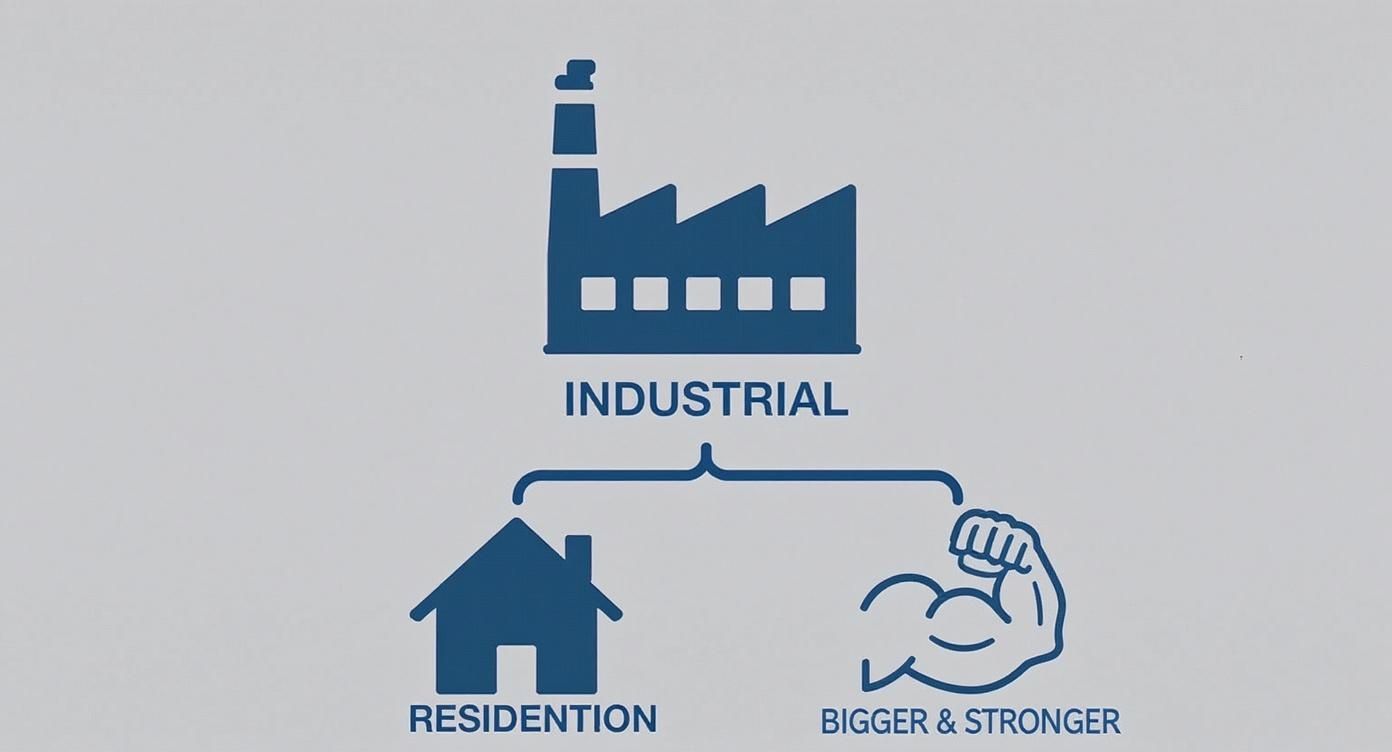
The key takeaway is that industrial applications demand more power and specialised approaches than what you'd use at home.
Hot Water Pressure Washing
But what happens when you’re dealing with something stubborn? Something greasy, oily, or sticky? That’s when you need to turn up the heat.
Hot water pressure washing introduces the powerful element of temperature. Think about washing a greasy frying pan at home. If you just use cold water, you mostly just push the grease around. But the second you add hot water and a bit of soap, the grease melts away effortlessly.
It’s exactly the same principle here, just on a much bigger scale. The heat breaks down the molecular bonds in oils and fats, making them easy to flush away.
For any job involving oil spills in a car park, grease buildup in a commercial kitchen, or grime on heavy machinery, hot water isn't just an option… it's essential. It cleans faster and more effectively, often reducing the need for harsh chemicals.
For instance, a food processing plant simply can't achieve a hygienic, grease free floor with cold water alone. Hot water cuts through fats and oils, sanitising the surface at the same time.
Steam Cleaning
Then we have steam. This is the most specialised method of the three. Steam cleaning uses very high temperatures but often at a much lower pressure than traditional washing.
So, when would you use it? It’s perfect for two main scenarios: sanitisation and delicate cleaning.
- Sanitisation: The high temperature of the steam kills bacteria, mould spores, and other pathogens on contact. This makes it ideal for healthcare settings, food production areas, or anywhere that requires a deep, sterile clean.
- Delicate Surfaces: Because the pressure is lower, steam is a fantastic choice for cleaning sensitive surfaces. Think about heritage listed sandstone buildings or historical monuments that could be etched or damaged by high pressure jets. Steam gently lifts away dirt and biological growth without harming the material underneath.
To help you decide at a glance, here's a quick comparison of the methods we've just covered.
Choosing Your Industrial Cleaning Method
A quick comparison to help you understand which pressure washing method is best suited for different industrial cleaning challenges.
| Method | Best For | Key Advantage | Common Use Case |
|---|---|---|---|
| Cold Water | General dirt, loose paint, mud, and non-greasy buildup. | Fast, cost-effective, and straightforward for general cleaning. | Rinsing down building exteriors, cleaning paths, removing loose debris. |
| Hot Water | Stubborn grease, oil, grime, and tough stains. | Heat breaks down oil and grease for a much deeper clean. | Degreasing heavy machinery, cleaning commercial kitchens, removing oil stains from concrete. |
| Steam | Sanitising surfaces and cleaning delicate materials. | Kills bacteria and mould with high heat and low pressure. | Sterilising food processing equipment, cleaning historic stonework, removing graffiti. |
Ultimately, choosing the right approach means matching the tool to the task for the best possible outcome.
A critical part of this is also knowing how to choose the right pressure washer nozzle for specific jobs, as the nozzle dictates the angle and intensity of the water stream. This choice is just as important as deciding between hot and cold water. So, picking the right method isn’t just about the machine; it’s about the entire setup.
Practical Applications for Your Facility
Alright, we've covered the different tools in the professional pressure washing kit… hot water, cold water, and steam. But where does this actually make a difference on the ground? You might be surprised by just how many corners of a facility can be transformed by a proper industrial pressure washing service.
This is about so much more than a simple tidy up. It's about safety. It’s about protecting your assets. It's about ensuring your facility is a functional, compliant, and genuinely safe place for your team to work. Let’s look at where the rubber really meets the road.
Warehouse Floors and Hardstand Areas
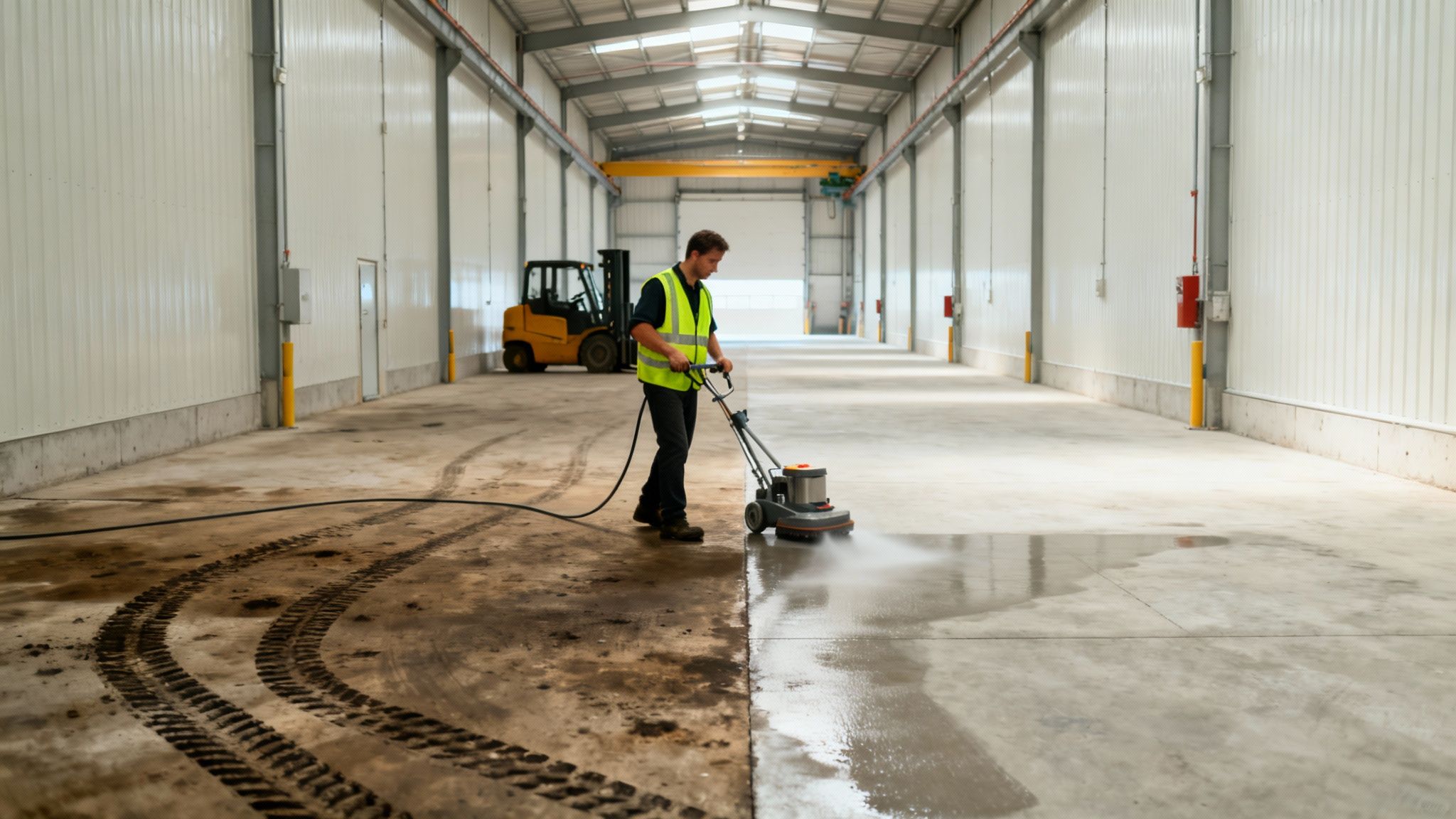
Picture a busy warehouse floor for a moment. You’ve got forklifts zipping around all day, leaving a web of black tyre marks. Add in a few hydraulic fluid drips, a bit of spilled product, and suddenly your floor isn't just dirty… it’s a legitimate slip and fall hazard waiting to happen.
Industrial pressure washing, particularly with hot water, can completely bring these surfaces back to life.
- Hazard Removal: It cuts through and lifts slippery oils and grease, which is a massive win for workplace health and safety.
- Improved Appearance: A clean floor instantly makes the entire space feel more organised and professional. It also makes it far easier to spot fresh spills or maintenance issues.
- Surface Longevity: Getting corrosive materials off your concrete helps prevent it from breaking down over time, saving you a fortune in costly repairs down the track.
The same principle applies to outdoor hardstand areas at transport depots or loading docks. These zones take an absolute beating from heavy vehicles, and keeping them clean is crucial for both safety and environmental compliance.
Degreasing Heavy Machinery and Equipment
For most industrial operations, heavy machinery is the heart of the business. And just like any engine, it runs best when it’s clean. A thick, caked on layer of grease, oil, and dust essentially acts like an insulating blanket.
This blanket traps heat, causing components to overheat and fail prematurely. A thorough degreasing with a hot water pressure washer isn’t just about aesthetics; it’s a form of preventative maintenance. A clean machine is easier to inspect for leaks, cracks, or other potential faults before they escalate into major, production halting problems.
It’s a direct investment in reliability. And it’s a big reason why demand for these services is on the rise. The Australian pressure washer market was valued at around USD 33.19 million in 2024 and is expected to climb to USD 51.66 million by 2033. This growth is being pushed along by increasing industrial activity and stricter government rules on sanitation.
Building Exteriors and Car Parks
Don't forget the outside of your building. Over time, facades can become coated in a layer of traffic pollution, grime, and even biological growth like mould, algae, and lichen. This doesn't just look bad; it can cause real, physical damage to your building materials.
A professional clean removes these harmful contaminants, protecting the building’s exterior from premature decay. It’s like giving your most valuable asset a much needed health check up.
Multi storey car parks are another classic example. They are notorious for accumulating layers of oil stains, tyre marks, and general filth. A deep clean not only improves the look and feel for users but also removes slippery substances, making it safer for both vehicles and pedestrians.
And it’s not just about cleaning what's already there.
- Surface Preparation: If you're planning to repaint a building or apply a new protective coating to a floor, the surface has to be perfectly clean. Industrial pressure washing is the most effective way to strip away old, flaking paint and grime to ensure the new coating bonds properly.
- Graffiti Removal: Unwanted graffiti can be blasted away quickly and effectively, often without damaging the underlying surface.
Each of these applications shows how a targeted industrial cleaning service can solve real world problems for your facility. It's a practical solution that delivers tangible benefits for safety, maintenance, and compliance, every single time.
Navigating Safety and Environmental Regulations
Right, let's talk about what is easily the most critical part of any industrial pressure washing job. You can't just point a high pressure lance and blast away, especially not on a commercial site. This isn't the wild west. All that power comes with some serious responsibilities, and getting this bit wrong can lead to some truly eye watering fines.
We're talking about more than just keeping the work site safe; this is about protecting our shared environment. The biggest worry for local councils and the Environmental Protection Authority (EPA) is managing the water runoff. Just think about what you're actually cleaning off a factory floor or a car park. It’s a mix of dirt, sure, but also oils, chemicals, heavy metals, and all sorts of other pollutants. If that nasty cocktail flows straight into the nearest stormwater drain, it goes directly into our local waterways.
Untreated.
Containing the Mess
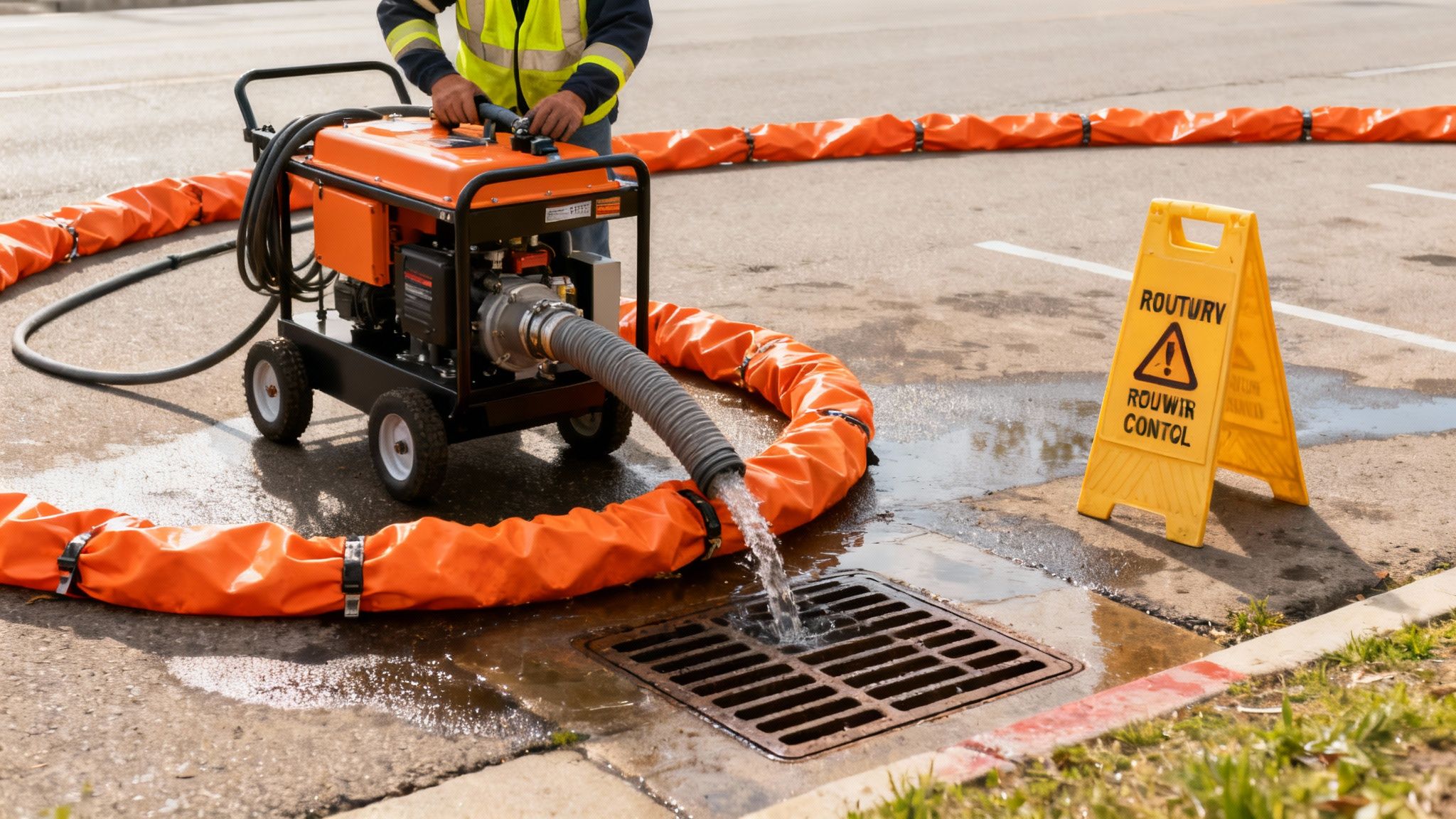
So, how do the pros stop this from happening? It all comes down to containment and recovery. A reputable team won't even think about starting a job without a bulletproof plan to capture every single drop of contaminated water.
This isn’t just a nice to have; it's a non negotiable part of the process.
- Drain Blocking: The first step is simple but crucial. We securely block all nearby stormwater drains to prevent any accidental runoff from escaping.
- Containment Booms: Think of these as temporary dams. We place them around the work area to pool all the wastewater, stopping it from spreading.
- Water Reclamation Systems: This is the really clever bit. A powerful vacuum system sucks up all the contained wastewater into a holding tank. From there, it's either filtered on site or transported for safe disposal according to strict local water authority guidelines.
This is the standard you should always expect. No ifs, no buts.
Handling Hazardous Materials
Now, let's raise the stakes. What happens when you're dealing with something genuinely hazardous? Maybe it's a chemical spill, old lead based paint, or even asbestos residue. This is where you absolutely must separate the professionals from the cowboys.
When hazardous materials (HAZMAT) are involved, standard cleaning protocols are thrown out the window. The job now demands specialised training, proper personal protective equipment (PPE), and strict adherence to Safe Work Australia and EPA regulations. The crew needs to know exactly what they're dealing with, how to contain it without risk, and how to dispose of it legally.
The risks of cutting corners here are just too high. An improperly handled HAZMAT clean up can endanger your staff, the public, and the environment, creating a legal and financial nightmare for your business.
This is exactly why professional training isn’t just a bonus; it’s absolutely essential. It’s the only way to guarantee the job is done right, protecting everyone involved.
Demystifying Compliance
All this talk of rules and regulations can feel a bit much, but it doesn't have to be complicated for you. A true professional contractor makes compliance their problem, not yours. They should be completely across all local council permits and state based EPA guidelines in Sydney and the surrounding regions.
They handle the paperwork, hold the right licenses, and carry comprehensive insurance. Their processes should be totally transparent, with clear safety plans like Safe Work Method Statements (SWMS) provided before any work kicks off. This level of professionalism is standard for all high risk work, whether it’s pressure washing a factory or managing complex jobs like the one we detail in our guide on window cleaning for high-rise buildings. The core principles of safety and compliance don't change.
Ultimately, navigating these regulations is about protecting two things: your business from fines and liability, and our environment for the future. It's a responsibility we take very seriously.
Understanding Professional Cleaning Costs
Alright, let's get right to it. The first question on pretty much everyone's mind is a simple one: "How much is this going to cost?"
And the honest answer is… it depends. But I know that’s not very helpful, so we’re not going to leave you hanging there. Instead, let's pull back the curtain and look at exactly what goes into building a proper quote for an industrial pressure washing job. Think of it like a recipe, where every single ingredient affects the final result.
My goal here is to give you a clear framework. That way, you’ll know what questions to ask and how to fairly compare quotes when they land on your desk.
The Key Cost Drivers
A quote is never just a number plucked from thin air. It’s a careful calculation based on several moving parts, starting with the size and scope of the work.
The most obvious factor is the total area we need to clean, usually measured in square metres. A sprawling 5,000 square metre warehouse floor is a completely different beast compared to a small loading bay. Simple enough, right?
But it gets more detailed from there. The type of surface we're working on plays a huge role. Porous, unsealed concrete, for example, is like a sponge… it soaks up oil and stains deep into its structure. Getting those contaminants out requires more time and often a more intensive cleaning method. Compare that to a sealed, non porous metal surface, which is usually a much quicker clean.
Beyond the Basics
Next, we look at just how dirty the area is. Are we dealing with light dust and grime from regular foot traffic, or are we facing years of caked on grease and chemical spills? The level of soiling directly impacts the time, effort, and resources needed to get the job done right.
Accessibility is another big one. A straightforward, ground level hardstand area is one thing. But what if we need to clean the exterior of a multi storey building or get into the guts of hard to reach machinery?
When a job requires special access equipment like scissor lifts, boom lifts, or scaffolding, those rental and operation costs are naturally factored into the final price. Safety and logistics are paramount here, and there are no shortcuts.
Finally, the specific cleaning requirements will shape the cost.
- Method Used: As we've covered, a hot water clean to dissolve grease is more involved (and uses more fuel) than a standard cold water wash.
- Chemicals Required: If we need specialised, industrial grade degreasers or cleaning agents to break down specific stains, that will be included.
- Containment Needs: The level of water runoff control is critical from a compliance standpoint. A job requiring full water reclamation with vacuum recovery is far more complex than one with simpler containment methods.
Understanding these factors is key. For a more detailed breakdown, you can learn more about what influences pressure cleaning costs in our complete guide. It’s not just about paying for a service; it’s about understanding the value and expertise you’re getting in return.
How to Choose the Right Pressure Washing Contractor
Hiring any contractor can feel a bit like rolling the dice, can't it? You're putting a lot of trust in someone to look after your property, and the last thing you want is to be let down.
But finding the right team for your facility doesn't have to be a gamble. It’s simply about knowing what to look for and what questions to ask. Think of this as your practical guide to separating the true professionals from the rest. It’s about confidently choosing a team that will deliver a safe, compliant, and genuinely high quality result.
Let's walk through it.
The Non-Negotiables
First up, let's cover the absolute must haves. These are the things you shouldn't even consider compromising on. They are the baseline for any professional operation.
The very first question you should ask is about their public liability insurance. If something goes wrong… and in high pressure work, things absolutely can go wrong… you need to know they are fully covered. Ask to see their certificate of currency; any professional outfit will have it ready to go, no excuses.
Next is their safety documentation. This is huge. Always ask for a copy of their Safe Work Method Statements (SWMS) for the specific type of job you're planning. This document proves they've actually thought through the risks involved and have a clear, documented plan to manage them safely. It’s a massive green flag.
A contractor who can’t easily provide proof of insurance and a comprehensive SWMS isn't just disorganised… they are a potential liability for your business. It's a clear sign to walk away and find someone who takes safety seriously.
Beyond the Paperwork
Once you've ticked those essential boxes, you can dig a little deeper to gauge their real expertise and reliability.
What sort of equipment are they using? You don't need to be a machinery expert, but it's worth asking if their gear is modern, well maintained, and suited for a proper industrial job. A team that invests in its equipment is a team that invests in doing the job right.
It’s also a great sign when contractors use modern tools like efficient scheduling and dispatching software to stay organised. It might seem like a small detail, but it speaks volumes about their professionalism and their commitment to a smooth, hassle free process for clients.
And of course, you need to see proof of their work.
- Case Studies: Do they have solid examples of jobs similar to yours? Seeing before and after photos can give you a real, tangible sense of the quality they deliver.
- References: Can they connect you with a past client, like another facility manager, who can vouch for their experience? A confident, professional contractor will always be happy to provide references.
Why the Cheapest Quote Is Rarely the Best
Finally, a quick word on price. It's always tempting to just go for the lowest number on the page, but in this industry, the cheapest quote often comes with hidden costs.
It might mean they're cutting corners on safety, skipping proper water containment, or using underpaid, untrained staff.
Choosing a contractor isn't just about getting a surface cleaned. It's about protecting your asset, ensuring the safety of your site, and complying with all the environmental rules. It's an investment in peace of mind, and that’s a value you can't always put a price tag on.
Got Questions? We’ve Got Answers.
We get asked a lot about industrial pressure washing, so we’ve put together a few of the most common queries we hear from facility managers. When you're making decisions for your property, having clear, straight up answers is always a good thing.
Let's dive right in.
How Often Should We Get Our Facility Cleaned?
This is the big one, and the honest answer is… it really depends. There's no magic number that fits every site, because every single facility has its own unique story.
For instance, a hectic transport depot with trucks constantly dripping oil and hydraulic fluid might need its hardstand cleaned every quarter just to keep on top of the grime and stay compliant. On the flip side, a building facade in a quiet, low pollution area might only need a good wash every few years to look its best.
The best way forward is usually a yearly professional assessment. This gives an expert a chance to see how things are weathering and recommend a schedule that actually makes sense for your specific needs, your budget, and your operational tempo.
Can Pressure Washing Actually Damage My Property?
Yes, it absolutely can. In the wrong hands, a high powered pressure washer is a surprisingly destructive tool. It's like giving someone a sledgehammer when what they really need is a fine tipped brush.
Using the wrong pressure, the wrong nozzle, or just plain bad technique can easily etch concrete, blast paint clean off a wall, or leave permanent scars on delicate surfaces. This is precisely why hiring a trained, experienced professional for any industrial pressure washing job isn't just a good idea… it's essential.
An expert knows how to read a surface. They'll assess the material and its condition before the machine is even turned on, then adjust their methods to clean it powerfully without causing any harm.
Will the Cleaning Process Disrupt Our Business Operations?
We get it. You’ve got a business to run, and the last thing you need is a major cleaning operation getting in the way of your team or your customers.
A true professional contractor will always plan the work around your schedule to keep disruption to an absolute minimum. In nearly every case, this means scheduling the job for your quietest times. For you, that might be overnight, over a weekend, or during a planned facility shutdown.
They’ll also use clear signage and cordon off work areas to keep everyone safe while letting your business carry on as smoothly as possible. The whole point is to make the process almost invisible to your day to day operations.
Ready to see how a professional clean can protect and enhance your facility? The team at That Cleaning Crew provides safe, compliant, and highly effective industrial pressure washing services across Sydney and surrounding areas. Get in touch for a free on-site quote and let us create a plan that works for you. Find out more at https://www.thatcleaningcrew.com.au.