
You know that musty, damp smell? The one that just screams something isn't right?
It’s mould.
And if you're like most Aussies, you’ve definitely met it before, probably lurking in a bathroom corner or hiding behind a wardrobe. Finding a good natural mould killer is about more than just cleaning up an ugly spot. It’s about making your home a healthier place for the people you care about most.
Understanding the Mould in Your Home
Before we jump into the solutions, it really helps to know what we’re up against. Think of it like getting to know your opponent before a match. It just gives you the upper hand.
Mould is a type of fungus. It's a natural part of the environment, but it only becomes a problem when it decides to move in with you. It spreads by releasing these tiny little spores into the air… spores that are pretty much everywhere, all the time.
All these spores need to start a little colony is a bit of moisture and a food source. And our homes are full of things mould loves to eat, like wood, plasterboard, and even dust.
Why Mould Loves Australian Homes
Our climate is basically a perfect storm for mould. The high humidity, especially during those warmer months, creates the exact damp conditions it needs to really take off. A steamy bathroom after a shower or a laundry room without enough airflow? That's a five-star resort for mould.
It’s a massive issue here. Seriously. Studies show that a huge number of Australian homes, somewhere between 10-50%, have issues with dampness and mould. It’s a problem that touches nearly every state, from the suburbs of Sydney to regional towns.
I'm not saying this to make you worry. Not at all. It’s about being informed. Because when you understand why it’s there, you're so much better equipped to get rid of it for good.
More Than Just an Ugly Stain
It's so easy to dismiss mould as just a cosmetic issue, right? Something you can wipe away and forget about. But ignoring it can be a big mistake. Those spores don't just stay on the wall; they get into the air you breathe.
For many people, this can lead to a whole range of health niggles, from sneezing and itchy eyes to more serious respiratory problems, especially for those with asthma or allergies.
Understanding this helps you see that tackling mould isn't just another cleaning chore. It's an important step in looking after your family's wellbeing. We've actually put together a guide that goes deeper into the hidden dangers of mould and why it's so important to handle it properly. Knowing the risks makes choosing the right solution, like a natural mould killer, feel even more important.
It’s easy to see why someone would grab a bottle of bleach. The label screams ‘quick fix’, and there’s a certain satisfaction in watching those black spots disappear. But what about that harsh chemical smell that hangs around for hours afterwards?
That smell is a dead giveaway you’re using something seriously potent. While chemicals like bleach can definitely make mould look like it's gone by whitening the stain, they often don’t get to the root of the problem. Mould is a bit like an iceberg; what you see on the surface is only a tiny fraction of what’s happening underneath.
The Problem with Bleach
Harsh chemicals often just kill the surface mould, leaving the deeper roots in porous materials like plasterboard or grout to simply grow back later. Think of it like pulling the top off a weed but leaving the root in the soil. You just know it’s only a matter of time before it pops up again.
Even worse, these aggressive cleaners can damage the very surfaces you’re trying to clean, and the fumes can be tough on our lungs… especially for little ones or anyone with sensitivities.
A truly clean home shouldn't come at the cost of your health or the air you breathe. It's about creating a safe space, and that means being mindful of what we're spraying onto our walls and into our air.
The Gentle Power of Natural Alternatives
This is where turning to a natural mould killer makes so much sense. It's not about jumping on a trend; it's a smarter, more effective way to handle the problem. Ingredients like vinegar and certain essential oils don’t just mask the issue. They get right to work, breaking down mould at a cellular level and killing it right down to the roots.
You’re choosing real effectiveness without the toxic aftermath. Think of it as using a targeted solution instead of a chemical bulldozer. And the benefits are huge:
- They're Healthier for Your Family: You can breathe easier knowing you’re not filling your home with volatile organic compounds (VOCs).
- They're Kinder to Surfaces: Natural solutions clean effectively without stripping finishes or damaging materials over time.
- They're Better for the Planet: What goes down our drains eventually ends up in our waterways. Natural ingredients are biodegradable and far less harmful.
This shift towards greener solutions is becoming more common right across Australia. The demand for eco-friendly cleaning products is growing steadily, which shows that more of us are realising that 'natural' doesn't mean 'weak'. You can read more about the rise of natural cleaning solutions in Australia here.
Your Pantry's Best Mould-Fighting Ingredients

You don’t need to rush out and buy a trolley full of harsh chemicals to start your mould-fighting mission. You really don't. In fact, some of the most effective solutions are probably sitting in your kitchen pantry right now.
We're going to look at the big three champions of the natural mould-killing world: white vinegar, tea tree oil, and clove oil. Each one is a powerhouse in its own right, but they all have unique strengths. Think of them as different tools for different jobs.
This is your simple recipe book for a healthier, mould-free home.
The Everyday Hero: White Vinegar
If you’re going to start anywhere, start with plain old white vinegar. It's cheap, incredibly effective, and a brilliant all-rounder, especially for non-porous surfaces like tiles, glass, or your shower screen.
So, how does it work? Well, mould absolutely hates acidic environments. The acetic acid in vinegar is strong enough to break down and kill the mould right down to its roots. Research shows it can kill over 80% of common mould species. It doesn't just bleach the stain like some chemicals do; it actually destroys the problem.
- Your Simple Vinegar Spray Recipe
Pour straight, undiluted white vinegar (the kind with about 5% acidity) into a spray bottle. Don't water it down. You want its full acidic power for this job. That’s it. It’s the easiest natural mould killer you’ll ever make.
The Antifungal Powerhouse: Tea Tree Oil
Tea tree oil is a bit of a local legend here in Australia, and for good reason. It’s packed with powerful antifungal and antibacterial properties, which makes it an incredible natural mould killer. The smell is strong and medicinal… that’s the smell of it working.
It’s fantastic for those stubborn spots that vinegar might struggle with, and it's great for adding a bit of extra punch to your cleaning routine. You only need a tiny amount, so a small bottle will last you for ages.
A quick heads-up if you have furry friends at home: Tea tree oil can be toxic to pets, especially cats, if they lick or ingest it. It's always best to keep them out of the room while you're cleaning and until the area is completely dry and aired out.
- Your Tea Tree Oil Mould-Busting Mix
- Add two teaspoons of tea tree oil to a spray bottle.
- Fill the rest of the bottle with two cups of water.
- Shake it really well before each use. The oil and water will naturally separate, so a good shake is essential to mix it up.
The Heavy Hitter: Clove Oil
When you're facing a really tough, stubborn patch of mould, clove oil is the one you call in. It’s the strongest of the three and is incredibly effective at killing even the most persistent mould spores. Its active ingredient, eugenol, is a potent natural fungicide.
The scent is very distinct and quite strong, which some people love. Because of its strength, it's perfect for porous surfaces like wood, gyprock, or plasterboard, where mould can really dig its roots in deep.
- Your Clove Oil Knockout Solution
- This one is potent. You only need about a quarter of a teaspoon of clove oil.
- Mix it with one litre of water in a spray bottle.
- Just like with tea tree oil, give it a very good shake before each use to make sure the oil is distributed through the water.
Comparing Your Natural Mould Killers
Not sure which one to grab? Here’s a quick look at the pros, cons, and best uses for each of these pantry powerhouses.
| Ingredient | Best For | How It Works | Things to Note |
|---|---|---|---|
| White Vinegar | Non-porous surfaces like tiles, glass, and countertops. Good for general, everyday mould cleaning. | The acetic acid creates an environment where mould can't survive, killing it at the source. | Very safe and cheap. The smell can be strong but disappears once dry. Not as effective on porous surfaces. |
| Tea Tree Oil | Stubborn mould spots on various surfaces. A great "next level" option when vinegar isn't enough. | A natural antifungal and antibacterial agent that attacks the mould cell structure. | More expensive than vinegar, but very concentrated. Toxic to pets, so use with caution around animals. |
| Clove Oil | Tough, persistent mould, especially on porous surfaces like wood, gyprock, or fabric. | Eugenol, its active compound, is a powerful fungicide that kills mould spores on contact. | The most potent option but has a very strong, lingering scent. Only a tiny amount is needed. |
Choosing the right ingredient really comes down to the surface you're cleaning and how stubborn the mould is. Start with vinegar for simple jobs and bring in the oils when you need some extra muscle.
Getting Your Natural Mould Killer Applied Correctly
Alright, you’ve mixed up your natural mould killer, and you’re ready to go. This is where the real work begins… and honestly, it’s where you’ll get those fantastic, lasting results. Getting the application right is just as important as the solution itself.
First things first, let’s talk safety. I know, I know, we're using natural stuff, but mould spores can be nasty if you breathe them in. So, before you spray anything, please grab some gloves, a pair of safety glasses, and a mask.
You’re going to be working overhead, scrubbing away, and the last thing you want is mould spores or even vinegar spray getting in your eyes or lungs. It only takes a minute, and it’s so worth it.
Prepping The Area and The Application Process
Once you’re kitted out, it’s time to apply your chosen natural mould killer. Spray the solution directly onto the mouldy patch. Don't be shy here. You want to completely saturate the area, making sure the entire spot is wet.
Now for the most important part… patience. This is not like using harsh bleach where you see an instant result. The natural ingredients are working deep down to kill the mould at its root.
You need to give it time to work its magic.
For a vinegar or tea tree oil spray, you absolutely must let it sit for at least one hour. If you're using the heavy-hitting clove oil for a stubborn patch, letting it sit for several hours is even better. Don't be tempted to start scrubbing straight away.
This "dwell time" is where your natural mould killer penetrates porous surfaces and breaks down the mould's structure. Rushing this step is the number one reason a treatment might not work as well as it should. Go make a cuppa, put on a podcast… just let it do its thing.
Here's a simple visual guide to the process we're following.
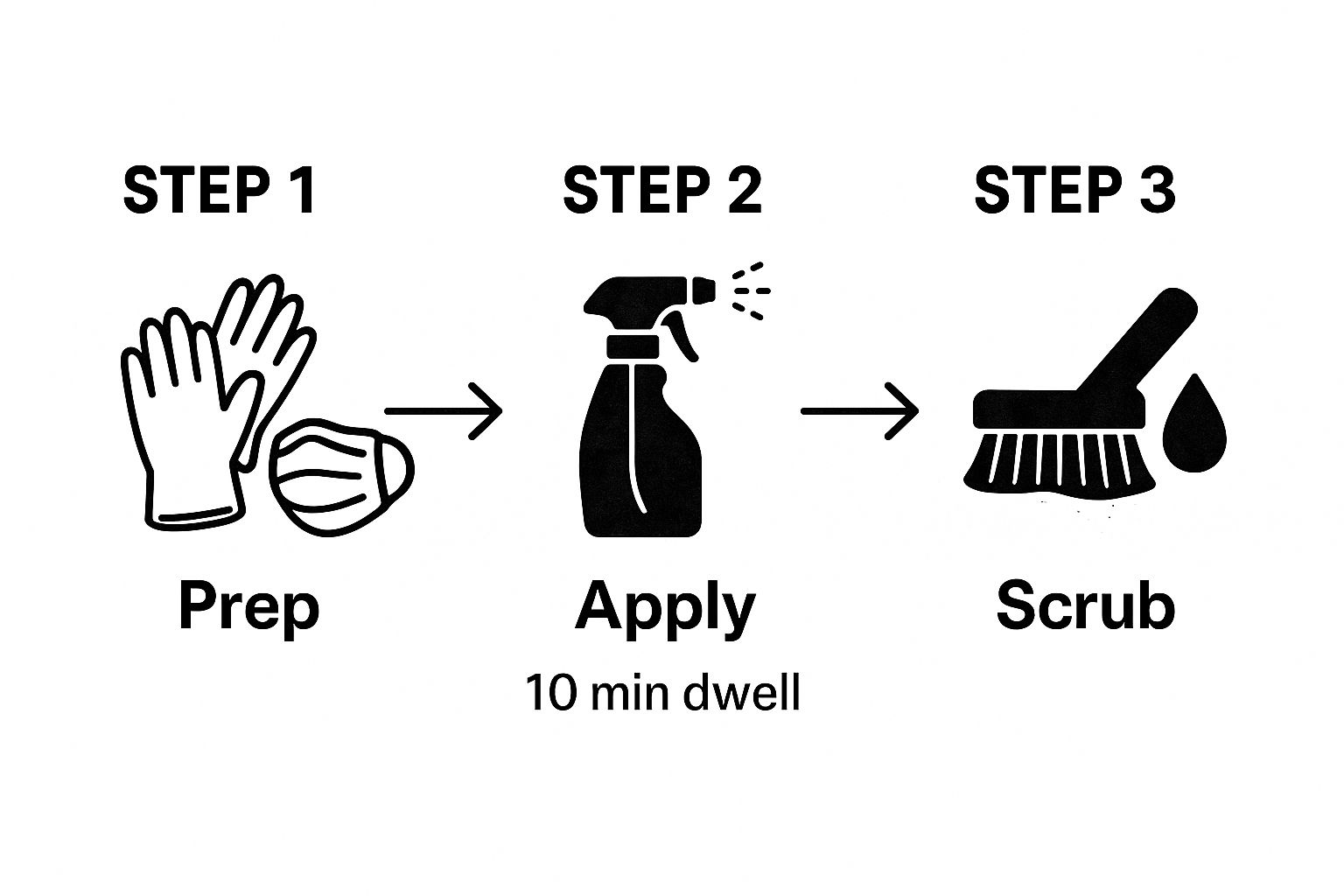
This visual breaks it down perfectly, showing that safety prep and allowing the solution to sit are crucial parts of the job, not just optional extras.
The Right Way to Scrub and Rinse
After you've waited, it's time to get scrubbing. Use a stiff-bristled brush or a scouring pad to scrub the area and dislodge all the dead mould. You’ll want to be firm but not so aggressive that you damage the surface underneath.
Once you’ve scrubbed it all away, rinse the area with a cloth and some clean, warm water. It’s important to get all the residue off. Afterwards, make sure the area is completely dry. You can use a dry cloth or even point a fan at it for a while. Remember, moisture is mould's best friend, so getting everything bone-dry is key to stopping it from coming straight back.
A common place this battle happens is the bathroom. We actually have a detailed walkthrough on expert techniques for removing mould from bathroom surfaces that you might find really helpful. It dives a bit deeper into tackling those notoriously damp spaces.
How to Stop Mould from Coming Back
Killing the mould you can see is a fantastic start. But the real win is making sure it never gets a chance to come back. This is all about playing the long game.
Mould is a creature of habit. It only thrives under certain conditions, so our job is to make your home as unwelcoming as possible for it. Think of it as cutting off its life support.
It all boils down to three key things: ventilation, moisture control, and light. Get these right, and you’re most of the way there. It sounds simple, and honestly, a lot of it is just that.
Tweak Your Daily Habits
Small, consistent actions make a massive difference over time. You can’t expect to have a tidy house if you only clean it once a year, and the same goes for mould prevention.
- Air Out the Bathroom: After every single shower or bath, run the exhaust fan for at least 15-20 minutes. If you don’t have a fan, just crack a window open. This one habit alone is a game-changer for stopping that classic corner mould.
- Give Furniture Breathing Room: Avoid pushing couches, wardrobes, and bookshelves right up against the wall. Leaving even a small gap of a few centimetres allows air to circulate, preventing moist, stagnant air from getting trapped behind them.
- Wipe Down Condensation: Notice water droplets on your windows in the morning? Don’t just leave them there. A quick wipe with a cloth or squeegee removes the moisture that mould needs to get a foothold.
These tiny adjustments disrupt the damp, still environment that mould loves. It's about making your home a place where it simply can't get comfortable. If the bathroom is a particular trouble spot, our guide on how to prevent mould in the bathroom has some extra tips just for that space.
Control Your Indoor Climate
Beyond your daily habits, managing your home's overall environment is crucial. This is especially true here in Australia, where mould is a widespread issue.
In fact, around 70% of households experience mould problems, which is why finding an effective, lasting solution is so important for our health. This huge number highlights the growing trend away from harsh chemicals towards reliable, natural mould killer strategies.
Your goal should be to keep your indoor humidity below 50%. This is the magic number where mould growth really slows down. A simple, inexpensive device called a hygrometer can measure this for you.
If you find your humidity is consistently high, a dehumidifier can be a brilliant investment, especially for damp-prone rooms like laundries or basements.
Finally, do a regular check for any sneaky leaks. A slow drip under the sink or a small crack in the roof can create a hidden mould factory. Fixing these water sources is the most important step of all, because without moisture, mould has absolutely nowhere to grow.
Common Questions About Natural Mould Removers
It’s completely normal to have a few questions when you’re dealing with something as persistent as mould. You're trying a new approach, and you want to be sure you're doing it right and getting the results you need.
Let’s go through some of the most common queries I hear from people making the switch to natural mould killers. Think of this as clearing up any uncertainties so you can tackle that mould with confidence.
How Long Does a Natural Mould Killer Take to Work?
This is a great question, and it gets to the heart of what makes these solutions different. Unlike harsh chemicals that can bleach a stain in minutes, natural ingredients work a bit more methodically. They’re less about a quick cosmetic fix and more about solving the actual problem.
For a vinegar or tea tree oil spray, you’ll want to let it sit for at least an hour to properly kill the mould spores. For tougher jobs, especially with clove oil, leaving it for several hours or even overnight can be incredibly effective.
The key here is patience. These ingredients are working to break down the mould at its root, not just hiding the evidence. Giving them that time to work is the most important step in the whole process.
Are These Natural Sprays Safe Around Pets and Children?
Generally, yes. These solutions are much safer than their chemical counterparts, which is a huge reason people make the switch in the first place. However, there are a couple of things to keep in mind.
Some essential oils, like tea tree oil, can be toxic to pets (especially cats) if they ingest them. When you're spraying, it's always a smart move to keep pets and children out of the room until the area is dry and well-ventilated. Vinegar is perfectly safe, but the strong smell might be a bit much for little noses and paws at first.
Good ventilation is always your best friend here. Crack a window and let the air circulate.
When Should I Call a Professional Instead of a DIY Solution?
DIY natural mould killers are fantastic for surface mould in small to moderate patches. Think of that spot in the bathroom corner, a bit on a windowsill, or some mildew on your shower grout.
But you should absolutely call in a professional if you’re facing any of these situations:
- The mould covers a large area (more than one square metre).
- It keeps coming back no matter what you do.
- You suspect it's growing inside your walls.
- There's a persistent musty smell with no visible mould… this is a major red flag for a hidden problem.
Professionals have the right gear and expertise to find the source of the moisture and remove widespread mould safely without spreading spores throughout your property.
When the job is too big, or you need the assurance of a professional touch, That Cleaning Crew is here to help. We specialise in effective, thorough mould remediation for commercial and complex properties. If you're facing a stubborn mould issue, get in touch for a free on-site quote.