Pressure Cleaning vs Soft Washing in Bella Vista
For a stained driveway or mould-covered exterior walls, the choice between pressure cleaning vs soft washing in Bella Vista, NSW, depends on the surface and its condition. Water pressure is a key difference, but local water-use requirements, runoff control and the work included in your quote also matter.
Pressure cleaning uses water force to lift grime from sound concrete and other durable surfaces. Soft washing combines lower pressure with cleaning solutions, making it generally better suited to render, painted finishes and delicate exterior materials. Your property may need both methods: treating a driveway and a rendered wall the same way is not always appropriate. Compare costs on that basis, with access, preparation and wastewater handling included, rather than judging the price by area alone.
How Pressure Cleaning and Soft Washing Work
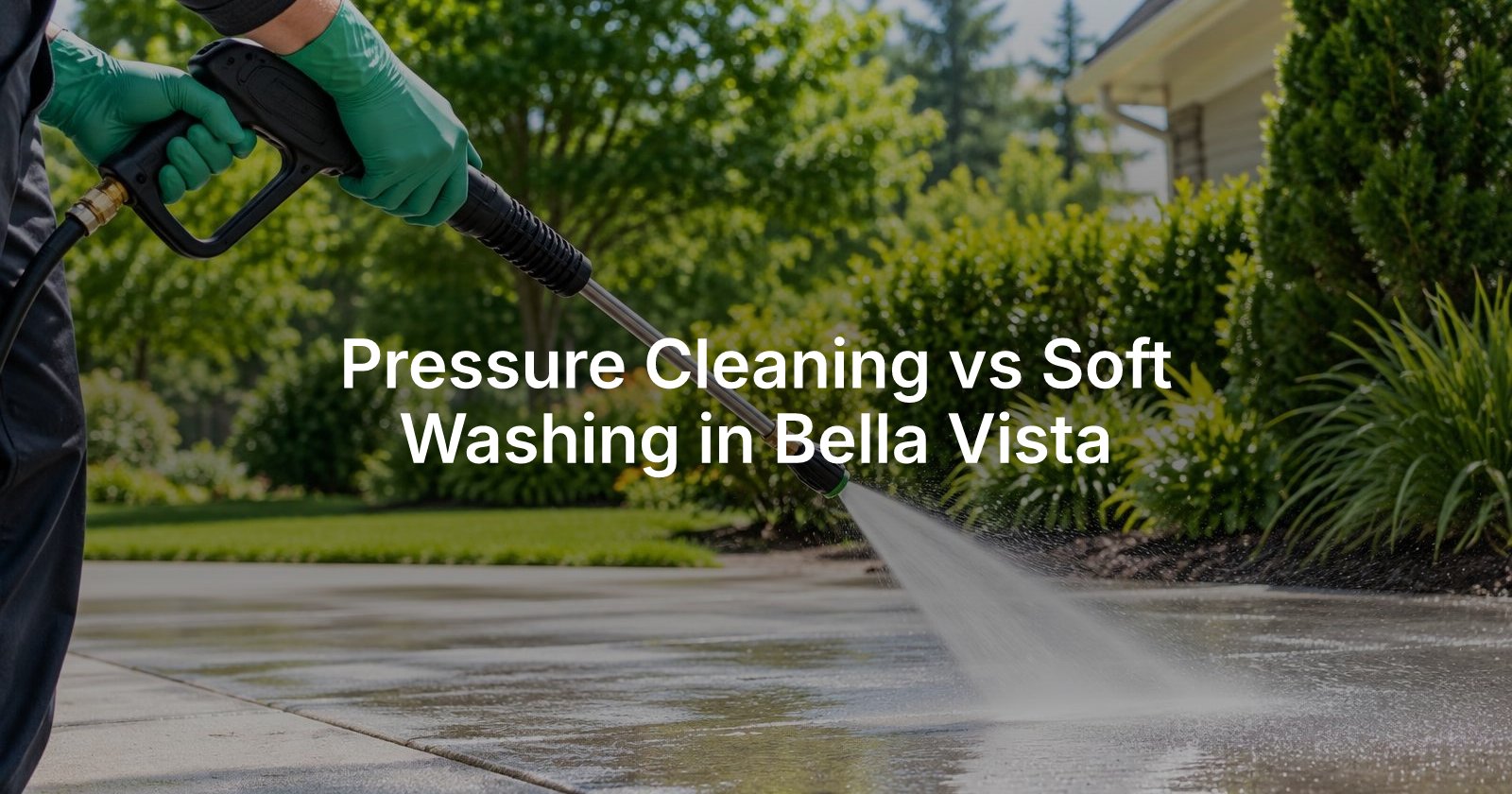
Pressure cleaning uses a pump to drive water through a nozzle, producing a concentrated jet. The impact loosens stubborn dirt, mud, moss and other surface contaminants. The operator adjusts the nozzle, spray distance and movement to control the force reaching the surface. The aim is enough pressure to remove buildup without stripping or marking the material underneath.
Soft washing shifts much of that work to specialised cleaning agents applied with low-pressure water. The solution needs time to act before a gentle rinse removes loosened material and residue. Choosing the product, dilution and contact time requires care: each must suit both the surface and the buildup. Lower pressure does not replace that assessment.
If you are comparing services through Tommytrims.com, look beyond the method’s name. Ask what will do the cleaning: water force, cleaning agents or a controlled combination, and how that approach suits your surface.
Pros and Cons of Each Method
Pressure cleaning is generally faster at removing stubborn grime and tough stains, but it can damage surfaces and typically uses more water than soft washing. That speed is an advantage for routine maintenance on materials that can tolerate the force. On a vulnerable finish, however, the risk of stripping or marking the surface outweighs the benefit of a quicker clean.
Soft washing offers a gentler option for delicate finishes and generally uses less water, but treatment takes longer and cleaning solutions can create chemical runoff. Allowing time for the solution to work is part of the process, not a step to rush. Lower pressure also leaves plant protection and runoff control just as necessary.
For your property, the useful comparison is cleaning efficiency against the care each finish needs. Mixed surfaces may call for both methods rather than accepting the drawbacks of using one approach throughout.
Surface Suitability for Pressure Cleaning and Soft Washing
For a property with mixed finishes, match the method to each surface. Sound concrete driveways, brick paving and durable metal surfaces generally suit pressure cleaning, while roofs, timber and painted surfaces are usually better suited to soft washing. The exposed finish matters: painted brick needs gentler treatment than sound, unpainted brickwork.
Concrete, brick and metal: Check the condition before applying pressure. Crumbling mortar, loose coatings and deteriorated concrete can leave otherwise hard-wearing paths and driveways vulnerable to damage. Metal surfaces also need assessment of their coating, corrosion and nearby seals, rather than an assumption that they can withstand a strong jet.
Roofs, timber and painted finishes: Soft washing is generally the better starting point for rendered walls, weatherboards, fences and roof surfaces. The cleaning solution and application still need to suit the timber finish, roof material or paint condition. A small test area helps establish how the surface responds before full treatment. That assessment should also account for nearby planting and where the wash water will go.
Environmental Impact of Cleaning Methods
Protecting the surface is only part of the job. Pressure cleaning can carry pollutants away with wash water, while soft washing can introduce chemicals that may affect local ecosystems. The environmental impact depends on what is removed, which products are used and where the runoff goes.
On a driveway, runoff may contain oil residue, dirt and cleaning products. Water-only cleaning does not make that runoff harmless. Wash water needs to be contained before it reaches street gutters or stormwater drains, rather than moving contamination off your property.
With soft washing, careful product selection, dilution and application help limit exposure to cleaning solutions in garden beds and nearby waterways. An “eco-friendly” label does not replace plant protection or wastewater containment.
For either method, the cleaning plan should specify how overspray will be limited and contaminated wash water collected and disposed of, while using only the water and product needed.
Cost Comparison for Bella Vista Properties
Neither pressure cleaning nor soft washing is automatically cheaper: surface area, accessibility and local market rates all affect the price. A useful Bella Vista estimate needs a defined scope, not just a preferred method.
An open driveway presents different working conditions from exterior walls above garden beds or beside a narrow passage. Larger areas mean more cleaning, while restricted access can add setup and labour. A soft washing quote should account for solution application, surface protection and rinsing. Pressure cleaning may also require preparation and stain treatment, so a straightforward-looking surface does not tell you the full cost.
Your quote for Pressure Cleaning Services in Bella Vista should identify the surfaces, proposed treatments and any separately priced work. Ask for clarification where preparation or cleanup is unclear before comparing totals.
Local requirements concerning wastewater discharge and chemical use may also affect the cleaning method and associated costs. If runoff needs containment or collection, check that this work is included.
Compare quotes for the same areas and level of care. A lower total offers little value if it leaves out the preparation, surface protection or wastewater handling your property needs.
Frequently asked questions
What local regulations affect cleaning methods?
Wastewater handling is more than a quote item: contaminated wash water must not enter stormwater drains or waterways. Pressure cleaning can produce runoff that carries pollutants. Before work starts, check current council guidance and your water supplier’s water-use rules. Restrictions and permitted equipment can change.
How often should I clean my property’s exterior?
Let surface condition guide the schedule, rather than booking automatically each year. Shaded walls, damp paving and areas beneath trees may need attention sooner than sunny, open surfaces. Watch for slippery growth, recurring green patches and dirt around drainage points, particularly after prolonged wet weather. If growth returns quickly, address contributing moisture, blocked drainage or overhanging vegetation rather than simply cleaning more often.
What safety precautions should I take?
Keep children and pets outside the work area until equipment is packed away and treated surfaces are safe under the product instructions. Wear eye protection, enclosed non-slip footwear and any protective equipment specified on the cleaning product label. Never mix cleaning chemicals. Keep spray away from electrical fittings, and never operate a pressure washer from a ladder. If you suspect a material contains asbestos, do not pressure clean it. Stop and arrange an assessment before disturbing it.
Set out a cleaning plan for each area
Before booking work at your Bella Vista property, list the areas needing attention and any concerns about their condition or safe access. Note loose paint, damaged joints, nearby garden beds and where wash water would drain. Prioritise slippery access paths, and flag damaged surfaces for assessment rather than including them in a routine clean.
Ask for an itemised quote that matches this list, with a proposed method for each area and clear allowances for stain treatment, plant protection and wastewater handling. If a finish is uncertain, request a test patch before full treatment. Property managers should also confirm access with occupants and agree with the contractor how shared paths will be managed during the work.
A plan combining pressure cleaning and soft washing may suit your property better than either method alone. Judge the quote by how well it addresses each area, not simply by its total. Preparation, surface protection and cleanup should be clear before you give approval.
For personalised advice and a detailed quote tailored to your Bella Vista property, reach out to That Cleaning Crew. Our local expertise ensures you receive the best cleaning solution for your needs.
Powered by Rankchat