Running a food business is a whirlwind, isn't it? You're juggling staff, orders, suppliers… the list just goes on and on. But the one thing that really holds it all together is how you clean commercial kitchen spaces. And that's so much more than just wiping benches to pass an inspection.
The Real Impact of Kitchen Hygiene
Let's talk about why this matters so much. Really. It’s easy to see cleaning as just another chore on a never-ending list. But thinking about it that way misses the whole point.
A disciplined approach to kitchen hygiene is your single strongest line of defence. It’s the invisible barrier that protects your customers from getting sick and safeguards the reputation you've poured your heart and soul into building. It’s not just about what you do, but the culture you create.
More Than Just a Clean Surface
When your team sees that cleanliness is a non-negotiable priority, something amazing happens. It sets a standard for everything else. Suddenly, a little extra care is taken with food prep. Storage areas are kept more organised. It builds a sense of professionalism and pride. This isn't just about avoiding problems; it’s about actively building trust.
Think of it like this: a spotless kitchen is the foundation of your entire business. If that foundation is shaky, everything you build on top of it… your menu, your service, your brand… is at risk of crumbling.
A commitment to a genuinely clean commercial kitchen sends a powerful message to everyone, from your newest apprentice chef to your most loyal customer. It says you care. It says you're serious about quality and safety.
This isn’t just good practice… it's a critical health measure. In Australia, there are around 4.7 million cases of foodborne illness reported each year, with a staggering number linked directly to inadequate cleaning in commercial settings. So this is serious stuff. Preventative cleaning is just so important.
This dedication to a clean environment also has a ripple effect on your staff. A clean, organised workspace is less stressful and more efficient, directly influencing how your team performs. You might be surprised by the link between professional cleaning services and workplace productivity. It's a small investment that pays off in big ways, from better staff morale to a smoother, safer service every single day.
Your Practical Kitchen Cleaning System
Feeling swamped by the endless list of cleaning tasks? You're not alone. A truly effective system to clean commercial kitchen spaces isn’t about working harder; it’s about working smarter with a plan everyone understands and can follow. Even on the busiest nights.
So, let's build that plan. The best way to tackle a huge job is to break it down into smaller, more manageable pieces. Instead of seeing your kitchen as one giant room, think of it as a series of connected zones.
Breaking Down Your Kitchen Into Zones
Every kitchen is different, but most have the same core areas. By assigning specific cleaning duties to each zone, you stop tasks from falling through the cracks and create a real sense of ownership among your team.
Your main zones will likely include:
- The Cookline: This is the heart of the action with your ovens, grills, and fryers. The epicentre of grease and grime.
- Prep Stations: Where all the chopping, mixing, and assembling happens. Cross-contamination is the biggest risk here.
- Storage Areas: Your walk-in coolers, freezers, and dry storage pantries. Airflow and organisation are key to preventing spoilage and pests.
- Pot Wash & Warewashing: The scullery or dish pit. This area deals with constant moisture and food debris, making it a hotspot for bacteria if not managed properly.
Once you've defined your zones, you can create simple, straightforward checklists for each one. This isn't about creating a mountain of paperwork; it's about clarity and consistency.
A checklist isn't just a list of chores. It's a map. A map that guides your team to a safe and hygienic result every single time, removing the guesswork and ensuring nothing gets missed.
This visual shows the simple but powerful connection between a disciplined cleaning process and the success of your business.
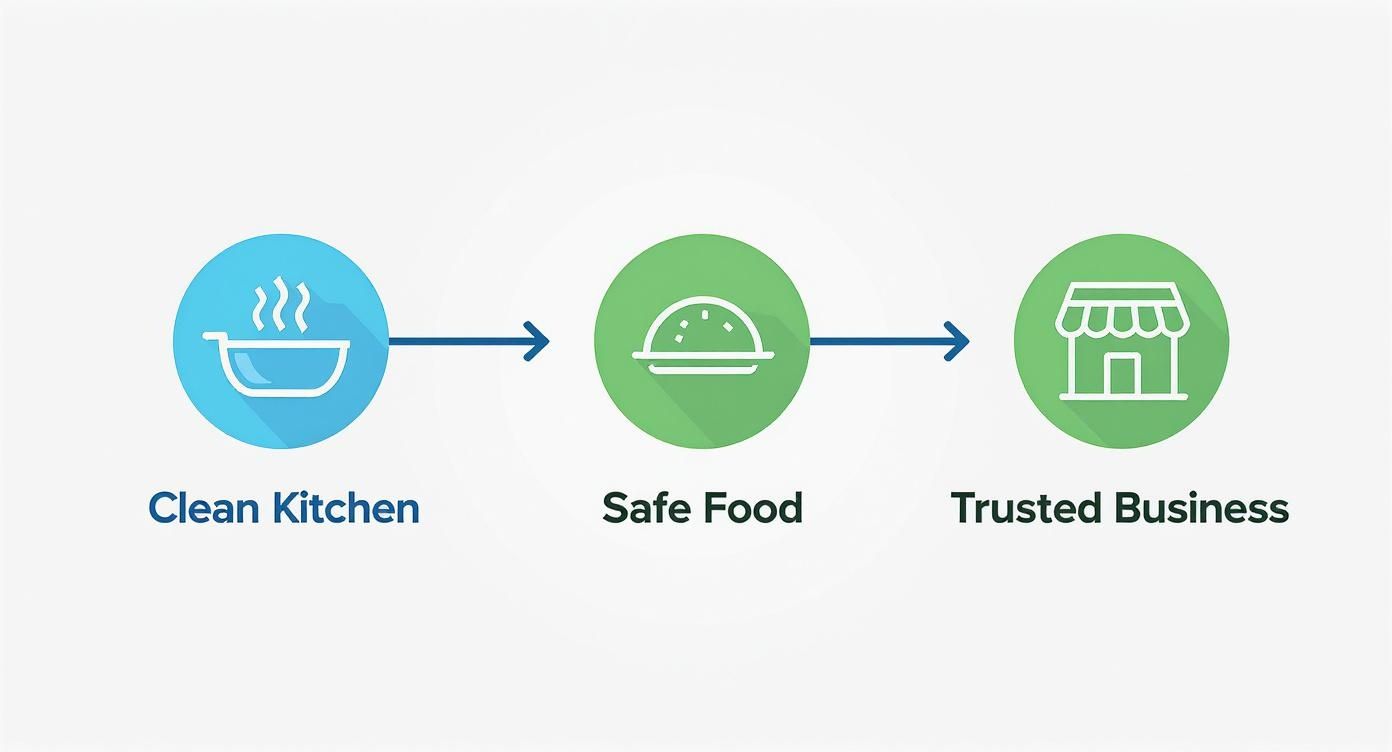
Ultimately, a spotless kitchen leads to safe food, which is the foundation for building a trusted, reputable business that customers return to again and again.
Your Tools for the Job
Having a system is one thing, but you need the right tools to bring it to life. This is where a little bit of organisation goes a very long way.
One of the simplest yet most effective practices is colour-coding. It’s a visual language that instantly tells your staff which cleaning tool to use where, drastically reducing the risk of cross-contamination. Imagine using the same cloth to wipe a raw chicken prep board and then a customer-facing counter… yikes. Colour-coding stops that from ever happening.
A typical system might look something like this:
- Red: For high-risk areas like toilets and washrooms.
- Yellow: For washroom sinks and surfaces.
- Blue: For general lower-risk areas like office spaces or window cleaning.
- Green: For all kitchen and food preparation areas.
This logic should extend to everything, from your cloths and sponges to your cutting boards. It’s a powerful, low-cost way to reinforce food safety habits every single shift.
Creating a Cleaning Schedule That Works
Now, let's put the zones and tools together into a schedule that actually works. The key is to think in terms of frequency. Breaking tasks down into what needs to be done daily, weekly, and monthly. To really get this system humming, using a comprehensive commercial kitchen cleaning checklist as a starting point can be a game-changer, allowing you to adapt it to your kitchen's specific needs.
Here’s a sample breakdown to get you started.
Commercial Kitchen Cleaning Frequency Checklist
This table gives you a basic framework for organising tasks. Remember to adapt it to fit your kitchen's unique layout, menu, and service volume.
| Area/Equipment | Daily Tasks | Weekly Tasks | Monthly Tasks |
|---|---|---|---|
| Cookline | Wipe down all surfaces, empty fryers, clean griddle and hobs. | Boil out deep fryers, clean oven interiors, degrease splashbacks. | Check and clean pilot lights, deep clean under all equipment. |
| Prep Stations | Clean and sanitise all benches, cutting boards, and sinks after use. | Sanitise fridge and cooler door handles and seals. | Empty and deep clean all fridges, delime sinks and taps. |
| Floors | Sweep and mop with a degreasing floor cleaner. | Use a deck brush to scrub grout lines, clean floor drains. | Professional deep clean of hard-to-reach areas. |
| Warewashing | Clean and delime the dishwasher, clean and sanitise all sinks. | Check and clean dishwasher filters and spray arms. | Descale the interior of the dishwasher machine thoroughly. |
This is just a foundation. Your own schedule will need tweaking.
The goal is to create a reliable system that becomes second nature for your team. When cleaning is built into the daily rhythm of the kitchen, it stops being a chore and simply becomes part of the professional standard you're all proud to uphold.
Tackling Your Toughest Cleaning Jobs
Every commercial kitchen has them. Those problem areas. You know exactly the ones I'm talking about… the ones that make you sigh just thinking about them. We're talking about the greasy canopy filters, the stubborn, cooked-on grime on the deep fryer, and that mysterious funky smell coming from the floor drains.
No one loves these jobs. But getting them right makes a massive difference to the health, safety, and overall vibe of your kitchen. So let's roll up our sleeves and get into the specifics of how to tackle these kitchen nightmares for good.

Conquering Grease in Your Extraction System
Let's start with the big one. The kitchen canopy and its filters. This isn't just a cleaning job; it's a critical fire safety task that, honestly, gets put off way too often. A build-up of grease in your extraction system is a serious fire hazard waiting to happen.
Your first move should always be the filters. These need to be removed and soaked regularly, and the best way to do it is with a commercial-grade degreaser diluted in hot water.
Here’s a practical approach that works every time:
- Carefully pull the filters out of the canopy hood. They'll be heavy and slippery, so get a solid grip.
- Get them fully submerged in your sink or a dedicated soaking tub filled with hot water and the correct amount of degreaser.
- Just let them sit for at least 20-30 minutes. This gives the chemical time to do the heavy lifting and break down that stubborn, baked-on grease.
- Once they've soaked, grab a stiff, non-abrasive brush to scrub away any remaining residue, then give them a thorough rinse with hot water.
While the filters are soaking, you can tackle the canopy itself by wiping down all accessible surfaces with a degreasing spray. For a truly professional result, understanding how to clean rangehoods properly is key… it makes sure you're not just moving grease around but actually removing it.
Dealing with Deep Fryers and Drains
Ah, the deep fryer. It's a workhorse, but it can get seriously grimy. A weekly 'boil out' is the best way to keep it in top shape and improve the quality of your oil.
After safely draining the old oil, you'll fill the fryer with water and a special boil-out cleaning solution. Then you bring it to a slow, gentle boil for about 20 minutes. This process lifts all the hardened grease and carbonised bits from the heating elements and walls. Once it's done and cooled, you can drain it, give it a good scrub, rinse it thoroughly, and it’s ready for fresh oil.
Now, about those drains. Out of sight, but definitely not out of mind, especially when they start to smell. A simple preventative habit can save you a world of trouble.
Pouring a bucket of very hot water down each floor drain at the end of every single shift is one of the easiest and most effective things you can do. It helps to flush away small grease particles before they have a chance to build up and cause blockages.
For a deeper clean, using an enzymatic drain cleaner once a week can work wonders. These products use beneficial bacteria to literally eat away at the organic build-up in your pipes, keeping things flowing freely and smelling fresh.
Preventing Mould in High-Humidity Zones
Finally, let's talk about mould. It loves damp, dark places. Your walk-in cooler, the gaskets on your fridge doors, and the cabinets under your sinks are all prime real estate for it to take hold.
Prevention here is all about managing moisture and promoting airflow.
- Check for Leaks: Regularly check for any small drips or leaks under sinks and around ice machines. A small problem fixed quickly is better than a huge mould issue later on.
- Wipe Down Seals: Make it a weekly task to wipe down the rubber gaskets on all your fridge and cooler doors with a food-safe sanitiser.
- Encourage Airflow: Don't overpack your walk-in cooler. Leaving space between items allows cold air to circulate properly, which helps to keep surfaces dry and inhibit mould growth.
These might be the toughest jobs, but building them into your regular weekly and monthly cleaning schedule makes them feel much less daunting. It's all about consistency. A little bit of attention to these problem areas goes a very long way in maintaining a truly clean and safe commercial kitchen.
Staying on Top of HACCP and Food Safety Compliance
Let's talk about the paperwork. I know, it’s probably the least exciting part of running a kitchen. But that folder of logs and records is your single best piece of evidence that you run a tight ship.
It's your proof that you don't just talk about safety… you live it. Every single day. This documentation is what stands between you and a lot of potential trouble.
When a health inspector walks through your door, they're looking for more than just sparkling benches. They want to see your systems. They want to know you have a proactive plan for keeping food safe, and that plan is called HACCP.
What Is HACCP Anyway?
HACCP stands for Hazard Analysis and Critical Control Points. I know it sounds complicated, but the idea behind it is actually quite simple and logical.
Think of it as a roadmap for food safety. Instead of just reacting to problems after they happen, you’re looking ahead to spot potential hazards… like a dodgy fridge temperature or a cross-contamination risk… and then putting simple, practical controls in place to stop them from ever becoming an issue.
It’s about being prepared, not just being clean.
HACCP isn't about creating more work. It’s a smart system designed to prevent the very problems that could shut you down, protecting both your customers and your business from harm.
Essentially, it's a way to prove you’re actively managing food safety risks at every stage, from when ingredients arrive at your back door to when a finished plate of food goes out to a customer. And your cleaning schedule is a huge part of that.
Your Paper Trail Is Your Best Defence
This is where record-keeping becomes so crucial. Your daily logs for cleaning, temperature checks, and staff training aren't just for ticking boxes. They create a culture of accountability.
When your team knows that fridge temperatures are checked and logged twice a day, every day, it becomes a non-negotiable habit. When a new delivery comes in, they check it, temp it, and sign off on it because that's the system. It builds discipline.
Here are the essential records you should be keeping:
- Cleaning and Sanitising Logs: A simple checklist showing what was cleaned, when it was cleaned, and who cleaned it. This confirms your daily and weekly cleaning schedules are actually being followed.
- Temperature Monitoring Records: This one’s critical. It includes logs for your coolers, freezers, and hot-holding units, plus temperatures of cooked foods. This proves you're keeping food out of the 'danger zone' where bacteria thrive.
- Goods Receiving Log: A record of deliveries, checking that incoming food is at the correct temperature and shows no signs of spoilage.
- Staff Training Records: This shows that your team is properly trained in food safety, hygiene practices, and understands your HACCP plan.
Beyond understanding HACCP principles, making sure your entire team undergoes comprehensive food handler certificate training is paramount for daily operational safety.
Why It Matters More Than Ever
Stricter food safety regulations are a big reason why professional cleaning is becoming so essential for kitchens that want to stay ahead of the curve. It's not just about appearances anymore; it's about meeting clear, mandatory standards.
The commercial cleaning services industry in Australia has actually seen a 6.7% compound annual growth rate, driven largely by these tighter regulations. This really highlights the growing demand for expert cleaning to meet protocols for daily sanitation of food prep zones and high-touch surfaces.
Your documentation system transforms the abstract idea of 'food safety' into a set of concrete, daily actions. It gives you a clear story to tell an inspector, but more importantly, it gives you peace of mind.
It lets you know for sure that your team is doing the right things, even when you're not looking over their shoulder. And in this business, that kind of confidence is priceless.
How Technology Can Help Keep Your Kitchen Clean
Cleaning doesn't have to rely purely on elbow grease and paper checklists anymore. Let's be honest, sometimes things get missed. A busy service, a new staff member, or just human error… it happens. But modern tech offers some seriously smart tools that can act as your backup, making it so much easier to keep everything hygienic and compliant.
This isn't about adding complicated gadgets for the sake of it. It's about using simple, effective tools that actually make your life easier and your kitchen safer. Think of it as having an extra set of eyes that never gets tired or distracted.
Smart Checklists and Digital Logs
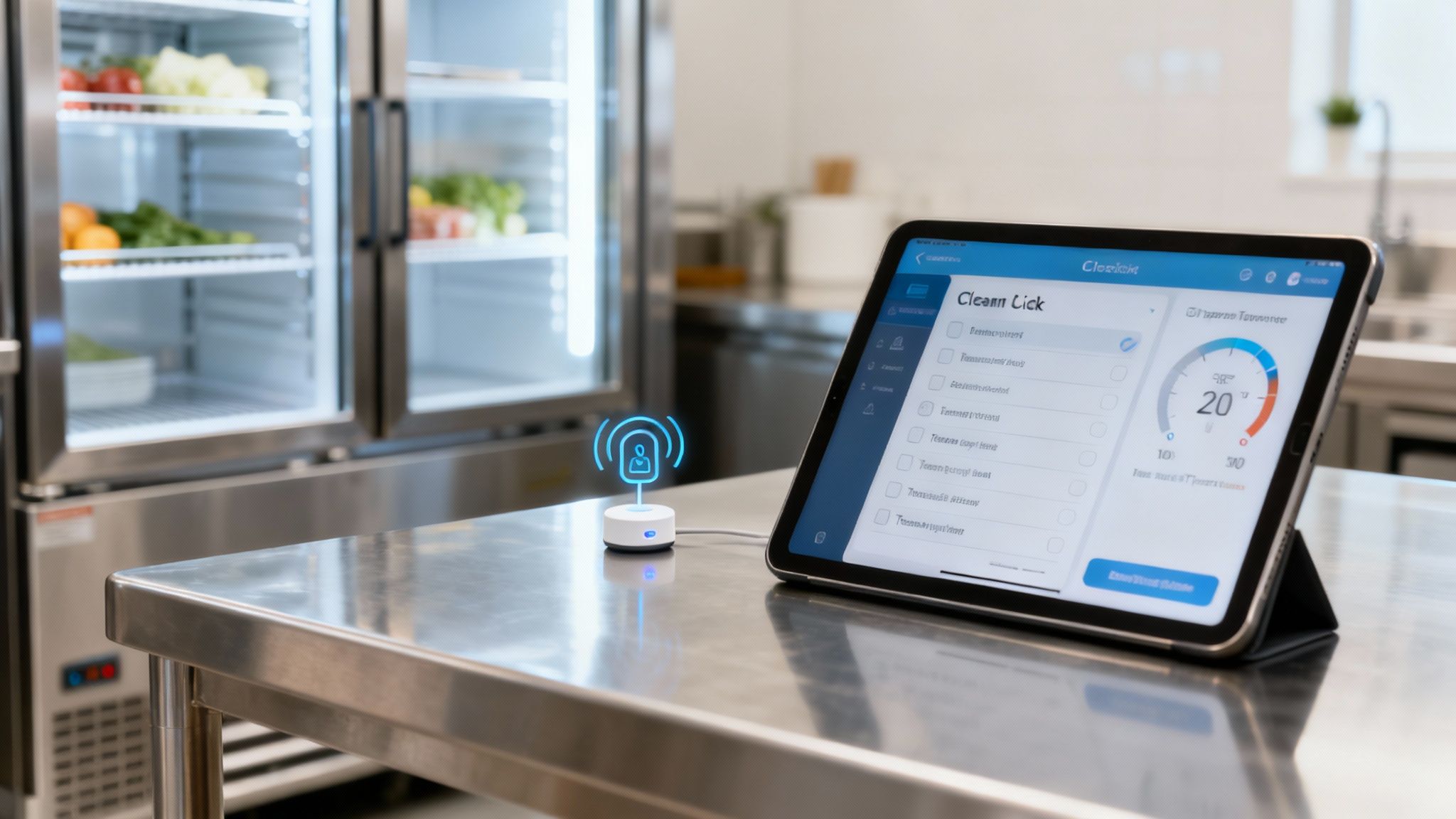
Remember those paper logs we talked about? They work, but they have their limits. They can get lost, damaged by spills, or filled out incorrectly. Now, imagine all of that on a tablet.
Digital checklists can send automatic reminders to your team's devices, pinging them when it’s time to temp the cool room or sanitise the prep benches. It’s a gentle nudge that makes sure crucial tasks are never forgotten, especially during the chaos of a lunch rush.
The best part? It creates an automatic digital record. When an inspector asks to see your cleaning logs from last Tuesday, you can pull them up in seconds. No more flipping through a messy binder.
This creates a clear, time-stamped trail of accountability. You can see who completed each task and when, which is invaluable for both compliance and team management.
Sensors That Keep Watch for You
Another game-changer is the rise of smart sensors. These are small, simple devices you can place inside your refrigerators and walk-in coolers to monitor the temperature 24/7.
If the temperature ever creeps into the danger zone… say, if a door is accidentally left ajar overnight… it won't just sit there waiting for someone to notice in the morning. Instead, it will send an instant alert straight to your phone. This gives you a chance to fix the problem before thousands of dollars worth of stock is spoiled.
This proactive approach is incredibly powerful. Some Australian restaurants using these kinds of AI-powered management systems have reported a 75% reduction in food waste and a 33% decrease in energy costs, simply by being more responsive to real-time data. AI sensors can alert staff to hygiene risks or temperature fluctuations, making sure food safety protocols are consistently followed. You can learn more about these commercial kitchen technology trends and how they're shaping the industry.
This technology isn't just about catching problems. It’s about building a smarter, more proactive food safety culture. It gives you real data to work with, helping you spot patterns and improve your processes over time. By taking the guesswork out of some of the most critical checks, it frees up your team to focus on what they do best: creating amazing food in a clean commercial kitchen you can be truly proud of.
Got Questions About Commercial Kitchen Cleaning? We've Got Answers.
We've covered a lot of ground, from setting up daily cleaning rosters to tackling the jobs everyone dreads. But even with the best systems in place, a few questions always pop up. That’s completely normal.
So, I’ve pulled together some of the most common things I get asked by kitchen managers and restaurant owners. Here are some straight-up, practical answers to help you keep things running smoothly.
What Is the Most Overlooked Cleaning Task in a Kitchen?
It's almost always the places you don't look at every single day. The hidden spots.
Think about the rubber gaskets on your fridge and cool room doors, the slimy interior of your ice machine, and the grimy undersides of prep benches and shelves. These are prime real estate for bacteria and mould to grow completely unnoticed. You might wipe the front of the fridge door, but it’s the seal that traps moisture and tiny food particles. You use the ice every day, but when was the last time the machine itself was fully sanitised?
The canopy and extraction filters are another massive one. It's a big, messy job, so it’s tempting to push it back another week. But a greasy canopy isn't just a hygiene issue… it’s a serious fire risk. Building these 'out of sight' spots into your regular deep clean schedule isn't just a good idea; it's absolutely non-negotiable for a safe kitchen.
How Do I Get My Staff to Actually Take Cleaning Seriously?
This is a big one. You can have the best checklists in the world, but they're useless if your team isn't on board. The secret isn't about being stricter; it's about better training and leading by example.
Great training has to be hands-on and consistent. Don't just hand someone a list and walk away. Get in there and actually show them how to do each task correctly and, most importantly, explain why it matters.
For instance, don't just say "use this sanitiser." Explain that it needs a five-minute contact time to actually kill the germs. Otherwise, they're just wiping surfaces with a damp cloth that isn’t doing much at all. Context is everything.
I find that visual aids near prep stations and short, regular training refreshers during team meetings work so much better than one long, boring session that everyone forgets a week later. Ultimately, you have to set the standard. When the team sees that you prioritise cleanliness and you're willing to get your own hands dirty, they're far more likely to follow suit.
Are Eco-Friendly Cleaning Products Strong Enough for a Commercial Kitchen?
Absolutely. Many modern, plant-based and eco-friendly cleaners are more than powerful enough for commercial use these days. The industry has come a long way. The trick is to choose professional-grade products specifically certified as food-safe.
Don't just grab something from the supermarket shelf. Look at the product specs from commercial suppliers to make sure they are proven effective against common pathogens like Salmonella and E. coli.
They can be a fantastic choice, and they're often safer for your staff's health and the environment. But just like any chemical, you still have to follow the manufacturer's instructions for dilution, application, and contact time. They're powerful, but they're not magic… you still have to use them correctly.
How Often Do I Really Need a Professional Deep Clean?
This really depends on how busy your kitchen is and what type of cooking you do. There isn't a single answer that fits everyone.
For a high-volume restaurant with multiple deep fryers and a char-grill, you should have the kitchen exhaust and canopy system professionally cleaned every three to six months. This is crucial for managing fire risk and is often a non-negotiable requirement for your insurance policy.
For the rest of the kitchen, a full top-to-bottom professional deep clean once or twice a year is a brilliant investment. It perfectly complements your team's daily cleaning by tackling the really heavy-duty jobs they can't get to… like cleaning behind fixed equipment, high-level pipes, and deep-scrubbing porous floor surfaces. Think of it as hitting the reset button on your kitchen's hygiene.
Keeping a commercial kitchen spotless is a constant challenge, but you don't have to do it all alone. For those deep cleaning jobs that require specialist equipment and expertise, That Cleaning Crew is here to help. We provide professional, reliable kitchen cleaning services that meet the highest standards of safety and compliance. Get in touch for a free on-site quote and let us handle the toughest jobs, so you can focus on the food.