Okay, so you've found it. That musty smell, those ugly dark spots… mould. It’s a moment that can really make your stomach drop. Don't panic. You're in the right place, and we'll walk through this together.
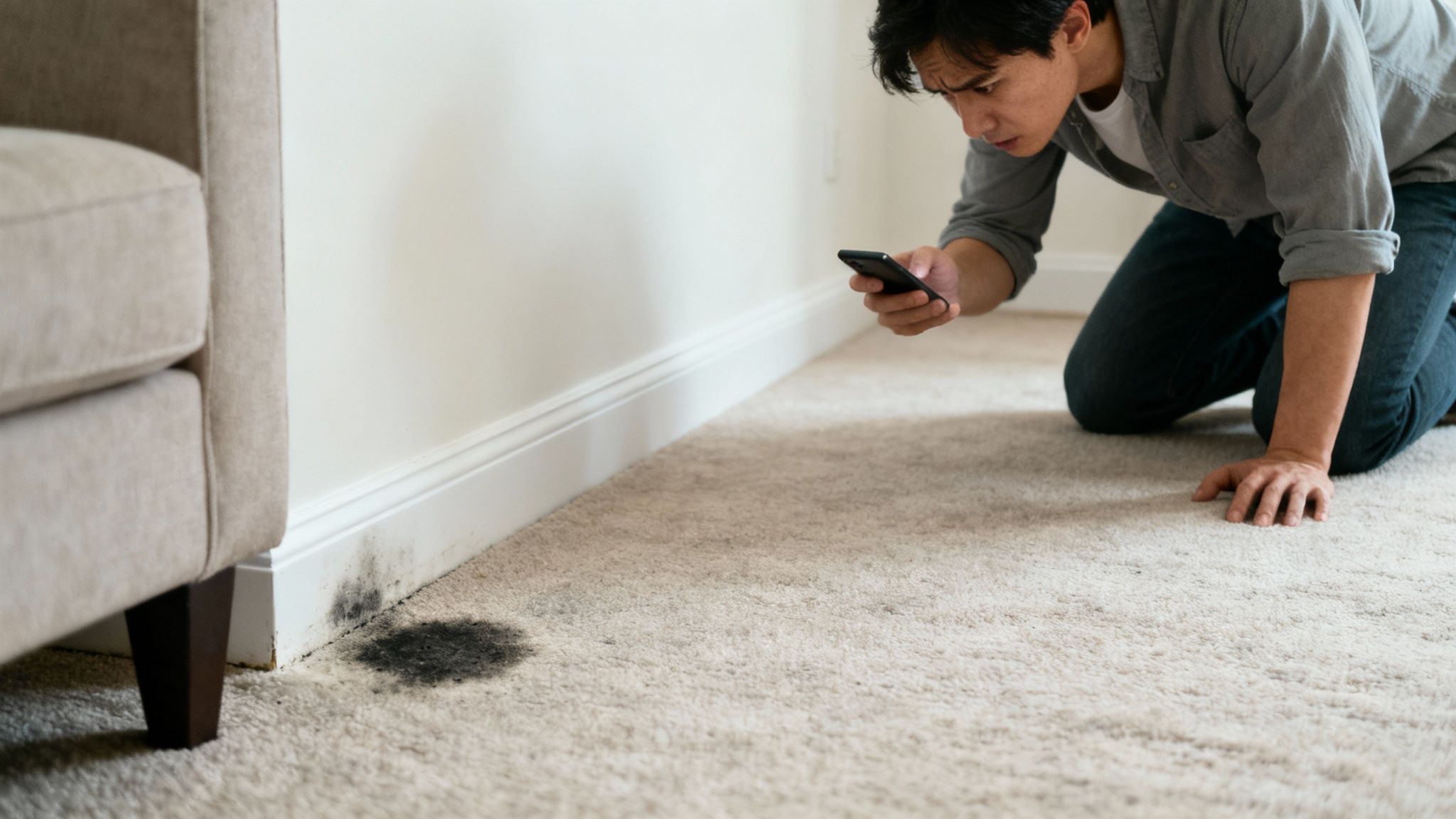
Before you even think about grabbing a scrubbing brush, the first move is to figure out exactly what you're dealing with. Let’s get a clear head. And a solid plan.
Why You Can't Just Ignore It
Ignoring mould on your carpet is like ignoring a leaky tap. It seems small at first, but it will only get worse, causing more damage and costing you more in the long run. Mould is a living thing, and its whole job is to spread. What starts as a small patch can quickly creep under the carpet, into the padding… and even damage the subfloor underneath.
But it’s not just about your floors. Mould releases spores into the air, which can seriously mess with the air quality in your home. This is a big deal, especially here in Australia where damp conditions can make it a really persistent problem.
Exposure to indoor mould can increase asthma symptoms by approximately 38-50%, highlighting just how serious mould-related health risks can be in our homes.
On top of that, carpets are surprisingly good at holding onto things. Like a sponge. They can host up to 200,000 bacteria per square inch, so adding mould to the mix just creates a bigger health hazard for everyone living in the space. You can learn more about the risks of mould in Australian homes and see why acting fast is so important.
Should You DIY or Call a Professional?
So, the big question is… can you handle this yourself, or is it time to call in the experts? The answer really depends on the size and depth of the problem. A tiny spot from a recent spill is one thing. A large, dark patch that's been growing for weeks is a whole other beast.
For small, surface-level spots, a good approach is to ventilate the area, dry it completely, apply a cleaning solution like vinegar and water, scrub the spot, and then dry it thoroughly again. Just be sure to wear protective gear.
But how do you know if it's really a small job?
Use this quick checklist to decide if you can tackle the mould yourself or if it's time to call in the professionals. Be honest with your answers here. It’s about safety first.
Quick Assessment Checklist: Is It a DIY Job?
| Symptom | DIY Potential (Small and Contained) | Professional Help Needed (Large or Persistent) |
|---|---|---|
| Size of Mould Patch | Smaller than your hand (less than 1 square metre). | Larger than your hand, or multiple patches throughout the room. |
| Source of Moisture | Obvious and recent, like a single drink spill. | Unknown, ongoing leak, or from a major flood. |
| Location | On the surface of the carpet pile only. | Deep in the carpet padding, underlay, or on the subfloor. |
| Smell | Faint musty odour isolated to the one spot. | Strong, pervasive earthy smell that fills the room. |
| Carpet Condition | Carpet is otherwise in good condition. | Carpet is water-stained, soggy, or has been damp for more than 48 hours. |
| Health of Occupants | No one in the home has allergies, asthma, or a compromised immune system. | Someone in the household is sensitive to mould or has respiratory issues. |
Being honest about the scope of the problem is the most important first step. Tackling a job that’s too big for a DIY approach can actually make things worse by spreading spores around and not fully killing the source. When in doubt, getting a professional opinion is always the safest bet.
Gathering Your Gear for Safe Mould Removal
Before you even think about tackling that mouldy patch, we need to talk about safety. This isn't like wiping up a coffee spill. You're dealing with a living organism that releases spores into the air, and you absolutely don't want to be breathing those in.
So, let’s gear up properly. Think of it like being a surgeon for your carpet… you wouldn't go into surgery without your mask and gloves, right? Getting this prep right from the start means you can do the job once, do it well, and most importantly, do it without putting yourself at risk.
Your Personal Protective Equipment
This part is non-negotiable. Seriously. Skipping this gear is a shortcut to feeling unwell later, and it's just not worth it. I've seen too many people try to "quickly" clean a spot without protection, only to suffer from itchy eyes and a cough for days.
Here’s your essential safety kit:
- A P2 Respirator Mask: Don't grab a flimsy paper dust mask from the two-dollar shop. You need a proper P2-rated mask that actually filters out fine particles like mould spores.
- Safety Goggles: Get the kind that wrap around your eyes. Spores can easily cause irritation, and you definitely don't want cleaning solutions splashing into them.
- Rubber Gloves: Go for a sturdy, reusable pair that covers your wrists. You don't want any cleaning solutions or mould coming into contact with your skin.
Taking a few minutes to put on the right gear is the most important step in the entire process. It’s your first line of defence against inhaling spores that can trigger allergies or respiratory issues.
Choosing Your Cleaning Arsenal
With your safety gear sorted, it's time to gather your cleaning supplies. You don't necessarily need harsh chemicals; some of the most effective solutions are probably already in your cupboard. Let’s look at the options.
For a DIY approach on how to clean moldy carpet, you'll want to have these on hand:
- White Vinegar: This is a fantastic natural anti-fungal. A simple mix of equal parts white vinegar and water in a spray bottle is often enough for small, surface-level jobs.
- Stiff-bristled brush: You'll need this for gently scrubbing the mould from the carpet fibres. Avoid wire brushes at all costs, as they'll just tear up your carpet.
- Old Towels or a Wet-Dry Vac: These are for the crucial blotting and drying phase. Removing as much moisture as possible, as quickly as possible, is key to stopping mould from coming straight back.
- Baking Soda: Great for sprinkling on the spot after cleaning. It helps absorb any lingering moisture and tackles those musty odours.
Having everything ready to go before you start makes the whole process smoother and safer. Now that you’re prepared, you’re ready to tackle the clean-up itself.
A Practical Method for Cleaning Surface Mould
Alright, you're geared up and ready to get stuck in. This is where the real work begins. The part where we actually get that mouldy patch out of your carpet. But hold on. This isn't about scrubbing like a maniac. There's a proper way to do this that stops you from accidentally making things a whole lot worse.
We're going to focus on a small, contained spot. The kind you can realistically handle yourself.
Start by Containing the Area
First things first, you need to stop those invisible mould spores from taking a trip around your house. Think of them like glitter. Once they get airborne, they settle everywhere and are a nightmare to get rid of.
So, open the windows in the room you're working in to get some fresh air circulating. But keep the door to the rest of the house closed. You want to create a bit of a quarantine zone.
Applying and Agitating Your Solution
Now, grab your cleaning solution. Whether it's the vinegar mix we talked about or a store-bought product, the application is key.
Lightly spray the mouldy area. You want it to be damp, not soaking wet. Drenching the carpet is a fast track to creating more moisture problems… which is exactly what got us into this mess in the first place.
Let the solution sit for about 15 minutes. This gives it time to work its magic and start breaking down the mould. Then, take your stiff-bristled brush and gently scrub the area in small circles. The goal is to loosen the mould from the carpet fibres, not to drive it deeper into the padding. Be firm, but not so aggressive that you damage the carpet itself.
When considering cleaning solutions, you might wonder if common household items are effective. You can find out the definitive answer to whether using bleach is the right approach by reading Does Bleach Kill Black Mold? for more details.
The Crucial Rinsing and Blotting Phase
This step is where many people go wrong. After scrubbing, you need to remove both the cleaning solution and the loosened mould. Grab a clean, damp cloth and gently blot the area to rinse it. Don't rub… you'll just push everything back down.
Then, take a dry, absorbent towel (or several) and start blotting the life out of that spot. Press down hard with your full body weight. Stand on it if you have to.
The secret here is to blot, not rub. Your aim is to pull moisture up and out of the carpet pile, not smear it around or push it deeper into the underlay. Swap for a dry towel as soon as one becomes saturated.
This infographic shows the simple but essential gear you need before starting any cleaning.
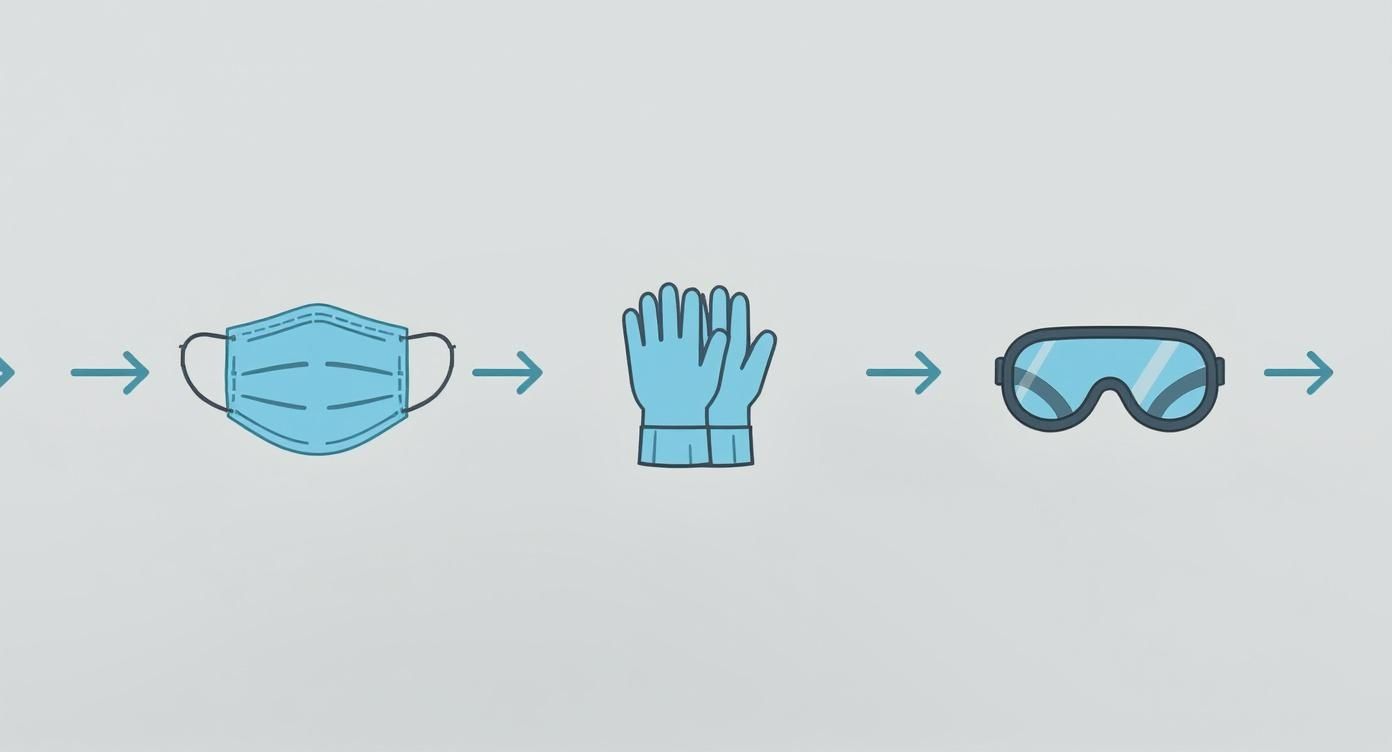
Each piece plays a vital role in protecting you from airborne spores and direct contact with cleaning agents. For more ideas on effective, non-chemical options, check out our guide on finding the best natural mould killer for your home.
It's also worth knowing that water damage is a huge contributor to mould in Australian homes, with over 17% of insurance claims related to it. For bigger jobs, professionals often use hot water extraction, which can reduce the fungal load from over 300 colony-forming units down to just 5.5. It shows just how powerful proper moisture removal really is.
Why Drying Your Carpet Completely Is So Important
You can do the best cleaning job in the world, but if you don't get this next part right, that mould will be back before you know it. Seriously. This isn't just a suggestion. It’s probably the most critical step in this whole process.
Mould absolutely loves moisture. Leaving your carpet even a little bit damp is like rolling out a welcome mat and handing it a drink. That temporary fix you just worked so hard on will become a recurring nightmare.
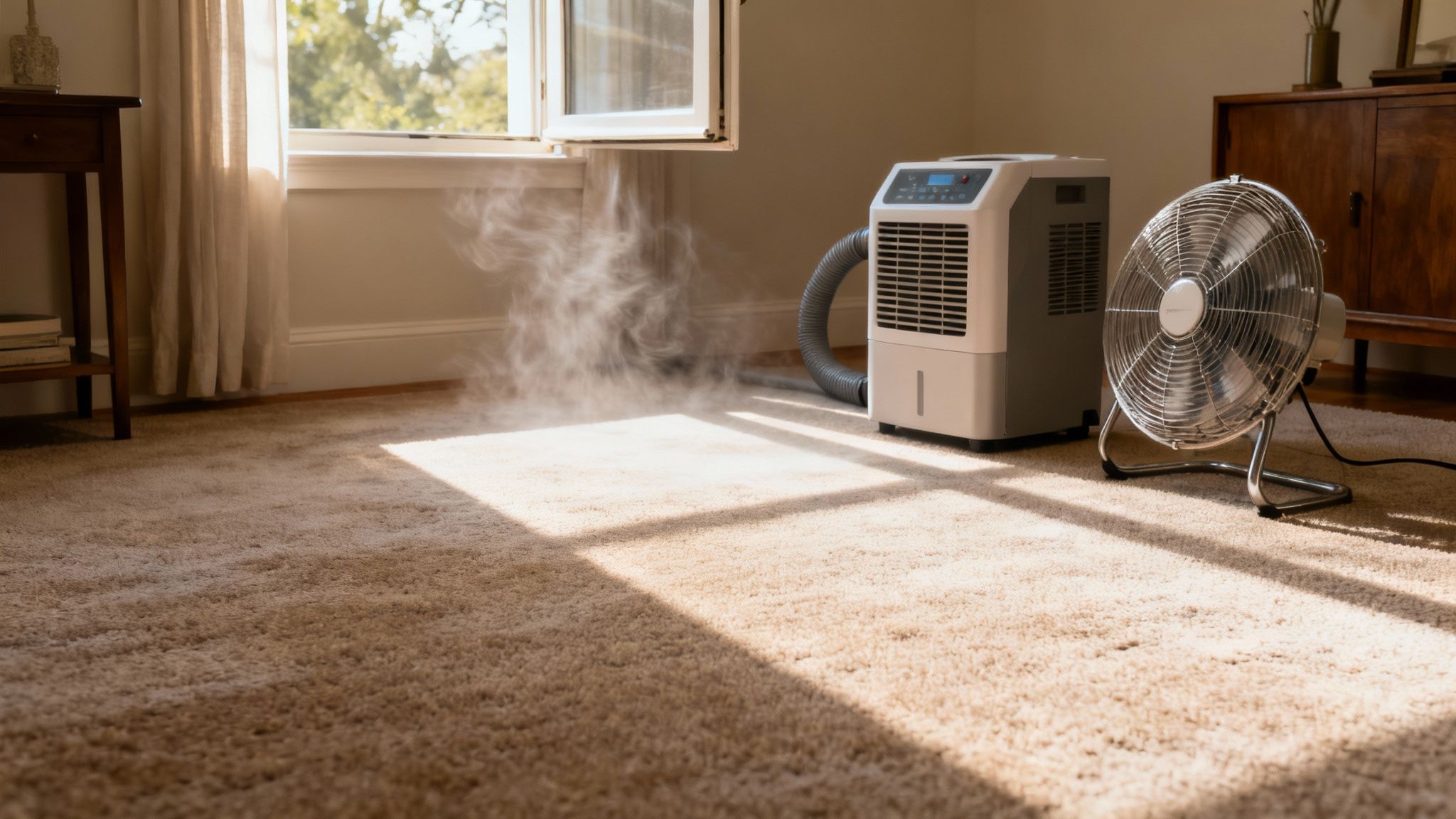
This is the part that truly separates a temporary clean-up from a long-term solution.
Creating a Drying Vortex
Your main goal is to get air moving. A lot of it. Just cracking a window open probably isn't going to cut it, especially on a humid day here in Australia. You need to create some serious airflow.
Think of it like trying to dry your clothes on a still, muggy day versus a breezy one. The wind makes all the difference.
- Bring in the Fans: Grab any pedestal or box fans you have and point them directly at the damp patch. Don't point them straight down, but rather across the surface to whisk the moisture away as it evaporates.
- Use a Dehumidifier: If you have one, now is its time to shine. A dehumidifier will actively pull moisture out of the air, which in turn helps pull it out of your carpet. Run it in the room with the door closed for maximum effect.
For more detailed instructions and tips on how to effectively dry a wet carpet to prevent mould, this guide is a fantastic resource.
How to Know When It's Truly Dry
Okay, so how long does this take? It really depends on how damp the carpet was and the conditions in the room. It could be a few hours or it might take a full day. Patience is key.
The surface might feel dry to the touch long before the padding underneath is. Don't be fooled. You need to check deep down to be sure you've truly solved the moisture problem.
So how do you check?
Press down firmly on the spot with a thick stack of paper towels. If they come up with any hint of dampness, you’re not done yet. Keep those fans blowing until the paper towel comes away completely dry. This final check ensures you're not leaving any hidden moisture behind for mould to find later.
How To Keep Mould Away for Good
Getting rid of the mould is a huge win. A proper victory. But keeping it away for good is the real goal, isn't it? You absolutely don't want to be going through all this again in six months.
This is all about turning your home from a mould-friendly haven into a place where it just can't get a foothold. We need to think bigger than just the carpet and look at the whole environment. This is your long-term game plan.
Control Your Indoor Climate
Mould has a best friend, and its name is humidity. If the air in your home is consistently damp, you’re basically sending mould an open invitation. The sweet spot for indoor humidity is between 30% and 50%.
A dehumidifier is your best weapon here. Running one in damp areas like basements, laundries, or poorly ventilated rooms can make a massive difference. It actively pulls moisture from the air, creating a much less hospitable environment for those pesky spores.
Also, don't underestimate airflow. It’s surprisingly important.
- Create space: Try to leave a small gap between your furniture and the walls. This lets air circulate, preventing those damp, stagnant pockets where mould loves to get started.
- Use your fans: Don't just save the exhaust fan for steamy showers. Let it run for an extra 10-15 minutes afterwards to properly clear the air. The same goes for the laundry if you have a dryer running.
Think of it like this: mould is a silent intruder that thrives in still, damp conditions. By simply keeping the air moving and dry, you’re making your home a much less attractive target.
Become a Leak Detective
The sneakiest mould problems often start with a slow, hidden leak. You need to become a bit of a detective and regularly check for signs of trouble.
Keep an eye out for subtle water stains on ceilings, around window sills, or under sinks. Check that your gutters are clear and directing water away from your house, not towards its foundations. A small drip you ignore today can become a massive mould colony under your carpet tomorrow.
When you find a leak, fix it immediately. It’s the single most proactive thing you can do. Our complete guide on how to get rid of mould provides even more detail on tackling the source of the problem.
Your Carpet Choices and Cleaning Habits Matter
Did you know the type of carpet you have can make a difference? Some materials are just naturally better at resisting mould.
An Australian study back in 2020 found that polypropylene (also known as olefin) carpet fibres showed the least fungal growth when compared to nylon or wool. This suggests that your choice of carpet material can play a vital role in preventing a mouldy carpet situation from the get-go.
The study also highlighted something else… that regular vacuuming doesn't do much to remove fungal nasties. However, professional hot water extraction was shown to dramatically reduce fungal levels.
So, what does this mean for you?
- Vacuum Regularly (with a HEPA filter): While it won't remove established mould, it will pick up the dust, dirt, and organic matter that mould spores feed on. A vacuum with a HEPA filter is even better as it traps the microscopic spores themselves.
- Schedule Professional Cleans: Getting your carpets professionally cleaned with hot water extraction once a year is a brilliant preventative measure. It deep cleans in a way household equipment simply can't, removing the building blocks mould needs to thrive.
Got Questions About Your Mouldy Carpet? Let's Clear Things Up
When you're staring down a patch of mould on your carpet, it's easy for your mind to start racing with questions. That's completely normal. You're dealing with something that looks pretty grim and can affect your family's health, so you want to get it right.
Let's walk through some of the most common questions I hear from homeowners. We'll get you some straight answers so you can feel more confident tackling the problem.
Does White Vinegar Actually Work on Mould?
Yes, it absolutely does. White vinegar is a fantastic natural anti-fungal. Because it's acidic, it's incredibly effective at killing the mould itself, not just bleaching the stain it leaves behind like some other products do.
This is a big reason why it’s a much better choice than bleach, especially for porous surfaces like carpet. Vinegar can penetrate the fibres and get to the root of the problem. For small mould spots, it’s a simple, cheap, and surprisingly powerful first line of defence.
So, Can I Just Use Bleach Instead?
I would strongly advise against it. This is one of the most common mistakes people make. They see a stain and immediately reach for the bleach. But bleach is a bit of a bully. While it's great at stripping the colour from mould on hard, non-porous surfaces like bathroom tiles, it often doesn't kill the mould's roots deep within a soft material like carpet.
So what happens? The stain vanishes, you think you've solved it, but the mould just grows right back. On top of that, bleach can easily damage and discolour your carpet fibres, leaving you with a permanent patch that looks worse than the original mould spot.
How Do I Know the Mould Is Really Gone?
This is the big one, isn't it? The real test goes beyond what you can see. Mould is sneaky and can survive deep inside the carpet padding, even when the surface looks perfectly clean.
Here’s how you can be more certain the job is done:
- The Smell Test: Once the area is completely dry, get right down on the floor and have a good sniff. If you can still detect that musty, earthy smell, it’s a massive red flag that mould is still lurking underneath.
- The Feel Test: Press down firmly on the spot with a clean, dry cloth or paper towel. Any lingering dampness or a spongy feel suggests the underlay is still holding moisture. Which is a perfect breeding ground for mould to return.
- The Sight Test: Keep a close eye on the area for the next few weeks. If any discolouration starts to creep back, you haven't dealt with the underlying issue.
Ultimately, if mould keeps returning to the same spot no matter how well you clean it, it's a clear sign the problem is deeper than the surface. The contamination is likely in the underlay or even the subfloor, and at that point, calling in a professional is your safest bet.
Dealing with recurring mould is frustrating, and it's natural to wonder what professional help might cost. Our guide on how much carpet cleaners charge can give you a much clearer picture of what to expect.
If you're facing a stubborn mould problem or simply want the peace of mind that comes with a professional clean, That Cleaning Crew is here to help. Our experienced teams have the right equipment and expertise to safely and effectively remediate mould, protecting your property and your health. Don't let mould win—get a free on-site quote from us today!