
So, you've found a suspicious patch on your carpet. Not the best discovery, right? The first thing you need to do is get the area completely dry. After that, a simple mix of white vinegar and water is often your best bet for scrubbing the spot before… you guessed it… drying it all over again. The whole game is about speed and being thorough. You've got to get rid of every last bit of moisture, because that’s what gives mould the green light to set up shop in the first place.
How to Spot and Understand Carpet Mould
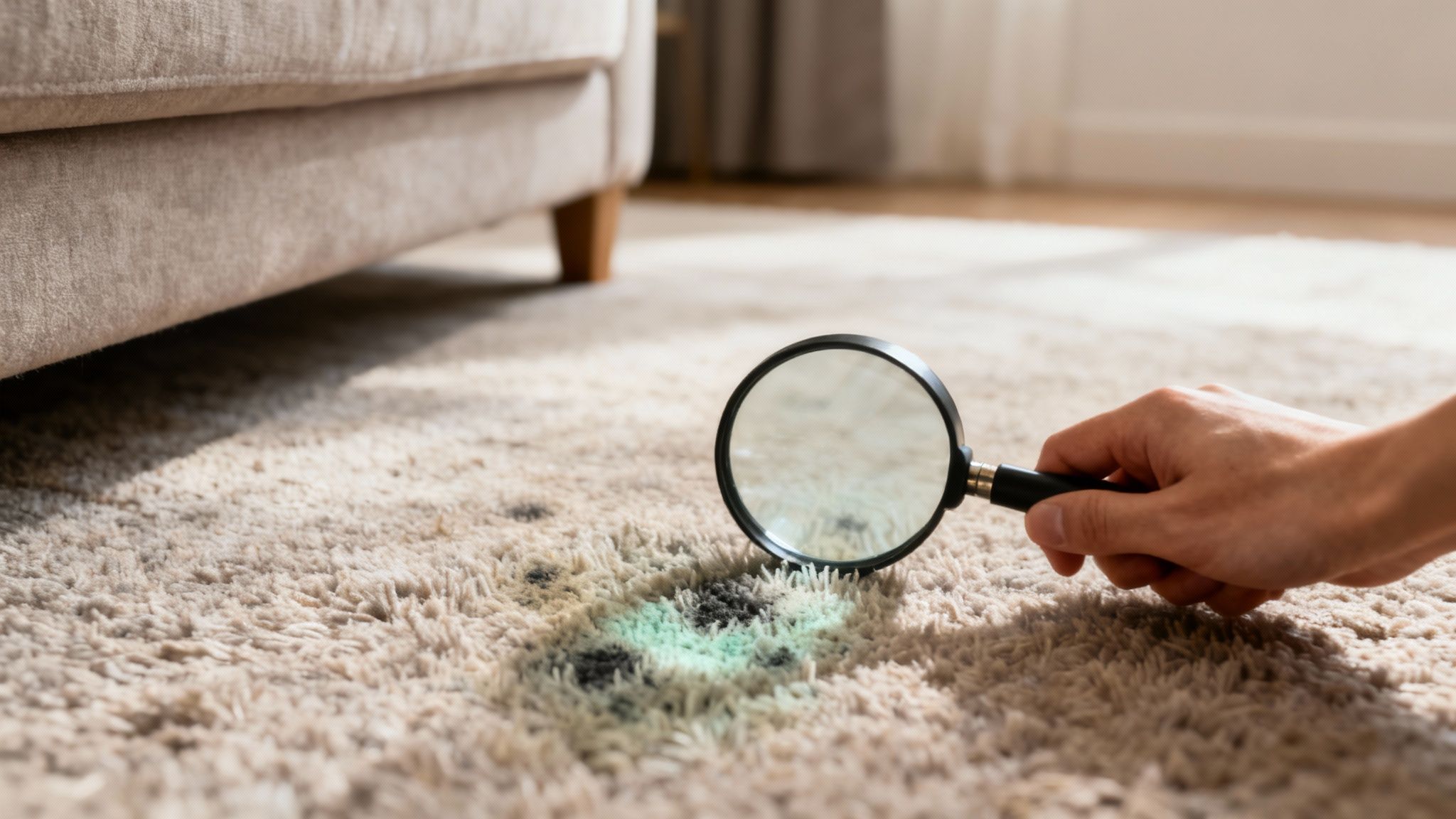
You know that slightly damp, earthy smell? It’s often the very first sign that something isn’t quite right with your carpet. It's so easy to brush off at first. You might just think it's a bit of lingering dampness after a rainy week. But that distinct musty scent is your nose’s way of sounding the alarm.
Before you even think about grabbing any cleaning supplies, you need to become a bit of a detective in your own home. Mould is sneaky. It doesn't always announce itself with big, obvious black spots. Sometimes, it’s much more subtle.
The Telltale Signs of Carpet Mould
Early on, mould can look a lot like a simple dirt patch or a bit of discolouration. It might be green, brown, black, or even have a whitish, fuzzy texture. If you notice a stain that just keeps coming back, no matter how many times you clean it… that's a massive red flag.
Here's a quick checklist of what to look for:
- Visible Growth: This is the most obvious one. You might see fuzzy patches or dark spots popping up on the carpet fibres. Don't ignore them, even if they're tiny.
- A Musty Odour: This is the classic mould smell. If a room smells damp and earthy even when it feels dry, you've almost certainly got a mould problem hiding somewhere.
- Dampness: Does a section of the carpet feel constantly damp or squishy under your feet? Mould can't grow without moisture, so this is a major clue.
- Increased Allergies: If you find yourself sneezing, coughing, or dealing with a stuffy nose more often in one particular room, airborne mould spores could be the culprit.
Why Mould Loves Our Homes
Mould isn't just a random nuisance; it's a living thing looking for the perfect place to call home. And unfortunately, our houses can provide exactly that. It's a particularly persistent issue here in Australia, where humidity can roll out the welcome mat for mould spores. In fact, a major national survey found that 17.97% of homes reported mould or mildew, with more recent studies still showing that over 8% of dwellings have mould issues. You can read the full research about these Australian housing findings to learn more.
That small, innocent-looking spot you see on the surface? It could be just the tip of a much larger iceberg. Often, the real problem is lurking in the carpet underlay or even the subfloor, completely hidden from view.
Understanding what you’re up against is the first, most crucial step. It’s not about causing a panic. It's about feeling confident enough to properly assess the situation before you dive in.
Getting Your Mould Removal Toolkit Ready
Before you even think about tackling that mould, let's talk prep. This isn't just about grabbing a random cloth and a spray bottle. Nope. It’s about gearing up properly to protect yourself and having the right tools on hand to actually get the job done right the first time.
Let's be really clear here… mould isn't something to take lightly. Disturbing it can send millions of tiny spores flying into the air, and you really don't want to be breathing those in. So, your first step is always safety. It's completely non-negotiable.
Your Safety Essentials
Think of this as your personal protective equipment, or PPE. Don't even think about starting the job without these items. They’re your first and most important line of defence against inhaling or touching mould spores.
- A P2 Respirator Mask: I’m not talking about a flimsy paper dust mask. A proper P2 mask is specifically designed to filter out fine particles like mould spores.
- Safety Goggles: You need something that wraps around to protect your eyes from any cleaning solution splashes or airborne spores. Your everyday glasses won't cut it.
- Rubber Gloves: A sturdy pair of reusable rubber gloves will protect your hands from both the mould itself and the cleaning solutions you'll be using.
Once you’re kitted out and protected, it's time to gather your cleaning arsenal. The good news is, you probably have a few of these things already.
Building Your Cleaning Arsenal
Now for the tools of the trade. Having everything ready to go makes the whole process smoother and much more effective. No running back and forth to the shed once you've started.
You’ll want to have these items on hand:
- A Stiff-Bristled Brush: This is your go-to for scrubbing the mould loose from the carpet fibres.
- A HEPA Vacuum Cleaner: This is so important. A standard vacuum will just suck up spores and blast them right back into the room. A vacuum with a HEPA filter actually traps those microscopic particles.
- Several Clean Cloths or Towels: You'll need a good supply of these for blotting the area dry as you work.
- Fans or a Dehumidifier: These are absolutely essential for the final, and most important, drying stage.
The biggest mistake I see people make is not drying the carpet thoroughly enough after cleaning. Any lingering dampness is just an open invitation for the mould to come right back, sometimes even worse than before.
Finally, you need your cleaning solution. You've got a couple of great options here, from simple pantry staples to store-bought products. For a deeper dive into what works best, you might find our guide on natural mould killer solutions really helpful.
Honestly, a simple mix of white vinegar and water (a 1:1 ratio is a great start) is often incredibly effective for surface mould on carpets. It’s a fantastic, non-toxic choice that gets the job done without filling your home with harsh chemicals.
The Practical Guide to Cleaning Mould from Carpet
Alright, you're geared up and ready to face the mould. This is where the real work begins. We're going to walk through this process properly, making sure you know exactly how to get mould out of carpet without causing any extra headaches.
First things first, if you're dealing with a small, contained patch of surface mould, you've got this. The key is to be methodical. You don't want to just blast it with cleaner and hope for the best… that can actually make things worse by soaking the underlay. Think of it less like a flood and more like targeted surgery.
This infographic lays out the simple, non-negotiable safety steps before you even touch a cleaning solution.

Remembering this simple sequence—Mask, Goggles, Gloves—is the easiest way to protect yourself before you start cleaning.
Comparing DIY Carpet Mould Solutions
Before you grab a spray bottle, it helps to know what you’re working with. People often reach for whatever is under the sink, but not all solutions are created equal. Here's a quick look at common household options for treating small patches of carpet mould.
| Solution | Effectiveness | Safety Notes |
|---|---|---|
| White Vinegar & Water | Good for surface mould. Kills about 82% of mould species. | Non-toxic and safe for most carpets, but always patch test first. |
| Baking Soda Paste | Moderate. Good for absorbing odours and scrubbing. | Safe and natural. Less effective at killing mould on its own. |
| Tea Tree Oil Solution | Good natural antifungal. | Strong scent. Can be irritating to pets, so use with caution. |
| Hydrogen Peroxide (3%) | Effective but can bleach fabrics. | MUST be patch-tested in an unseen area. A definite risk for coloured carpets. |
| Bleach & Water | Not Recommended. Often just bleaches the colour, doesn't kill roots in porous surfaces. | Releases harsh fumes. Damages carpet fibres and is a poor choice for this job. |
While several options exist, a simple mix of white vinegar and water remains one of the safest and most effective starting points for a DIY job on a small, manageable patch.
Treating Surface Mould
Let's stick with our recommended solution: the mix of white vinegar and water. Lightly spray it directly onto the mouldy area. The aim is to dampen the fibres, not saturate the entire carpet down to the subfloor.
Once you’ve applied the solution, let it sit for about fifteen minutes. This gives the vinegar time to work its magic and start breaking down the mould.
Now, grab your stiff-bristled brush. This is where your technique really matters. You want to scrub the area gently but firmly to loosen the mould from the carpet fibres. Work from the outside of the patch inwards… this helps stop you from accidentally spreading the spores to clean areas.
After a good scrub, it's time to blot.
A critical tip I share with all my clients… always blot, never rub. Rubbing can fray the carpet fibres and push the mould deeper into the pile. Press a clean, dry cloth firmly into the area to soak up the moisture and lift the loosened mould away.
Repeat this process—spraying, scrubbing, and blotting—until you can't see any more visible mould. You might need to go over it two or three times for a stubborn patch. Patience is your best friend here.
The All-Important Drying Process
Now for what is honestly the most critical part of the entire job. Drying. If you leave even a tiny bit of moisture behind, you’re basically rolling out the welcome mat for the mould to return. And it will. Quickly.
Your carpet needs to be completely, utterly, bone-dry.
Here’s how you can speed things up and ensure a thorough dry:
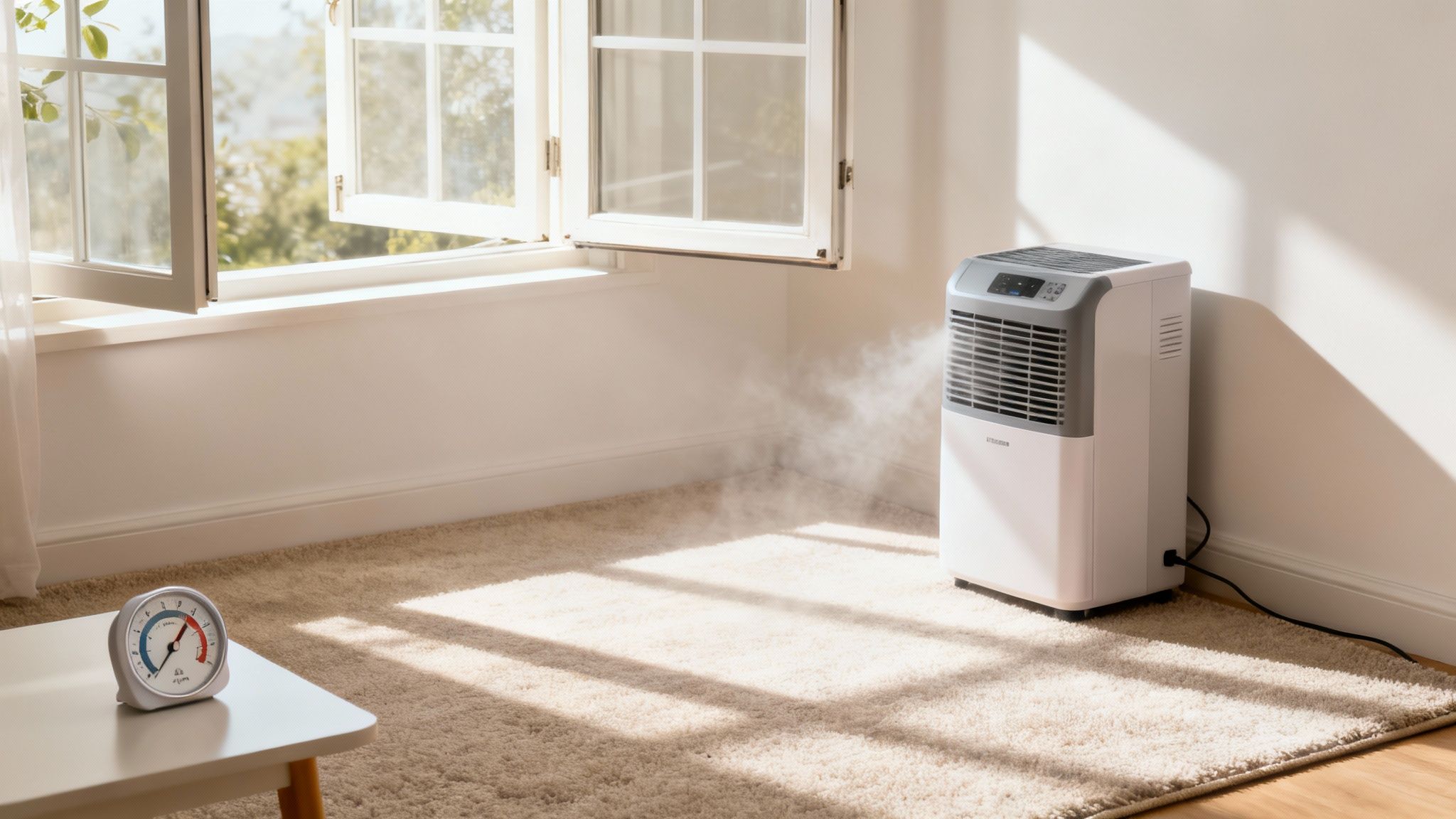
- Create Airflow: Open up all the windows and doors in the room. Get some air moving. Then, set up a few fans and point them directly at the damp patch.
- Bring in a Dehumidifier: If you have one, a dehumidifier is your secret weapon. It will actively pull moisture out of the air and, by extension, out of your carpet. Run it in the room for at least 24-48 hours after cleaning.
- Use a Wet-Dry Vacuum: If you have access to a wet-dry vacuum, use it on the damp spot before you set up the fans. It's incredibly effective at sucking out excess water from deep within the carpet pile.
Don't be tempted to rush this stage. Feel the carpet with your hands. If it feels even slightly cool or damp to the touch, it needs more time. Once it's completely dry, give the entire area one final, thorough vacuum with your HEPA-filter vacuum to suck up any lingering spores. This final step is your insurance policy, making sure those pesky mould spores are gone for good.
Knowing When to Call a Mould Removal Professional
Look, sometimes you have to know when to tap out. And that’s perfectly okay. Knowing your limits is just as important as knowing how to tackle a bit of surface mould yourself. It's not about giving up; it’s about making the smartest choice for your home and your health.
So, when does a small cleaning job turn into a big professional one? Well, there are a few clear signs that you're facing a problem that's bigger than a spray bottle and some elbow grease.
Red Flags It's Time for an Expert
The most obvious sign is the size of the mould patch. Think about it this way… if the affected area is larger than a dinner plate, it’s generally time to call in the cavalry. A large visible patch almost always means there's a much more significant problem hiding in the underlay and subfloor.
It's like seeing a single weed in a garden; you know there are roots spreading all over the place underneath.
Another huge red flag is a history of significant water damage. If your carpet has been wet for a long time, say after a flood or from a slow, persistent leak you just discovered, the DIY window has likely closed. That constant moisture creates the perfect five-star resort for mould to thrive deep within the layers of your flooring.
In these situations, the mould you can see is often just a fraction of what’s really there. According to guidance from WorkSafe Queensland, if a carpet has been wet for more than 48 hours and shows mould, it’s often best to throw it out entirely. Experts also agree that mouldy carpet underlay is nearly impossible to clean effectively and should be replaced to prevent the spores from coming back. You can discover more insights about mould-affected carpet underlay from industry professionals.
Calling a professional isn't an admission of defeat. It's an investment in doing the job correctly and thoroughly, making sure the problem is completely solved and not just temporarily hidden.
Finding and Working with a Pro
So, you've decided to make the call. The first step is to find a reputable, certified mould remediation specialist. Don't just go with the first name you find online.
Look for a company that:
- Is IICRC certified (Institute of Inspection, Cleaning and Restoration Certification). This is the industry gold standard.
- Provides a detailed inspection and quote. They should be able to explain their process clearly, without any jargon.
- Has solid reviews and local references. Check what other people in your area are saying about them.
During their initial inspection, a good professional will assess the full extent of the problem, which might involve lifting the carpet to check the underlay and subfloor. They’ll use specialised equipment like moisture meters to find hidden dampness. If you're curious about the potential costs, our guide on how much carpet cleaners charge can provide some useful context for professional services.
Ultimately, bringing in an expert provides peace of mind. You’ll know the job is done safely and the mould won’t be making an unwelcome return visit.
How to Prevent Mould from Returning
Getting that mould out of your carpet is a huge win. Seriously, pat yourself on the back. But now comes the real challenge… making sure it stays gone for good.
The ultimate goal is to turn your home into a place where mould simply can't thrive. It’s not about constant, frantic cleaning. It’s about creating an environment that’s naturally hostile to it.
And how do we do that? By cutting off its life support. Mould’s one true love is moisture. If we can control the moisture, we control the mould. It really is that simple.
Control Your Home's Climate
Think of your home's air like a sponge. When it's full of humidity, it squeezes that moisture into everything… including your carpets. Our job is to gently wring out that sponge and keep it from getting waterlogged again.
This is where a few simple, practical habits can make all the difference:
- Use Your Fans: That exhaust fan in your bathroom or kitchen? It’s not just for smells. Run it every single time you shower or cook to pull that steamy, damp air straight outside.
- Let the Fresh Air In: Whenever the weather allows, open your windows for at least 15-20 minutes a day. This creates cross-ventilation, which is fantastic for flushing out stale, moist air.
- Consider a Dehumidifier: For rooms that just always feel a bit damp or musty, like a laundry room or a poorly ventilated bedroom, a dehumidifier is a game-changer. It actively pulls moisture from the air, keeping humidity levels in check.
The thing about prevention is that it’s made up of lots of small, consistent actions. You're not looking for a single magic bullet; you're building a fortress of good habits, brick by brick.
Be Quick on the Draw with Spills
We've all done it. A glass of water gets knocked over, and you think, "I'll get to that in a minute." But for mould, that minute is an opportunity. A small, forgotten spill is like rolling out a welcome mat.
Make it a house rule to clean up any spills immediately and dry the area thoroughly. Don't just wipe the surface; grab a dry towel and press down firmly to soak up moisture from the carpet pile. For larger spills, break out the fans again.
With rising awareness of mould-related health risks, the demand for professional mould inspections in Australia has grown. These experts use advanced equipment to find hidden moisture you'd never spot yourself, sometimes recommending carpet replacement if the problem is too deep. This shows a real shift towards proactive home health management.
By staying on top of spills and controlling your home's humidity, you’re not just cleaning; you're actively preventing future problems. For more tips on tackling mould throughout your home, you can also explore our detailed guide on how to get rid of mould.
Common Questions About Carpet Mould
We get a lot of questions about this tricky topic, so let's tackle some of the most common ones. It's totally normal to feel a bit unsure when you're dealing with mould, and having clear answers can help you handle the situation with more confidence.
Here are a few things people often wonder about when they find those unwelcome spots on their carpet.
Why Does the Mould Keep Coming Back?
This is probably the most frustrating part of dealing with mould. You might spend a whole weekend scrubbing, drying, and thinking you've won the battle, only to see those pesky spots reappear a few weeks later.
The reason is almost always the same: an unresolved moisture source.
Cleaning the visible mould is only half the job. If you haven't fixed the underlying leak, improved the room's ventilation, or dealt with high humidity, you're just trimming the weeds instead of pulling out the roots. Mould will always return if its favourite food source—moisture—is still available.
Is Professional Carpet Cleaning Effective Against Mould?
That's a great question. A standard professional steam clean is fantastic for general hygiene and shifting dirt. It can definitely help remove surface mould spores and give the carpet a much-needed freshen-up.
However, it's not a mould remediation service. If the mould has soaked through to the underlay, a standard clean just won't solve the core problem. Specialised mould removal professionals use different techniques and gear designed specifically to kill mould at its source and address those hidden moisture issues.
Think of it this way: a regular carpet clean is like washing your car, while a mould remediation service is like taking it to a mechanic to fix a leaking engine. Both are useful, but they solve very different problems.
Can I Save a Completely Soaked Carpet?
This is the tough one. If your carpet has been completely saturated for more than 48 hours—say, from a burst pipe or a minor flood—saving it becomes incredibly difficult and is often not recommended.
After that much time, mould growth is almost guaranteed, not just in the carpet fibres but deep within the underlay and even on the subfloor. At that point, the underlay is a lost cause. It's like a giant sponge you can never truly get dry or clean again. While you might be able to salvage the carpet itself with professional help, the underlay will almost certainly need to be replaced to prevent a swift and aggressive return of the mould.
Dealing with persistent mould can be a real headache. If you've tried everything and are ready for a professional solution that gets to the root of the problem, That Cleaning Crew is here to help. Our certified mould remediation specialists can ensure your space is safe, healthy, and truly mould-free. Request your free on-site quote today!